Coal & Char

Patio Heater vs Fire Pit

A heater heats people. A fire pit gathers them. The deciding question is whether you have a roof over the space — because only one of these two can live under one.

By Stephen V.Last updated How we pick

How this is funded:we earn a commission if you buy through our links, at no extra cost to you. It never changes which pit or heater we recommend, and we’ll tell you when we’d skip one. Full disclosure.

Buy a patio heater if the space is covered, tight, shared with neighbors or used standing up. Buy a fire pit if it is open ground and people sit down and stay. For most buyers that is the decision made, because it is a siting question rather than a heat question. A propane patio heater is built to run under a roof with adequate ventilation; a wood-burning fire pit is not, and no clearance figure changes that.

If the space is genuinely open and the choice is free, the honest answer is that they do different jobs. A heater warms people— it points heat down at head and shoulder height from about seven feet up, across a standing circle. A fire pit warms a circle— intense at shin and chest height for anyone within a few feet of it, and almost nothing beyond. One keeps a party comfortable. The other is the reason the party is outside.

The comparison, point by point

 Patio heaterWood fire pit
Works under a roofYes, with ventilation and stated clearancesNo
Heat patternDown and out from ~7 ft — standing heightSideways at seat height, falls off fast
Typical rated output46,000–50,000 BTU (per the listings)Not rated — depends on the fire you build
Time to useful heatSeconds15–20 minutes
Switches offInstantly, at the valveNo — has to be put out and stays hot
SmokeNoneYes, unless it is a smokeless pit on dry wood
Embers and sparksNoneYes — a screen matters near timber
Cheapest fuelPropane cylinder or electricityWood you season yourself
Balcony and rental friendlyOften, electric especiallyRarely permitted
People gather around itNot reallyThat is the entire point
Stores awayTall and awkward; needs a coverEasy — a lid or a cover and it stays out
Work per eveningOpen a valveFuel, light, tend, extinguish, empty ash

Where a patio heater wins outright

Covered and partly covered space.This is the decisive one. A porch, a veranda, a pergola with a solid roof, a balcony with a floor above it — a heater is designed for those with ventilation and its own stated clearances, and a wood fire is not. If the space is fully enclosed, electric infrared removes the question entirely, because nothing is burning. We cover that route on patio heaters for covered porches and electric patio heaters. Enclosure also changes which output tier you want rather than just which fuel — what size patio heater do you need explains why a covered space is a reason to size down, not up.

Standing, moving, serving. At a barbecue-free gathering where people are on their feet with a drink, a heater is simply better: the warmth arrives at the height people occupy, and nobody has to choose a seat based on where the fire is.

Neighbors, HOAs and burn bans. Smoke is the complaint that gets fire pits banned, and a seasonal burn ban can take a wood pit out of service for the hottest part of the year. A gas heater is unaffected by both.

Instant on, instant off.A heater is worth it for a forty-minute coffee outside in October. Nobody lights a wood fire for forty minutes — the fire takes a quarter of an hour to be worth sitting near, and then you own it for the rest of the evening.

Where a fire pit wins outright

Open ground and a seated group. Put six chairs round a 19.5-inch pit and it is unambiguously the better evening. The fire is the thing people look at, and radiant heat at chest height from a few feet away is more pleasant than the same energy delivered from above.

Running cost, if you have wood.Seasoned wood you split and stacked yourself is the cheapest heat on this page by a wide margin, and a pit has no regulator, no valve and nothing electrical to fail. Where that falls apart is buying bundled wood by the armful — that is the most expensive option here, and it is worth knowing before you choose a pit for the economics. Our firewood seasoning guide is what makes the cheap version work.

Nothing to plug in, nowhere to plug it. A fire pit works at the far end of a garden, on a beach, at a campsite. Electric heaters need a socket and propane heaters need a cylinder that has to be swapped; a pit needs the wood you already have.

Storage and looks. A tall mushroom heater is a hard object to put away and does not improve a patio when it is off. A fire bowl with a lid sits there looking like furniture.

The middle answer: propane fire pits and fire tables

If you want the flame but the siting rules out wood, a propane fire bowl or fire table is the compromise most people land on. You get a visible fire, a knob, no smoke, no embers and no ash, and the clearance picture is far better than a wood pit — some models state that they can be used under an open structure, which is exactly the case a wood fire can never make. It is more expensive to run than wood and the flame has none of the character, but it is permitted in places wood is not, and it goes out when you let go of the valve.

See best propane fire pits for the bowls, best fire pit tables for the version with a usable surface, and fire pits under pergolas and gazebos for the clearance detail if there is anything overhead at all.

The safety difference, briefly

Both are safe used as intended, and they fail in different directions. A patio heater’s risks are a tip-over, a bad hose connection, and running a combustion heater in a space with no real airflow — the CPSC’s standing advice on CO alarms is the backstop for that, and more than 200 people in the US die every year from accidental non-fire CO poisoning linked to consumer products. A fire pit’s risks are clearance and embers: Smokey Bear’s published guidance is to clear at least a 10-foot diameter around the site, stay at least 15 feet from tents, vegetation and low-hanging branches, and keep vertical clearance at least three times the height of the flames.

The practical difference is the end of the evening. A heater is finished when you turn the knob. A fire pit is not finished until it has been drowned, stirred and checked — the method is on how to put out a fire pit, and whether it can sit on timber at all is on can you put a fire pit on a deck.

So, which should you buy?

Patio heater, if: the space is covered or semi-covered; you are on a balcony or in a rental; smoke would reach a neighbor; people stand rather than sit; you want heat for a short spell without committing an evening to it; or a burn ban applies where you live.

Fire pit, if: the space is open with real clearance; people sit down and stay; you have access to cheap wood; and the point of being out there is the fire itself rather than the temperature.

Propane fire pit, if you wanted the fire and the site said no. It is the only object here that delivers a flame people gather round and still switches off at a valve.

On a raised deck the comparison tightens, because the floor is combustible and the rules change for both products: best outdoor heaters for a deck covers the heater side and best smokeless fire pits for a deck covers the fire side.

What we'd buy on each side

Two picks per side, from the registry, with live prices. The first pair is the straight answer to each question — the standard 46,000 BTU freestanding heater, and the 19.5-inch smokeless pit. The second pair is for the two people who want the other thing: a heater that still shows you a flame, and a propane fire bowl that behaves like a heater you can switch off.

Quick picks

Ranked on published specs, beginner-friendliness and value. Select a row to jump to the full write-up. We haven’t cooked on every one of these — here is exactly what we do instead.

#ProductBest forPrice
1
Amazon Basics 46,000 BTU Propane Patio Heater with Wheels

Amazon Basics 46,000 BTU Propane Patio Heater with Wheels

The standard restaurant-patio mushroom heater at the lowest sensible price. Forty-six thousand BTU under a reflector puts warmth down over roughly a circle of seating, which is a fundamentally different job from a fire pit: you are heating people, not making a focal point. Wheels and a water-fillable base are the two features that matter in practice — one so you can move it, the other so it does not go over. It is the default pick and the one to beat.

Best heater overall
$156.16 · View on Amazon

Price as of November 23, 2026. #ad How we’re funded

2
Solo Stove Bonfire 2.0 with Stand

Solo Stove Bonfire 2.0 with Stand

The default smokeless fire pit, and the one most people should buy. At 19.5 inches it is big enough to throw a real circle of heat and small enough that two people can move it off the patio, and the 2.0 revision added the removable base plate and ash pan that the original badly needed — you tip the ash out instead of upending the whole pit. You pay a brand premium over a plain steel bowl, and the double-wall airflow only works properly on dry wood, but nothing else at this size is as easy to light, as clean-burning or as simple to put away.

Best fire pit overall
$282.14 · View on Amazon

$349.9919% off

Price as of November 23, 2026. #ad How we’re funded

3
EAST OAK Pyramid Patio Heater (48,000 BTU)

EAST OAK Pyramid Patio Heater (48,000 BTU)

A pyramid heater puts a tall column of visible flame behind glass, so it does the job of a patio heater and the job of a fire feature at once. That is worth real money to some people and nothing at all to others. On pure warmth per dollar the mushroom heaters beat it; on atmosphere nothing else in this category comes close. Forty-eight thousand BTU is a competitive rating, and the glass tube is the part to treat carefully.

Best heater if you want a visible flame
$284.99 · View on Amazon

$299.995% off

Price as of November 23, 2026. #ad How we’re funded

4
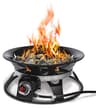
Outland Living Portable Propane Fire Pit 21" (58,000 BTU)

Outland Living Portable Propane Fire Pit 21" (58,000 BTU)

The same 58,000 BTU burner in a 21-inch bowl instead of 19. The extra two inches spreads the same gas over a wider flame, which looks better and feels marginally less concentrated — it does not make it hotter. Pick this one if the pit will be the centerpiece of a seating circle and you want the fire to read as big; pick the 19-inch if you will be carrying it in and out of a car.

Best of both, honestly
$132.22 · View on Amazon

$199.9934% off

Price as of November 23, 2026. #ad How we’re funded

#1Best heater overall

Amazon Basics 46,000 BTU Propane Patio Heater with Wheels

The standard restaurant-patio mushroom heater at the lowest sensible price. Forty-six thousand BTU under a reflector puts warmth down over roughly a circle of seating, which is a fundamentally different job from a fire pit: you are heating people, not making a focal point. Wheels and a water-fillable base are the two features that matter in practice — one so you can move it, the other so it does not go over. It is the default pick and the one to beat.

What’s good

  • 46,000 BTU under a reflector heats a seating circle, not just a focal point
  • Wheels — you can move it off the patio when it rains
  • Water-fillable base adds stability without permanent weight
  • The cheapest full-size heater from a brand with returns behind it

Trade-offs

  • 20 lb propane tank is not included
  • Wind cuts its effective range sharply
  • Painted steel will mark where the burner housing heats
  • Tall and top-heavy if the base is left empty
TypeFreestanding propane patio heater
Heat output46,000 BTU (per the listing)
MobilityWheels, per the listing
BaseWater-fillable, per the listing
FuelPropane — 20 lb tank not included

Specs read from the product listing, on October 7, 2026. “Not published” means the maker doesn’t state that figure there.

#2Best fire pit overall

Solo Stove Bonfire 2.0 with Stand

The default smokeless fire pit, and the one most people should buy. At 19.5 inches it is big enough to throw a real circle of heat and small enough that two people can move it off the patio, and the 2.0 revision added the removable base plate and ash pan that the original badly needed — you tip the ash out instead of upending the whole pit. You pay a brand premium over a plain steel bowl, and the double-wall airflow only works properly on dry wood, but nothing else at this size is as easy to light, as clean-burning or as simple to put away.

What’s good

  • 19.5-inch body is the sweet spot — real heat without a two-person lift
  • 2.0 removable ash pan means emptying it is a 30-second job
  • Stand is included on this listing, so you are not buying it separately
  • Lights fast and burns down to almost nothing when the wood is dry

Trade-offs

  • Costs well over double a plain steel fire bowl of the same diameter
  • Smokeless only works on properly seasoned wood — wet logs smoke like anything else
  • No cover or lid included at this price
  • Radiates sideways, not up: it warms a circle, not a deck
TypeDouble-wall smokeless wood-burning fire pit
Diameter19.5" (per the listing)
MaterialStainless steel
FinishAsh (per the listing)
Stand includedYes — this listing is the with-stand configuration
Ash panRemovable (2.0 design)

Specs read from the product listing, on October 27, 2026. “Not published” means the maker doesn’t state that figure there.

#3Best heater if you want a visible flame

EAST OAK Pyramid Patio Heater (48,000 BTU)

A pyramid heater puts a tall column of visible flame behind glass, so it does the job of a patio heater and the job of a fire feature at once. That is worth real money to some people and nothing at all to others. On pure warmth per dollar the mushroom heaters beat it; on atmosphere nothing else in this category comes close. Forty-eight thousand BTU is a competitive rating, and the glass tube is the part to treat carefully.

What’s good

  • Visible flame column — it looks like a fire feature, not an appliance
  • 48,000 BTU is a strong rating for the category
  • Narrow footprint compared with a mushroom reflector
  • Stainless and glass rather than painted steel

Trade-offs

  • Costs roughly double an equivalent-output mushroom heater
  • The glass tube is the vulnerable part — covers matter
  • A tall flame column throws heat up as well as out
  • Tank not included
TypePyramid / glass-tube propane patio heater
Heat output48,000 BTU (per the listing)
MaterialStainless steel with glass flame tube
FuelPropane — 20 lb tank not included

Specs read from the product listing, on October 7, 2026. “Not published” means the maker doesn’t state that figure there.

#4Best of both, honestly

Outland Living Portable Propane Fire Pit 21" (58,000 BTU)

The same 58,000 BTU burner in a 21-inch bowl instead of 19. The extra two inches spreads the same gas over a wider flame, which looks better and feels marginally less concentrated — it does not make it hotter. Pick this one if the pit will be the centerpiece of a seating circle and you want the fire to read as big; pick the 19-inch if you will be carrying it in and out of a car.

What’s good

  • Wider 21-inch bowl spreads the flame more convincingly
  • Same 58,000 BTU burner as the 19-inch
  • Cover and carry kit included per the listing
  • Still portable, just bulkier

Trade-offs

  • Costs more than the 19-inch for the same heat output
  • Bigger footprint to store and transport
  • Tank still separate
  • Same wind sensitivity as any gas pit
TypePortable propane fire bowl
Diameter21" (per the listing)
Heat output58,000 BTU (per the listing)
FuelPropane — 20 lb tank not included
IncludedCover and carry kit, per the listing

Specs read from the product listing, on October 7, 2026. “Not published” means the maker doesn’t state that figure there.

A note on fire safety. Clearances and extinguishing steps on this page follow Smokey Bear’s campfire-safety guidance. Your local burn rules, HOA and the manual that came with your unit all override anything here. We’re enthusiasts sharing what we’ve researched, not fire officers — when in doubt, follow your local fire authority.

Frequently asked questions

Is a patio heater or a fire pit better?

A patio heater is better for a covered patio, a balcony, a porch, a restaurant-style standing space, or anywhere an open flame and smoke are not allowed. A fire pit is better for an open yard where people sit down and stay, and it is far cheaper to run on wood. The thing that usually decides it is not warmth at all: a propane patio heater is designed to work under a roof with adequate ventilation, and a wood fire pit never is.

Which gives off more heat, a patio heater or a fire pit?

They are not really comparable, because they heat differently. A freestanding patio heater rated around 46,000 to 50,000 BTU radiates downward and outward from a reflector about seven feet up, so it warms a standing circle roughly 10 to 15 feet across fairly evenly. A wood fire pit radiates sideways at seat height: intense close in, very little past about six feet, and nothing at all above waist height. For a seated circle the pit feels hotter. For a group standing and moving around, the heater does more.

Can you use a patio heater under a covered patio?

A propane patio heater can, with real ventilation and the clearances in its own manual, and that is the single biggest advantage it has over a fire pit. Electric infrared is the easier answer for a fully covered or enclosed space because there is no combustion and therefore no carbon monoxide. The CPSC recommends CO alarms on every level of a home and outside sleeping areas, and a well-enclosed porch is the case where that advice starts to apply outdoors. A wood fire pit under a roof is not a ventilation question — it is simply the wrong place for it.

Which is cheaper to run?

Wood, by a wide margin, if you have a cheap supply and are willing to season it. After that it depends on fuel: a 20-pound propane cylinder runs a 46,000 BTU heater for roughly 9 to 10 hours at full output, while electric infrared costs whatever your utility charges for 1,500 to 3,000 watts. The gap narrows if you buy bundled firewood at a gas station, which is the most expensive heat on this page per hour.

Can you have both?

It is a common and sensible setup: a heater on the covered part of the patio where people stand and eat, a fire pit out on the open paving where they sit afterwards. If you only want one object, a propane fire pit or fire table is the honest middle — it gives you a visible flame and a knob, it is permitted in many places where wood fires are not, and some models can sit under an open pergola with the clearances their manual specifies.

Which is safer?

A gas appliance, as a rule, because there are no embers and no smoke, and it stops the instant you close the valve. A wood fire pit throws sparks, stays dangerous for hours after it looks finished, and has to be extinguished deliberately. Neither is dangerous when used as intended: the heater's risks are a tip-over and running it somewhere with no ventilation, and the pit's risks are clearance and embers. The fire pit is the one that needs a procedure at the end of the night.

Do fire pits keep you warm in winter?

Close in, yes, and only there. The radiant heat from an open fire falls away quickly with distance and does almost nothing above seat height, so on a cold night you get warm shins and a cold back. That is why a tall patio heater suits winter standing use better, and why people who use a fire pit through the winter tend to add windbreaks, blankets and a tighter seating circle rather than a bigger fire.

Sources

  • CPSC — Carbon Monoxide Information Center — The US Consumer Product Safety Commission on carbon monoxide: “More than 200 people in the United States die every year from accidental non-fire related CO poisoning associated with consumer products,” and its standing recommendation to “Install battery-operated CO alarms or CO alarms with battery backup on every level of the home and outside sleeping areas” (accessed October 7, 2026)
  • Smokey Bear — Campfire Safety — The official “Drown, Stir, Drown, Feel” method for extinguishing an outdoor fire — “Pour lots of water on the fire until the hissing sound stops, drowning all the embers,” stir the water into the embers with a shovel, keep adding water until all material is cool, then “Hover the back of your hand over the ashes to feel that the embers are cool.” The same page gives the siting rules: clear “at least a 10-foot diameter around the site,” “stay at least 15 feet from tents, vegetation, and low-hanging branches,” and “ensure you have vertical clearance at least 3 times the height of the flames” (accessed October 7, 2026)
  • FTC Consumer Advice — Online Shopping — FTC guidance for buying online: “before you buy something online, shop around and check out sellers and products,” note the exact manufacturer or model number when comparison shopping, and pay by credit card so a bad order can be disputed (accessed October 7, 2026)

Keep reading