Patio heater, or a portable heater for a garage or tent?
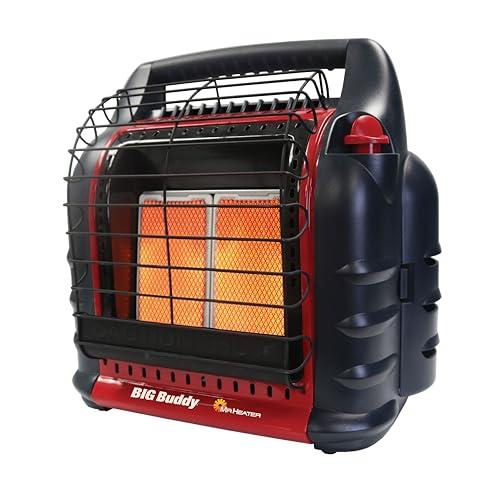
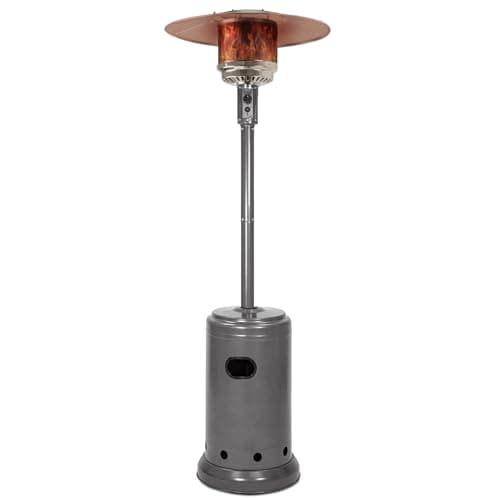
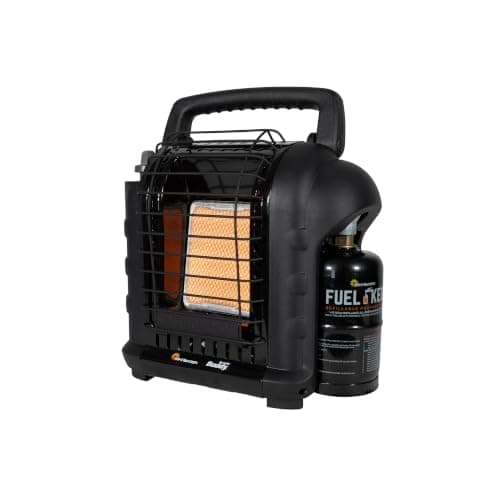
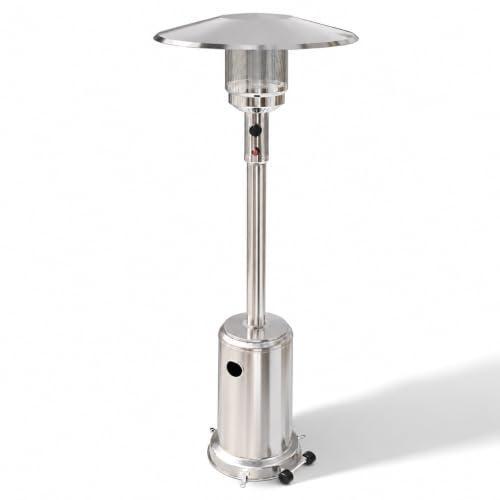
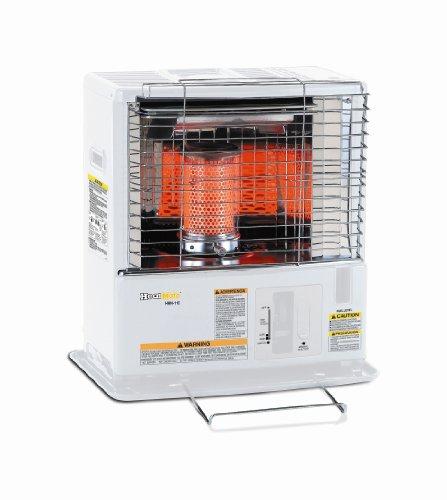
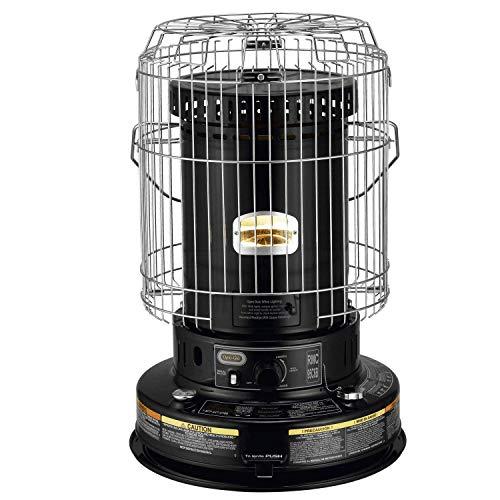
These are different products and people arrive here wanting both. A patio heater is a tall freestanding appliance built to warm seated people in the open air, and everything above is one of those. If what you actually need is heat in a garage, workshop, tent, RV or job site, you want a portable propane heater instead — smaller, cheaper, and sized to a space rather than to a patio. Our portable propane heater picks run from 3,800 BTU for one person in a tent up to an 80,000 BTU convection heater for a barn, and they are explicit about the ventilation and carbon monoxide rules that come with running a combustion heater in an enclosed space.
How to choose a patio heater
Answer the covered-space question first. If there is a roof, a canopy, a pergola with a solid cover or a garage door above you, a propane heater is the wrong product unless the manufacturer specifically rates that model for it. Combustion in a partly enclosed space produces carbon monoxide, and it is odorless. Electric infrared has no combustion at all, which is why it is the default for covered porches, balconies and garages. Everything else in this list is secondary to that.
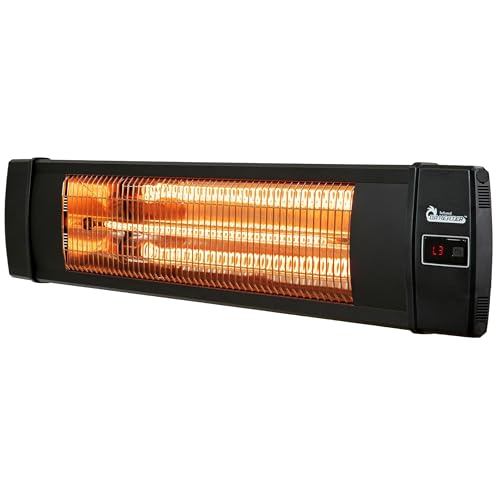
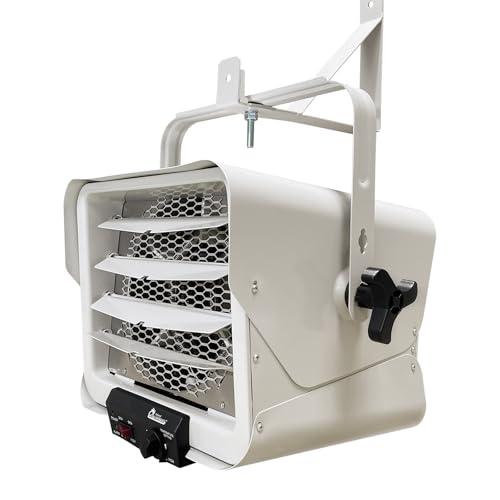
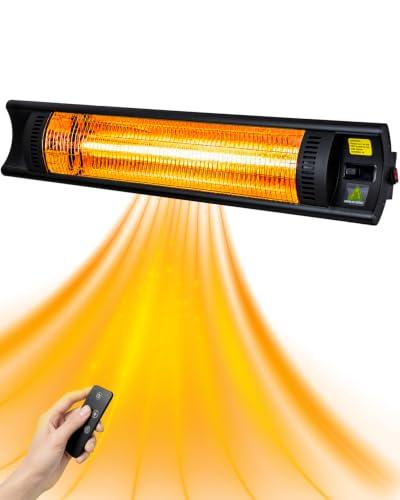
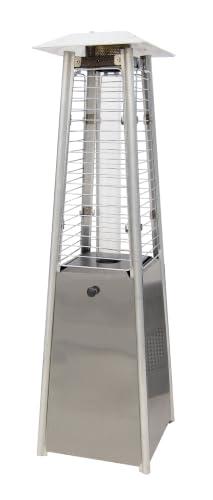
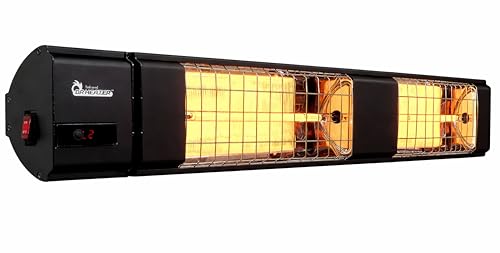
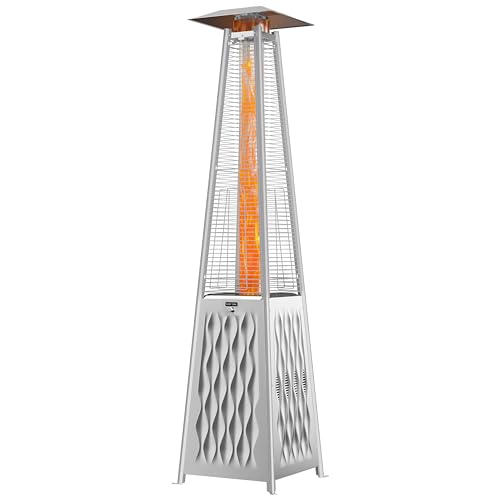
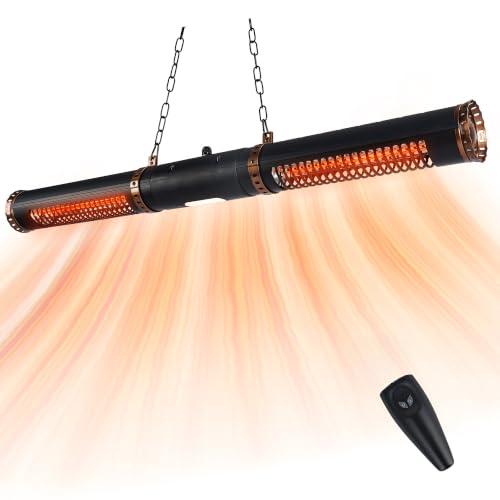
Then pick the form factor. A mushroomheater with a reflector spreads heat down over the widest circle and is the most heat per dollar — it is what restaurants use because it works. A pyramid heater puts a visible column of flame behind glass and does the job of a heater and a fire feature at once, for roughly double the money and a fragile glass tube. A tabletop unit runs on a 1 lb cylinder and warms the two or three people actually at the table. A wall or ceiling mounted infrared bar takes no floor space and nothing can knock it over, but it needs a proper electrical install and heats one spot forever.
Read the BTU rating as flame size, not as warmth. The gas heaters here run 46,000 to 50,000 BTU and the difference between them matters far less than where you stand. Wind is the real variable: it cuts the effective range of any outdoor heater sharply, and no specification on any listing accounts for it. If your patio is exposed, a windbreak will do more for you than another 4,000 BTU.
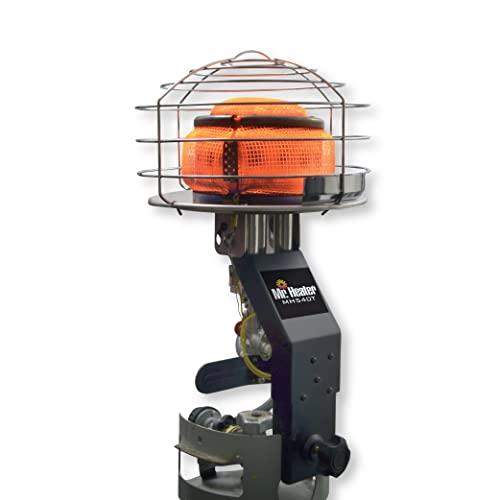
Check the safety features are actually stated.A tilt-over shutoff and a flame-failure cutoff should be standard on any gas heater, and the better listings say so explicitly. On the portable radiant heaters — the Mr. Heater Buddy family, which people use in garages, tents, ice shelters and hunting blinds — the tip-over switch and oxygen depletion sensor are part of why those models are so widely used. They are not a substitute for a CO alarm. Nothing is.
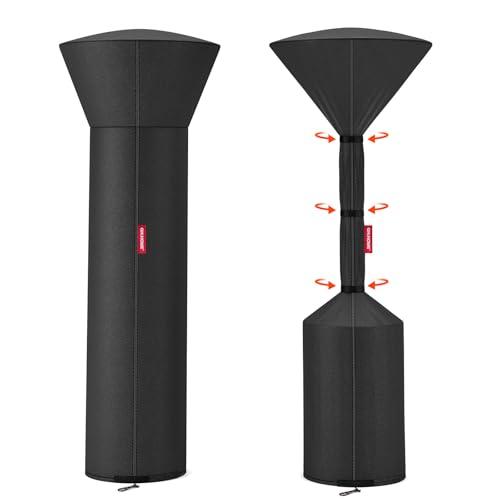
Budget for the tank and the cover. None of the freestanding gas heaters include a 20 lb propane tank. All of them live outdoors and all of them last longer under a cover. And if you are weighing a heater against a flame you can sit around, read propane vs electric for the running-cost side, and carbon monoxide and outdoor heaters for the part that actually matters.
New on this hub. Five pages added in October, split by where the heat has to go: electric garage heaters and propane garage heaters for a workshop, electric porch heaters for a covered porch, and propane heaters for camping and propane heaters for RVs for a tent or a camper, both with the ventilation rules spelled out.
Just added. Best small patio heaters is for anyone whose balcony cannot take a seven-foot mushroom heater — the tabletop propane towers and the mounted electric panels that cost you no floor space at all. For growers, using a propane heater in a greenhouse leads with the ventilation and humidity fix before it recommends anything, because a sealed glasshouse is the hardest place to run unvented gas safely.