Coal & Char

Best Chimney Brush Kits

Sweeping your own flue is a sixty-dollar tool and a dirty hour. What it is not is an inspection — and the difference between those two things is the whole point of this page.

By Stephen V.Last updated How we pick

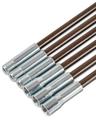
Buy the Sealegend 30 ft rotary kit. It is the chimney brush kit most people should own — its listing publishes nine flexible rods joining to 30 feet and a rotary flexible cleaning brush, which is the combination that suits an ordinary house flue. Flexible rods matter more than reach does: they follow an offset or a bend that a rigid rod set simply stops at, and because you sweep upward from the hearth you never get on the roof.

Buy the Sealegend 33 ft set instead if the chimney is tall— ten rods and three more feet, per its listing. A three-storey flue, or a two-storey flue plus the height you lose standing at the hearth, is exactly where a 30 ft kit comes up one rod short, and a spare rod is useful on any flue.

The budget pick is the Glosaie 18 ft fiberglass rod set, which is rods only. If you already own a brush sized to your flue, that is the whole purchase and it costs less than half of a complete kit. Its listing states 1/4-NPSM fittings and compatibility with Midwest Hearth brushes, which is the thread the category has standardised on.

Five sets below, in two categories: complete kits with a brush, and rod sets for a brush you already have. The one measurement that decides whether any of this fits your chimney is the brush diameter, and not one complete kit in this category publishes it— so measure your liner before you order, and read the spec tables rather than the marketing copy. We own none of these and have run none of them up a flue. Every figure here is one the maker publishes on its own listing, read on a dated visit; where a listing is silent the spec table says “Not published”. Prices on the cards are pulled live and stamped with the date they were read.

How this is funded:we earn a commission if you buy through our links, at no extra cost to you. It never changes which pit or heater we recommend, and we’ll tell you when we’d skip one. Full disclosure.

Quick picks

Ranked on published specs, beginner-friendliness and value. Select a row to jump to the full write-up. We haven’t cooked on every one of these — here is exactly what we do instead.

#ProductBest forPrice
1
Sealegend 30 ft Rotary Chimney Sweep Kit with 9 Flexible Rods

Sealegend 30 ft Rotary Chimney Sweep Kit with 9 Flexible Rods

The shape of kit most people should buy: nine flexible rods that join to 30 feet, and a brush head driven from below rather than dropped from the roof. Flexible rods are the whole point - they will follow an offset that a rigid rod set simply stops at, and sweeping from the hearth upward means you never get on the roof. What the listing publishes is reach and rod count; what it does not publish is the brush diameter, which is the one measurement that decides whether this kit fits your flue, so measure the liner first. And read the obvious limit honestly: a DIY sweep removes soot, it is not an inspection, and glazed creosote needs a professional.

Best chimney brush kit
$57.99 · View on Amazon

Price as of November 23, 2026. #ad How we’re funded

2
Sealegend 33 ft Chimney Sweep Kit with 10 Flexible Rods

Sealegend 33 ft Chimney Sweep Kit with 10 Flexible Rods

The same idea with one more rod, and that extra three feet is not a gimmick - a three-storey flue, or a two-storey flue plus the height you lose standing at the hearth, is exactly where a 30 ft set runs out one rod short. Buy this instead of the 30 ft version if the chimney goes through two floors and an attic, or if you would rather have the spare rod than discover you need it. Everything else, including the published-spec gaps, is the same: reach and rod count are stated, brush diameter is not.

Best for a tall flue
$60.99 · View on Amazon

Price as of November 23, 2026. #ad How we’re funded

3
Bluesea 30 ft Ergonomic Chimney Sweep Kit with 9 Flexible Rods

Bluesea 30 ft Ergonomic Chimney Sweep Kit with 9 Flexible Rods

A 30 ft, 9-rod kit whose listing leads on the handle rather than the brush, which is more honest than it sounds: sweeping a flue is ten minutes of awkward overhead work in a confined space, and the part you will remember afterwards is your wrists. On specification it sits level with the other 30 ft kit here - same reach, same rod count, same unpublished brush diameter - so choose between them on the grip or on whichever is cheaper on the day you buy. Like all of these it removes soot and tar; it tells you nothing about whether the liner behind the soot is sound.

Best grip
$59.99 · View on Amazon

Price as of November 23, 2026. #ad How we’re funded

4
Midwest Hearth Fiberglass Chimney Sweep Rod Kit, 18 ft, 1/4-NPSM

Midwest Hearth Fiberglass Chimney Sweep Rod Kit, 18 ft, 1/4-NPSM

Rods, not a kit - and that is the point. Six three-foot fiberglass rods on the 1/4-NPSM thread the brush market has standardised on, described by the listing as stiff and non-wobbly and explicitly for manual sweeping rather than drill rotation. If you already own a brush sized to your flue, this is the upgrade that makes sweeping tolerable: a rod set that pushes instead of flexing away is the difference between scrubbing a flue and wiggling a brush at it. Read the limits off the listing rather than around them - 18 feet is a single-storey or short two-storey reach, and it says manual sweeping only.

Best rods for a brush you own
$54.95 · View on Amazon

Price as of November 23, 2026. #ad How we’re funded

5
Glosaie Fiberglass Chimney Sweep Rod Kit, 18 ft, 1/4-NPSM

Glosaie Fiberglass Chimney Sweep Rod Kit, 18 ft, 1/4-NPSM

The cheapest thing on this page that does a real job: 18 feet of fiberglass rod on the same 1/4-NPSM thread, stated by the listing as compatible with Midwest Hearth brushes. If you have a brush and a short flue, this is the whole purchase, and it costs less than half of a complete rotary kit. The trade against the Midwest Hearth rods is a published one - these are described as tough and flexible, those as stiff and non-wobbly, and on a straight flue stiff is what you want while flexible is what you want on an offset. Neither listing publishes a rod diameter or a wall thickness, so that part of the call is being made on price.

Budget pick
$39.99 · View on Amazon

$42.997% off

Price as of November 23, 2026. #ad How we’re funded

The picks in full

#1Best chimney brush kit

Sealegend 30 ft Rotary Chimney Sweep Kit with 9 Flexible Rods

The shape of kit most people should buy: nine flexible rods that join to 30 feet, and a brush head driven from below rather than dropped from the roof. Flexible rods are the whole point - they will follow an offset that a rigid rod set simply stops at, and sweeping from the hearth upward means you never get on the roof. What the listing publishes is reach and rod count; what it does not publish is the brush diameter, which is the one measurement that decides whether this kit fits your flue, so measure the liner first. And read the obvious limit honestly: a DIY sweep removes soot, it is not an inspection, and glazed creosote needs a professional.

What’s good

  • 9 rods joining to 30 ft, per the listing - enough for most two-storey flues
  • Flexible rods follow bends a rigid set cannot
  • Swept from the hearth upward, so no roof work
  • Rotary drive, so the brush is turned rather than just shoved

Trade-offs

  • Brush diameter not published - measure your flue before ordering
  • Rod material and grade not published
  • Removes soot; it is not an inspection and will not shift glazed creosote
  • Drill-driven rotary kits can unscrew a rod inside the flue if run in reverse
TypeRotary chimney sweep kit (brush plus rods)
Total reach30 ft (per the listing)
Rods9 flexible rods (per the listing)
BrushRotary flexible cleaning brush (per the listing)
Brush diameterNot published
Rod materialNot published
Stated purposeRemoves soot and creosote (per the listing)

Specs read from the product listing, on November 21, 2026. “Not published” means the maker doesn’t state that figure there.

#2Best for a tall flue

Sealegend 33 ft Chimney Sweep Kit with 10 Flexible Rods

The same idea with one more rod, and that extra three feet is not a gimmick - a three-storey flue, or a two-storey flue plus the height you lose standing at the hearth, is exactly where a 30 ft set runs out one rod short. Buy this instead of the 30 ft version if the chimney goes through two floors and an attic, or if you would rather have the spare rod than discover you need it. Everything else, including the published-spec gaps, is the same: reach and rod count are stated, brush diameter is not.

What’s good

  • 10 rods joining to 33 ft, per the listing - the longest reach here
  • A spare rod is useful even on a shorter flue
  • Flexible rods follow offsets
  • Same hearth-upward method, no roof work

Trade-offs

  • Brush diameter not published - measure the liner first
  • Rod material and grade not published
  • More rods means more joints, and joints are where these kits fail
  • Costs more than the 30 ft set for reach many flues never use
TypeChimney sweep kit (brush plus rods)
Total reach33 ft (per the listing)
Rods10 flexible rods (per the listing)
Brush diameterNot published
Rod materialNot published
Stated purposeFireplace and flue cleaning (per the listing)

Specs read from the product listing, on November 21, 2026. “Not published” means the maker doesn’t state that figure there.

#3Best grip

Bluesea 30 ft Ergonomic Chimney Sweep Kit with 9 Flexible Rods

A 30 ft, 9-rod kit whose listing leads on the handle rather than the brush, which is more honest than it sounds: sweeping a flue is ten minutes of awkward overhead work in a confined space, and the part you will remember afterwards is your wrists. On specification it sits level with the other 30 ft kit here - same reach, same rod count, same unpublished brush diameter - so choose between them on the grip or on whichever is cheaper on the day you buy. Like all of these it removes soot and tar; it tells you nothing about whether the liner behind the soot is sound.

What’s good

  • 9 rods joining to 30 ft, per the listing
  • Ergonomic handle is the listing's stated focus
  • Flexible rods for offsets and bends
  • Listing states a strong brush head

Trade-offs

  • Brush diameter not published
  • Rod material and grade not published
  • No measured comparison between these kits exists - we have used none of them
  • Soot removal only; no inspection, no glazed creosote
TypeChimney sweep kit (brush plus rods)
Total reach30 ft (per the listing)
Rods9 flexible rods (per the listing)
HandleErgonomic (per the listing)
Brush diameterNot published
Rod materialNot published

Specs read from the product listing, on November 21, 2026. “Not published” means the maker doesn’t state that figure there.

#4Best rods for a brush you own

Midwest Hearth Fiberglass Chimney Sweep Rod Kit, 18 ft, 1/4-NPSM

Rods, not a kit - and that is the point. Six three-foot fiberglass rods on the 1/4-NPSM thread the brush market has standardised on, described by the listing as stiff and non-wobbly and explicitly for manual sweeping rather than drill rotation. If you already own a brush sized to your flue, this is the upgrade that makes sweeping tolerable: a rod set that pushes instead of flexing away is the difference between scrubbing a flue and wiggling a brush at it. Read the limits off the listing rather than around them - 18 feet is a single-storey or short two-storey reach, and it says manual sweeping only.

What’s good

  • 1/4-NPSM thread fits Midwest Hearth and other standard brushes, per the listing
  • Stiff, non-wobbly construction is the listing's stated design goal
  • 6 x 3 ft rods, so it packs down short
  • Fiberglass stated, unlike most kits here

Trade-offs

  • No brush included - this is rods only
  • 18 ft is the shortest reach on this page
  • Manual sweeping only, per the listing - not for a drill
  • Costs nearly as much as a complete 30 ft kit
TypeChimney sweep rod kit (rods only)
Total reach18 ft (per the listing)
Rods6 x 3 ft (per the listing)
Thread1/4-NPSM (per the listing)
MaterialFiberglass (per the listing)
DriveManual sweeping only (per the listing)
Brush includedNo

Specs read from the product listing, on November 21, 2026. “Not published” means the maker doesn’t state that figure there.

#5Budget pick

Glosaie Fiberglass Chimney Sweep Rod Kit, 18 ft, 1/4-NPSM

The cheapest thing on this page that does a real job: 18 feet of fiberglass rod on the same 1/4-NPSM thread, stated by the listing as compatible with Midwest Hearth brushes. If you have a brush and a short flue, this is the whole purchase, and it costs less than half of a complete rotary kit. The trade against the Midwest Hearth rods is a published one - these are described as tough and flexible, those as stiff and non-wobbly, and on a straight flue stiff is what you want while flexible is what you want on an offset. Neither listing publishes a rod diameter or a wall thickness, so that part of the call is being made on price.

What’s good

  • Cheapest real option here by a wide margin
  • 1/4-NPSM fittings, stated compatible with Midwest Hearth brushes
  • Fiberglass stated, tough and flexible per the listing
  • Secure thread connection is the listing's stated focus

Trade-offs

  • No brush included - rods only
  • 18 ft reach, so not a three-storey flue
  • Flexible rather than stiff, which is the wrong trade on a dead-straight flue
  • Rod diameter and wall thickness not published
TypeChimney sweep rod kit (rods only)
Total reach18 ft (per the listing)
Thread1/4-NPSM (per the listing)
MaterialFiberglass (per the listing)
Stated compatibilityMidwest Hearth brushes (per the listing)
Brush includedNo
Rod diameterNot published

Specs read from the product listing, on November 21, 2026. “Not published” means the maker doesn’t state that figure there.

What a DIY sweep does, and what it does not

Start here, because it decides whether any of these kits is the right purchase.

A brush removes loose and flaky soot. That is a real job, worth doing, and the thing that most reduces the fuel load in an ordinary flue over a heating season. If you burn dry wood in a stove you run hot, this is most of what your chimney needs between professional visits.

A brush does not remove glazed creosote.Glaze is the hard, shiny tar that forms when flue gas condenses — the product of smouldering fires, wet wood and cold external chimneys. A poly or wire brush will not shift it; it needs chemical treatment or mechanical rotary chain work by somebody who knows what the liner will take. If what you can see is shiny rather than powdery, stop and call a sweep.

And a brush is not an inspection.Sweeping tells you nothing about a cracked liner, a failed flashing, a blocked cap, a bird’s nest above the smoke chamber or a joint that has opened up. The EPA’s wood-burning guidance is to have a chimney inspected annually by a professional; a DIY sweep is maintenance between those inspections, not a replacement for them.

Rotary kits and manual rods are two different tools

A rotary kit— the three 30-and-33-foot sets here — is driven by a cordless drill, so the brush spins as it travels. That scrubs rather than scrapes and it is the easier way to work a long flue. The thing nobody puts on the box: run the drill in reverse and you can unscrew a rod joint inside the chimney, which is how people lose a brush up a flue. Check your kit’s stated rotation direction, mark the drill, and do not change direction mid-flue.

A manual rod set— the two 18-foot fiberglass sets — is pushed and pulled by hand. The Midwest Hearth listing is explicit that it is for manual sweeping only, and it describes its rods as stiff and non-wobbly, which is exactly the right property for a straight flue: a stiff rod transmits your push to the brush instead of flexing in the middle. The Glosaie set describes itself as tough and flexible, which is the better property on an offset and the worse one on a dead-straight run. Neither listing publishes a rod diameter or wall thickness, so that part of the comparison is being made on price and on the maker’s own words.

Sizing it: the two numbers that matter

  1. Brush diameter against flue size.A brush should match the flue or sit very slightly over it, so the bristles press against the wall. Too small and it polishes the middle of the flue and leaves the corners; too large and it jams. Measure the liner — and if you have a square or rectangular clay flue, you want a square brush, not a round one. None of the complete kits here publishes its brush diameter, which is the single biggest gap in this category and the reason the rod-only sets are on the page.
  2. Total rod length against flue height. Add the height of the chimney above the appliance, then add the distance from where you will stand to the appliance connection. Most two-storey houses are inside 30 feet. Three storeys, or two plus an attic run, is where you want 33.

How we ranked these five

  1. Published reach and rod count, because those are the figures every listing in this category actually states.
  2. Flexible or stiff, and whether the listing is honest about which. A set that says “stiff, non-wobbly, manual only” is telling you how to get a good result; a set that claims everything is not.
  3. Thread standard. 1/4-NPSM is what the brush market uses, and a rod set that publishes it can be re-brushed for years. A proprietary thread makes the kit disposable.
  4. What it leaves you to buy.Two of these are rods only, and that is scored as a trade rather than a fault — cheaper, but only if you own a brush.
  5. Price last. The cheapest set here is the budget pick, not the winner.

We have swept no flue with any of these. There is no measured comparison between these kits anywhere on this page, because we have not made one, and no listing in the category publishes bristle material or stiffness in a comparable way. How we pick sets out what we do instead.

Doing it without making a mess of the room

The soot that comes down has to land somewhere. Seal the stove or fireplace opening before the brush goes up — plastic sheet and tape around a stove, a proper cover plate over an open fireplace — and expect fine black dust to find any gap you leave. Cold stove, cold flue, old clothes, gloves and a dust mask. An ash vacuum is the right tool for what collects in the firebox and the smoke shelf afterwards, and a household vacuum is emphatically not: best ash vacuums covers why.

Then put a date in the calendar. Sweeping frequency depends on how you burn, not on a number somebody invented: dry wood in a stove run hot soots up slowly, and wet wood in a stove damped down overnight soots up fast. A stove thermometer is the cheapest way to stay in the first category, and it is the accessory that reduces how often you need the brush at all.

Frequently asked questions

What is the best chimney brush kit?

The Sealegend 30 ft rotary kit, for an ordinary house flue. Its listing publishes nine flexible rods joining to 30 feet along with a rotary flexible brush head, which is enough reach for most two-storey chimneys, and flexible rods follow an offset that a rigid set would stop at. Its brush diameter is not published, so measure your liner before you order.

Can you sweep your own chimney?

You can remove loose and flaky soot, which is worth doing and is most of what an ordinary flue needs between professional visits. What you cannot do with a brush is remove glazed creosote — the hard shiny tar that forms from smouldering fires and wet wood — and sweeping is not an inspection. The EPA's guidance is an annual professional chimney inspection; a DIY sweep is maintenance in between.

What size chimney brush do I need?

One that matches your flue or sits very slightly over it, so the bristles press against the wall rather than polishing the middle of it. Measure the liner, and if the flue is square or rectangular clay you want a square brush rather than a round one. None of the complete kits on this page publishes a brush diameter, which is the biggest single information gap in the category.

How long a rod set do I need?

Add the height of the chimney above the appliance to the distance from where you will stand to the appliance connection. Most two-storey houses come in under 30 feet, which is why 30 ft nine-rod kits are the standard. Three storeys, or two storeys plus an attic run, is where the 33 ft ten-rod set earns its extra cost.

Rotary kit or manual rods?

Rotary if the flue is long or the soot is heavy — a drill-driven brush scrubs as it travels and it is less work. Manual if the run is short and straight, where a stiff rod set pushing a brush is perfectly effective and much cheaper. One warning that belongs on every rotary kit: run the drill in the wrong direction and you can unscrew a rod joint inside the flue, which is how people lose a brush up a chimney.

Are rod-only kits worth buying?

Yes, if you already own a brush sized to your flue — they are less than half the price of a complete kit and both of the ones here publish 1/4-NPSM fittings, which is the thread the brush market uses, so they can be re-brushed for years. They are the wrong purchase if you do not own a brush, because the brush is the part that has to fit your chimney.

How often should a chimney be swept?

It depends on how you burn, not on a fixed number. Dry wood in a stove run hot soots up slowly; wet wood in a stove damped down overnight soots up fast, and that second pattern is also what produces glazed creosote a brush cannot remove. The things that actually reduce sweeping frequency are a moisture meter, a stove thermometer and seasoned fuel — plus an annual professional inspection regardless.

Sources

  • EPA Burn Wise — Best Wood Burning Practices — EPA on firewood: “Wood burns best at a moisture content of less than 20 percent,” and “Season wood for at least six months. Be sure to store wood outdoors, off the ground, with only the top covered -- covering the sides traps in moisture.” The same page lists what must never be burned, including household trash, “coated, painted, and pressure-treated wood,” plywood and particle board, driftwood, and “wet, rotted, diseased, or moldy wood” (accessed October 7, 2026)
  • EPA Burn Wise — The EPA's residential wood-burning program: guidance on appliance choice, fuel quality and reducing smoke from wood heaters and outdoor fires (accessed October 7, 2026)
  • FTC Consumer Advice — Online Shopping — FTC guidance for buying online: “before you buy something online, shop around and check out sellers and products,” note the exact manufacturer or model number when comparison shopping, and pay by credit card so a bad order can be disputed (accessed October 7, 2026)

Keep reading