Coal & Char

Best Ash Vacuums

An ash vacuum is a metal can with a motor on it, and the metal is the whole product. Here is which one to buy for a wood stove, for a pellet stove and for the lowest money.

By Stephen V.Last updated How we pick

Buy the PowerSmith PAVC101 if you clean a wood stove or a fireplace every week through the winter. The specification that matters in this category is not suction, it is material: a metal canister and metal hose fittings, so warm ash cannot soften or melt the body of the machine. Its listing publishes a 3-gallon metal drum, a 10 amp motor and 120 V operation, and PowerSmith still sells the washable filter and the crevice-tool kit as separate parts — which is the practical reason people still own these after five seasons.

Buy the Vacmaster EAV508S if you want the most machine for the money. A stainless steel 5-gallon drum rated 3.5 peak horsepower for less than the 3-gallon PowerSmith is, on paper, the value of the page. It sits second only because its listing publishes almost nothing else — no hose length, no cord length, no filter type — and in a category with no independent testing, a thin listing is a real cost.

Buy the VANPORE 5.2-gallon if you run a pellet stove. Pellet ash is fine and there is a lot of it, and the burn pot wants cleaning far more often than a cordwood firebox does. The biggest drum here plus a wheeled base is the combination that saves actual time.

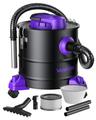
The budget pick is the SIPPON 2.6-gallon. It is the cheapest unit here that is still built as an ash vacuum rather than a shop vac with a filter dropped in it, and it is light enough to carry one-handed up a step. You will empty it mid-clean.

One rule governs all of them and no machine changes it: the ash has to be cold.Not warm, not “it was two days ago” — cold. An ash vacuum is a dust-handling tool, not a fire-handling tool, and a live ember pulled into a drum of fine ash is how these start fires. The section below is the part of this page worth reading even if you buy nothing.

We own none of these and have measured no suction. Every figure here is one the listing itself publishes, read on a dated visit; where a listing is silent — and on filter ratings, most of them are — the spec table says “Not published”. Prices are live and dated on each card.

How this is funded:we earn a commission if you buy through our links, at no extra cost to you. It never changes which pit or heater we recommend, and we’ll tell you when we’d skip one. Full disclosure.

Quick picks

Ranked on published specs, beginner-friendliness and value. Select a row to jump to the full write-up. We haven’t cooked on every one of these — here is exactly what we do instead.

#ProductBest forPrice
1
PowerSmith PAVC101 10 Amp Ash Vacuum (3 gal)

PowerSmith PAVC101 10 Amp Ash Vacuum (3 gal)

The ash vacuum the category is measured against, and the one to buy if you clean a wood stove or a fireplace every week through the winter. The reason is the specification that matters and that most cheap ash vacs skip: a metal canister and metal hose fittings, so warm ash cannot soften or melt the body. The listing publishes a 3-gallon drum, a 10 amp motor, 120 V and a 16-foot reach figure, and PowerSmith sells the washable filter and the crevice kit separately, which is how you keep one alive for years. It is not the biggest drum here and it is not the cheapest, and a 3-gallon canister is a small drum if you are emptying a pellet stove.

Best ash vacuum overall
$83.20 · View on Amazon

Price as of November 23, 2026. #ad How we’re funded

2
Vacmaster EAV508S 5-Gallon 3.5 Peak HP Stainless Steel Ash Vacuum

Vacmaster EAV508S 5-Gallon 3.5 Peak HP Stainless Steel Ash Vacuum

The value pick, and on paper the most machine per dollar on this page: a stainless steel 5-gallon drum with a 3.5 peak HP rating for less than the 3-gallon PowerSmith. Stainless is the right material for ash for the same reason the metal canister is — nothing in the body can soften — and five gallons is the difference between one trip to the ash can and three. Peak horsepower is a marketing figure rather than a measure of suction at the nozzle, so we are not ranking on it, and the listing publishes very little else: no hose length, no filter type, no cord length. That thin listing is the reason it sits second rather than first.

Best value
$69.99 · View on Amazon

Price as of November 23, 2026. #ad How we’re funded

3
VANPORE 5.2 Gallon 1200 W Ash Vacuum with Wheels

VANPORE 5.2 Gallon 1200 W Ash Vacuum with Wheels

Buy this one if you run a pellet stove. Pellet ash is fine, it is produced in volume, and the hopper and burn pot want cleaning far more often than a cordwood stove does — which makes the 5.2-gallon drum and the wheeled base the two features that actually save time here. The listing publishes 1200 W, 5.2 gallons, metal construction and a wheeled base, and names pellet stoves, fireplaces, wood stoves and fire pits. It is the most expensive unit on this page, the wattage figure is input power rather than suction, and a wheeled 5-gallon canister is a bulky thing to store in a small utility room.

Best for pellet stoves
$70.35 · View on Amazon

$102.9932% off

Price as of November 23, 2026. #ad How we’re funded

4
SIPPON 800 W 2.6 Gallon Ash Vacuum

SIPPON 800 W 2.6 Gallon Ash Vacuum

The budget pick: the cheapest unit here that is still built as an ash vacuum rather than a shop vac with a filter in it. At 2.6 gallons it is a one-fireplace machine — you will empty it during a big clean — but it is light enough to carry in one hand up a step, which a wheeled 5-gallon canister is not, and the listing states a leak-proof design and a dual filtration system, which is the pair of features that stops fine ash blowing back out of the exhaust. Nothing about cordwood or pellet ash is gentle on a cheap machine, and the listing publishes no hose length and no filter rating, so treat it as the entry point rather than the last ash vacuum you buy.

Budget pick
$52.48 · View on Amazon

$64.9919% off

Price as of November 23, 2026. #ad How we’re funded

5
PowerSmith PAAC301 Washable Heat-Resistant Ash Filter, 5 x 5 x 2"

PowerSmith PAAC301 Washable Heat-Resistant Ash Filter, 5 x 5 x 2"

Order this with the vacuum, not after it fails. The filter is the part an ash vacuum lives and dies by: fine ash packs into the media, suction drops off, and the usual conclusion is that the machine is broken when it needs a rinse or a replacement. The listing publishes a double-layer washable heat-resistant element at 5 x 5 x 2 inches for the PowerSmith ash vacuums. Washable means you can extend its life with water and a full dry, but ash is abrasive and the pleats do not come back forever, so a spare on the shelf is the difference between cleaning the stove this weekend and waiting on a delivery.

Buy the spare filter with it
$12.99 · View on Amazon

$14.5911% off

Price as of November 23, 2026. #ad How we’re funded

The picks in full

#1Best ash vacuum overall

PowerSmith PAVC101 10 Amp Ash Vacuum (3 gal)

The ash vacuum the category is measured against, and the one to buy if you clean a wood stove or a fireplace every week through the winter. The reason is the specification that matters and that most cheap ash vacs skip: a metal canister and metal hose fittings, so warm ash cannot soften or melt the body. The listing publishes a 3-gallon drum, a 10 amp motor, 120 V and a 16-foot reach figure, and PowerSmith sells the washable filter and the crevice kit separately, which is how you keep one alive for years. It is not the biggest drum here and it is not the cheapest, and a 3-gallon canister is a small drum if you are emptying a pellet stove.

What’s good

  • Metal canister and fittings, per the listing — the spec that matters
  • Replacement filters and tool kits are sold separately and stay available
  • 10 amp motor on a 120 V household outlet
  • The best-supported unit here if something wears out

Trade-offs

  • 3-gallon drum is the smallest of the full-size units here
  • Costs more than the 5-gallon stainless unit below
  • No HEPA claim on the listing
  • Ash still has to be cold — no ash vacuum changes that
TypeAsh vacuum (canister)
Drum3 gal (per the listing)
Motor10 amp, 120 V (per the listing)
BodyMetal (per the listing)
Reach16 ft stated on the listing (cord or hose not specified)
FiltrationNot published as HEPA

Specs read from the product listing, on November 8, 2026. “Not published” means the maker doesn’t state that figure there.

#2Best value

Vacmaster EAV508S 5-Gallon 3.5 Peak HP Stainless Steel Ash Vacuum

The value pick, and on paper the most machine per dollar on this page: a stainless steel 5-gallon drum with a 3.5 peak HP rating for less than the 3-gallon PowerSmith. Stainless is the right material for ash for the same reason the metal canister is — nothing in the body can soften — and five gallons is the difference between one trip to the ash can and three. Peak horsepower is a marketing figure rather than a measure of suction at the nozzle, so we are not ranking on it, and the listing publishes very little else: no hose length, no filter type, no cord length. That thin listing is the reason it sits second rather than first.

What’s good

  • Stainless steel drum, per the listing
  • 5 gallons — the biggest drum here bar one
  • Cheaper than the 3-gallon metal unit above
  • Peak HP rating published, unlike most of the field

Trade-offs

  • Listing publishes no hose length, cord length or filter type
  • Peak HP is not suction at the nozzle
  • No HEPA claim
  • Newer listing with less of a support history than PowerSmith
TypeAsh vacuum (canister)
Drum5 gal (per the listing)
Motor3.5 peak HP (per the listing)
BodyStainless steel (per the listing)
Hose lengthNot published
FiltrationNot published

Specs read from the product listing, on November 8, 2026. “Not published” means the maker doesn’t state that figure there.

#3Best for pellet stoves

VANPORE 5.2 Gallon 1200 W Ash Vacuum with Wheels

Buy this one if you run a pellet stove. Pellet ash is fine, it is produced in volume, and the hopper and burn pot want cleaning far more often than a cordwood stove does — which makes the 5.2-gallon drum and the wheeled base the two features that actually save time here. The listing publishes 1200 W, 5.2 gallons, metal construction and a wheeled base, and names pellet stoves, fireplaces, wood stoves and fire pits. It is the most expensive unit on this page, the wattage figure is input power rather than suction, and a wheeled 5-gallon canister is a bulky thing to store in a small utility room.

What’s good

  • 5.2-gallon drum, the largest here
  • Wheeled base, so it rolls between stove and bin
  • 1200 W motor and metal body, per the listing
  • Listing names pellet stoves specifically

Trade-offs

  • Most expensive unit on this page
  • 1200 W is input power, not suction at the nozzle
  • Bulky to store
  • Filter type is not published
TypeAsh vacuum (wheeled canister)
Drum5.2 gal (per the listing)
Motor1200 W (per the listing)
BodyMetal (per the listing)
MobilityWheeled base (per the listing)
FiltrationDual filtration stated; type not published

Specs read from the product listing, on November 8, 2026. “Not published” means the maker doesn’t state that figure there.

#4Budget pick

SIPPON 800 W 2.6 Gallon Ash Vacuum

The budget pick: the cheapest unit here that is still built as an ash vacuum rather than a shop vac with a filter in it. At 2.6 gallons it is a one-fireplace machine — you will empty it during a big clean — but it is light enough to carry in one hand up a step, which a wheeled 5-gallon canister is not, and the listing states a leak-proof design and a dual filtration system, which is the pair of features that stops fine ash blowing back out of the exhaust. Nothing about cordwood or pellet ash is gentle on a cheap machine, and the listing publishes no hose length and no filter rating, so treat it as the entry point rather than the last ash vacuum you buy.

What’s good

  • Cheapest real ash vacuum here
  • Light enough to carry one-handed
  • Leak-proof design and dual filtration stated on the listing
  • Compact enough for a small utility cupboard

Trade-offs

  • 2.6 gallons fills fast on a big clean
  • 800 W is the lowest input power here
  • No hose length or filter rating published
  • Short listing history compared with the PowerSmith
TypeAsh vacuum (canister)
Drum2.6 gal (per the listing)
Motor800 W (per the listing)
BodyMetal (per the listing)
FiltrationDual filtration stated; rating not published
Hose lengthNot published

Specs read from the product listing, on November 8, 2026. “Not published” means the maker doesn’t state that figure there.

#5Buy the spare filter with it

PowerSmith PAAC301 Washable Heat-Resistant Ash Filter, 5 x 5 x 2"

Order this with the vacuum, not after it fails. The filter is the part an ash vacuum lives and dies by: fine ash packs into the media, suction drops off, and the usual conclusion is that the machine is broken when it needs a rinse or a replacement. The listing publishes a double-layer washable heat-resistant element at 5 x 5 x 2 inches for the PowerSmith ash vacuums. Washable means you can extend its life with water and a full dry, but ash is abrasive and the pleats do not come back forever, so a spare on the shelf is the difference between cleaning the stove this weekend and waiting on a delivery.

What’s good

  • Washable and reusable, per the listing
  • Heat-resistant double-layer element
  • Cheapest item on this page by a wide margin
  • Keeps suction where it should be instead of fading

Trade-offs

  • Fits the PowerSmith ash vacuums, not every machine here
  • Must be bone dry before it goes back in
  • Ash is abrasive — washing extends life, it does not stop wear
  • No filtration rating (HEPA or otherwise) published
TypeReplacement ash vacuum filter
Size5 x 5 x 2" (per the listing)
ConstructionDouble layer, washable (per the listing)
Heat resistantYes, per the listing
FitsPowerSmith ash and dust vacuums
Filtration ratingNot published

Specs read from the product listing, on November 8, 2026. “Not published” means the maker doesn’t state that figure there.

Why a shop vac is the wrong tool

This is the question behind every ash vacuum purchase, and it deserves a straight answer: you already own a vacuum, so why buy another one?

Because of what the body is made of.A shop vac is a plastic drum with a plastic hose. Ash that feels cool on the surface of a firebox can still be well above the softening point of that plastic underneath, and the failure is not dramatic — the hose deforms, the inlet warps, the seal stops sealing. Every machine on this page states a metal or stainless canister for exactly this reason.

Because ash is finer than household dust.Wood ash and especially pellet ash will pass straight through a standard shop vac filter and out of the exhaust, which means a gray film on everything in the room and ash in the motor. Ash vacuums use heat-resistant media and, in the better ones, two stages — the listings for the VANPORE and the SIPPON both state dual filtration, though neither publishes a rating.

Because the drum is sized for the job.Three to five gallons is a season’s sensible unit for a stove. A 16-gallon shop vac full of ash is a thing you cannot lift.

None of that makes a shop vac dangerous to own. It makes it the wrong tool for this one job, in the same way that a spark screen is not a substitute for a cover.

How we ranked these

  1. Stated body material first.Metal canister, metal fittings. This is the one spec that separates an ash vacuum from a vacuum with “ash” in the title, and all five entries here publish it.
  2. Drum volume second. It decides how many trips to the bin a clean takes, and it is the figure every listing does publish: 2.6, 3, 5 and 5.2 gallons across this page.
  3. Parts availability third. The filter is a consumable. A machine whose maker sells a replacement element and a tool kit outlives one that does not, and that is the main argument for the PowerSmith over the cheaper 5-gallon unit.
  4. Motor figures last, and discounted.Peak horsepower and input wattage are not suction at the nozzle. We have printed what each listing states — 10 amp, 3.5 peak HP, 1200 W, 800 W — and declined to rank on them, because the four numbers are not even measured in the same units.

We have run no suction test and no filtration test, and nobody independent publishes one for this category. How we pick sets out what that does and does not let us claim.

Cold ash: the rule that makes this safe

Ash insulates. A bed of it can hold live embers for a surprisingly long time after the visible fire is out, which is why the standard outdoor method for killing a fire is not “wait” but drown, stir, drown and then physically check for heat. Smokey Bear’s campfire guidance is explicit about the last step: hover the back of your hand over the ashes to feel that the embers are cool. The same test is the right one at a firebox door.

The practical version for a stove or a fireplace:

  • Give it a full day, minimum, after the last burn. Two is better for a deep bed in a cast iron stove, which holds heat for hours after the flame is gone.
  • Check before you touch the switch, with the back of a hand held over the bed rather than a finger in it.
  • Empty the drum outside, into metal with a lid, and not into a plastic bin or a garbage bag. A drum of fine ash that contains one surviving ember is a slow fire with a lot of fuel around it.
  • Never use it on a fire pit you lit tonight. If the pit is outdoors and still warm, our guide to putting out a fire pit is the right sequence, and a vacuum is not part of it.

Wood ash itself is worth handling properly for a second reason: it is a fine alkaline dust, and breathing it or getting it in your eyes is unpleasant. Gloves and a dust mask cost almost nothing — wood stove accessories covers the gloves we list.

The filter is the part that fails

Nearly every “my ash vacuum stopped working” story is a filter story. Ash is so fine that it packs into the media rather than sitting on the surface of it, the airflow drops, and the machine that worked beautifully in October feels broken in February. It is not broken; it is blocked.

Two things follow. First, buy a spare element with the machine — it is the cheapest item on this page and it is the difference between cleaning the stove this weekend and waiting for a delivery. Second, wash the filter on schedule rather than on failure, and put it back bone dry. A damp filter and fine ash make a paste, and that is worse than a blocked filter.

A dumping tip that extends filter life more than any product will: tap the filter out and empty the drum when it is a third full, not when it is overflowing. Fine ash compacts under its own weight, and a nearly full drum pushes a lot of it straight into the element.

Which stove you have changes the answer

Cordwood stove. You are dealing with coarse ash and the occasional nail, in volume, about once a week. A 3 to 5-gallon metal drum is right, and the PowerSmith is the pick. If the stove itself is still on your list, best wood burning stoves is the roundup.

Pellet stove.Fine ash, more often, plus a burn pot and a heat exchanger that need a nozzle small enough to get into them. Capacity and filtration matter more here than anywhere else, which is the VANPORE’s case — and a crevice tool is not optional. The stoves themselves are in best small pellet stoves.

Open fireplace. Less ash, but far more of it ends up on the hearth and the surround than in a stove. A lighter machine you will actually carry beats a bigger one you leave in the garage, which is the honest case for the SIPPON.

Outdoor fire pit. A vacuum is a convenience, not a necessity: most wood pits are designed to be tipped out or to drop ash into a removable pan. It earns its place if the pit lives on a patio where tipping a bowl of ash is not an option. Our backyard fire pit roundup flags which designs make ash removal easy, and fire pit safety covers disposal.

One thing an ash vacuum is notfor: a gas fire pit. There is no ash in one. If your fire pit runs propane and the pan looks dirty, that is soot on the media, and it washes — see best fire glass for how to clean and replace a bed of glass or lava rock.

Sweeping the flue is the other half of the same job, and it makes more mess than the firebox does. Best chimney brush kits covers the rotary and manual rod sets, how to size a brush to a liner, and the point at which a brush stops being the right tool.

Frequently asked questions

What is the best ash vacuum?

The PowerSmith PAVC101, among the units we list. Its listing publishes a metal canister with metal fittings, a 3-gallon drum, a 10 amp motor and 120 V operation — and PowerSmith still sells the washable filter and the crevice-tool kit as separate parts, which is why these stay in service for years. If value matters more than parts support, the Vacmaster EAV508S gives you a stainless 5-gallon drum for less money, with a much thinner listing.

Can I use a regular shop vac for ash?

Not for this job. A shop vac has a plastic drum and a plastic hose, and ash that feels cool on the surface can still be hot enough underneath to soften them — the hose deforms, the inlet warps, the seal stops sealing. Ash is also finer than household dust and will pass through a standard shop vac filter and out of the exhaust, coating the room and reaching the motor. Every unit here states a metal or stainless canister for that reason.

How long should I wait before vacuuming ash?

Give it a full day after the last burn as a minimum, and two for a deep bed in a cast iron stove, then check by hovering the back of your hand over the ash rather than touching it — the same cool-to-the-touch test Smokey Bear's campfire guidance ends with. Ash insulates, so it can hold live embers long after the fire looks dead, and one surviving ember in a drum of fine ash is the whole risk with these machines.

What size ash vacuum do I need?

Three gallons is enough for a weekly fireplace or cordwood stove clean, five or more if you run a pellet stove, where the ash is finer and there is more of it. Bigger is not automatically better: a full drum of ash is heavy, and fine ash compacts under its own weight and packs the filter, so the practical habit is to empty at about a third full regardless of the drum you bought.

Do ash vacuums have HEPA filters?

None of the listings here publishes a HEPA rating, so we have not claimed one. What they do publish is heat-resistant filter media, and in the case of the VANPORE and the SIPPON a dual filtration system without a stated rating. That is the honest state of the category — the filtration claim you can verify is the material and the stage count, not a rating.

Where do I empty an ash vacuum?

Outside, into a metal container with a lid, never into a plastic bin or a garbage bag. Even cold-feeling ash can contain an ember, and a sealed metal can is the standard precaution. Keep the container off a wooden deck and away from the side of the house until the ash is unquestionably cold.

How often should the filter be cleaned or replaced?

Clean it on a schedule rather than when suction dies — ash packs into the media rather than sitting on it, so performance fades gradually and people assume the motor has gone. Washable elements like the PowerSmith PAAC301 can be rinsed and reused, but they must be completely dry before they go back in, and ash is abrasive enough that the pleats do not recover forever. A spare element on the shelf is the cheapest insurance on this page.

Sources

  • Smokey Bear — Campfire Safety — The official “Drown, Stir, Drown, Feel” method for extinguishing an outdoor fire — “Pour lots of water on the fire until the hissing sound stops, drowning all the embers,” stir the water into the embers with a shovel, keep adding water until all material is cool, then “Hover the back of your hand over the ashes to feel that the embers are cool.” The same page gives the siting rules: clear “at least a 10-foot diameter around the site,” “stay at least 15 feet from tents, vegetation, and low-hanging branches,” and “ensure you have vertical clearance at least 3 times the height of the flames” (accessed October 7, 2026)
  • FTC Consumer Advice — Online Shopping — FTC guidance for buying online: “before you buy something online, shop around and check out sellers and products,” note the exact manufacturer or model number when comparison shopping, and pay by credit card so a bad order can be disputed (accessed October 7, 2026)

Keep reading