How to choose a propane patio heater
Open air only, and that decides more than price. If there is a roof, a canopy, a solid pergola cover or a garage door above the seating, a freestanding propane heater is the wrong product unless the manufacturer specifically rates that model for covered use. This is not a cautious footnote; it is the governing constraint in the category. Electric infrared produces no combustion products at all and is the right answer under any roof.
BTU is flame size, not warmth at your chair. Everything here sits between 46,000 and 50,000 BTU, and in practice the difference between those figures is swamped by wind and by how close people sit. If your patio is exposed, a windbreak or repositioning the heater will do more than another four thousand BTU will. Where a listing does not publish a rating, our spec table says so. If you are not sure this is even the right output tier, what size patio heater do you need works through the 9,000, 11,000, 46,000 and 80,000 BTU bands by who is sitting where — and explains why outdoor square-footage formulas have no physical basis.
Stainless if it lives outdoors, painted if it doesn’t. A painted-steel heater will mark around the burner housing and start rusting at the base within a few damp seasons. Stainless costs more and still discolors around the heat shield, but it survives. Either way the reflector is the part that dents in transit, so check it on arrival.
Look for the safety cutoffs stated on the listing. A tilt-over shutoff and a flame-failure cutoff should be standard on any gas heater sold today, and the better listings say so explicitly rather than leaving you to hope. Fill the base with water or sand as the manual directs: an empty base on a tall, top-heavy heater is how these things go over.
And ask whether a heater is what you want at all. A patio heater warms people— a reflector pushes heat down over a seating circle and nobody has to face it. A fire pit makes a focal point that people turn toward. They are different products for different evenings, and we work the choice through in patio heater vs fire pit. If the answer is a heater but the space is covered, propane vs electric has the running-cost arithmetic.
Buying several rather than one
A terrace is a different problem from a patio, and output is the easy part of it. Best commercial patio heaters is written for restaurants and venues: how many heaters it takes to cover a seating plan, cylinder storage and who swaps them, why stainless matters when staff handle a unit nightly, and where real commercial equipment is sold.
Buy the cover with the heater
Every unit above is a thin-walled column with a burner, an igniter and a gas valve at the top of it, standing outdoors. Water reaching that burner corrodes the electrode and fouls the ports, which is why a heater that worked in March will not light in October. Best patio heater covers covers the three measurements to take first, and why a round mushroom cover and a pyramid sleeve are not interchangeable.
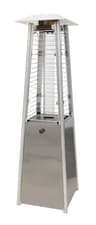
Two narrower cuts of this field, if one of them is your actual question. Best pyramid patio heaters takes the glass flame towers on their own, full-height and tabletop, and is honest about how much of that price is the visible flame. Best patio heaters under $100 is the band below everything here, where the free-standing shapes run out and the tank-top burner takes over.
Most of this field sits inside a single price band, and if that is how you are shopping then best patio heaters under $200 is the page: it is where the free-standing tower first becomes buyable, and it sets out why the second hundred dollars buys the pole, the base and the reflector rather than more heat.