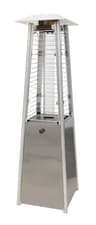
How to choose an electric patio heater
Portable or mounted.A portable infrared unit on a stand plugs into a normal outlet, moves with you and costs the least. A wall or ceiling mounted bar takes no floor space, cannot be knocked over, and heats one fixed area forever — which is exactly right under a pergola or a covered patio where the seating never moves. The mounted option needs a proper electrical install, and the 3,000 watt model here states 208 to 240 volts on its listing, so check your supply before ordering.
Understand what infrared does.It heats objects and people directly rather than warming air, which is why it works outdoors at all — heated air blows away, radiant heat does not. The practical consequence is that it is strongly directional. Three people facing the heater are comfortable; the person round the corner feels nothing. Plan the aim before you plan the wattage.
Check the weather rating if it lives outside. The mounted picks here state an IP55 weatherproof rating, which is the kind of specification that matters for something bolted under an eave. A portable unit brought in after use needs less, but it still should not be rained on.
Two fuel-burning alternatives for unheated spaces.The Mr. Heater Buddy family is included here because they are the standard answer in garages, workshops, hunting blinds and ice shelters where there is no outlet to use. They are radiant propane heaters with a tip-over switch and an oxygen depletion sensor, and they are excellent at that job. They are also combustion heaters in enclosed spaces, which means a carbon monoxide alarm goes with them — every time, not just when you remember.
Budget the running cost honestly.Electric infrared costs more per hour than propane in most places. What you buy for that is no tank, no refueling trips, no combustion products and the ability to use the thing under a roof. For a covered porch used a few evenings a week, that is a fair trade. For an open patio hosting twenty people, it is not — go back to the patio heater hub and look at the gas options.
Two narrower pages if you know where the heater is going. For a covered porch, best electric porch heaters ranks the mounted infrared bars on weather rating rather than wattage. For a garage or workshop, best electric garage heaters is a different category again — 240 volts, hardwired, heating air in an enclosed space instead of warming people in an open one.
At venue scale
Mounted electric is usually the better operational choice for a business, because it removes cylinder storage, cylinder swaps and anything standing in a service lane. Best commercial patio heaters covers that comparison properly — including the point that 3,000 watts per unit across a terrace is a real electrical load and wants an electrician’s input rather than a string of extension leads.
Two follow-ups to this page. One brand accounts for four of the electric units we list, and the models suit completely different spaces — best Dr. Infrared heaters sorts them by supply voltage and mounting rather than by output. And if the budget is under a hundred dollars, best patio heaters under $100 is where the 1,500 W panels and the propane burners meet.
There is a third mounting position besides floor and wall, and on a covered patio it is often the best one: best outdoor heat lamps ranks the hanging ceiling-mounted infrared units, which aim down at the people at the table from a distance that does not change when somebody moves a chair.