Coal & Char

Best Kerosene Heaters

One category of heater needs no cord, no cylinder plumbing and no chimney. The price of that is simple: every one of these is unvented, so ventilation stops being optional.

By Stephen V.Last updated How we pick

Buy the Dyna-Glo RMC-95C6B. It is the best kerosene heater for most people — its listing publishes 23,000 BTU, the highest figure on this page, in a convection cabinet that radiates 360 degrees to heat a room rather than a direction. It is for an outage, an uninsulated workshop or a cabin with no electricity, and the reason it wins is not the output: it is that Dyna-Glo is the established name here, so the wick you will eventually need is a part you can still buy.

Buy the VORTEXTOVE instead if you want the most published spec per dollar.Its listing states 20,000 BTU, coverage up to 344 square feet, 360-degree heating, an adjustable flame and no electricity — and it is designed to take a pan on top, which is the feature that makes a kerosene unit genuinely useful in an outage rather than just warm. The square-footage figure is the maker’s claim and depends entirely on how well the room is insulated.

The budget pick is the Sengoku HeatMate, at a published 10,000 BTU and cordless. It is the cheapest unit here that makes real heat, and the lowest output: a one-room heater rather than a whole-floor one.

Five heaters below. Before any of them, the part that is not negotiable: a kerosene heater is unvented by design. The combustion products go into the room with you, which is exactly why it needs no chimney and exactly why it needs an open window and a carbon monoxide alarm. The CPSC records more than 200 accidental non-fire carbon monoxide deaths a year in the US associated with consumer products and recommends CO alarms on every level of a home and outside sleeping areas. We own none of these and have burned none of them. Every figure below is one the maker publishes on its own listing, read on a dated visit; where a listing is silent the spec table says “Not published”. Prices on the cards are pulled live and stamped with the date they were read.

How this is funded:we earn a commission if you buy through our links, at no extra cost to you. It never changes which pit or heater we recommend, and we’ll tell you when we’d skip one. Full disclosure.

Quick picks

Ranked on published specs, beginner-friendliness and value. Select a row to jump to the full write-up. We haven’t cooked on every one of these — here is exactly what we do instead.

#ProductBest forPrice
1
Dyna-Glo RMC-95C6B Indoor Kerosene Convection Heater (23,000 BTU)

Dyna-Glo RMC-95C6B Indoor Kerosene Convection Heater (23,000 BTU)

The one to buy if you want a kerosene heater from a company that will still exist when you need a wick. Dyna-Glo is the established name in this category and the RMC-95C6B publishes 23,000 BTU in a convection cabinet - a 360-degree burner designed to heat a room rather than a direction, which is what you want for a power outage or an uninsulated workshop. It is the most expensive unit here and the listing publishes neither tank capacity nor run time, which is the gap across the whole category. Kerosene heaters are unvented by design: ventilation and a carbon monoxide alarm are requirements, not accessories.

Best kerosene heater
$272.00 · View on Amazon

$284.985% off

Price as of November 23, 2026. #ad How we’re funded

2
VORTEXTOVE 20,000 BTU Non-Electric Kerosene Heater and Stove (344 sq ft)

VORTEXTOVE 20,000 BTU Non-Electric Kerosene Heater and Stove (344 sq ft)

The most specified unit in the category for the money: 20,000 BTU, a stated 344 square feet of coverage, 360-degree heating, an adjustable flame and no electricity, all on the listing. It is also a stove as well as a heater - the top is designed to take a pan, which is the feature that makes a kerosene unit worth owning for an outage rather than just for a cold garage. The square-footage figure is the maker's claim and depends entirely on insulation, which is said rather than repeated as fact. Unvented, like everything here: ventilate it and fit a CO alarm.

Most published spec per dollar
$219.99 · View on Amazon

Price as of November 23, 2026. #ad How we’re funded

3
Bluefire 2-in-1 Portable Kerosene Radiant Heater (11,000 BTU, 16 hr)

Bluefire 2-in-1 Portable Kerosene Radiant Heater (11,000 BTU, 16 hr)

The only kerosene heater here that publishes a run time, and that makes it the pick for an emergency kit rather than a workshop. Sixteen hours on one tankful at 11,000 BTU is a figure you can actually plan around - it is the difference between knowing you can get through a night and guessing. The output is roughly half the 20,000 BTU units, which is the trade: this warms a room you are sitting in rather than a garage bay. Radiant rather than convection means it warms what it faces, so position matters more than with the cabinet heaters.

Best for an emergency kit
$225.99 · View on Amazon

Price as of November 23, 2026. #ad How we’re funded

4
Kero World Kerosene Convection Wick Heater with Sure Seat Chimney System

Kero World Kerosene Convection Wick Heater with Sure Seat Chimney System

The only heater here whose listing names its wick-and-chimney design, which is the part of a kerosene heater that decides whether it burns cleanly or smells. The Sure Seat chimney system is the maker's term for seating the chimney squarely on the wick - a misseated chimney is the usual cause of a smoking kerosene heater, and a design that addresses it is worth naming. The listing describes both radiant and convective heat and a lightweight, compact build, but publishes NO BTU figure, which on a page where three units publish 20,000 or more is the reason it does not rank higher.

Best wick design
$252.59 · View on Amazon

Price as of November 23, 2026. #ad How we’re funded

5
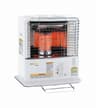
Sengoku HeatMate Portable Kerosene Heater (10,000 BTU, Cordless)

Sengoku HeatMate Portable Kerosene Heater (10,000 BTU, Cordless)

The small, cordless kerosene heater — 10,000 BTU per the listing, and no mains power required, which is the pairing that makes it an emergency-heat choice rather than a shop-heating one. It is the direct comparison against a 9,000 BTU propane Buddy heater: similar output, a fuel that stores for years in a can rather than a cylinder, and a wick instead of a regulator. Same rules as every combustion heater: ventilate the space and fit a carbon monoxide alarm.

Budget pick
$189.99 · View on Amazon

$199.895% off

Price as of November 23, 2026. #ad How we’re funded

The picks in full

#1Best kerosene heater

Dyna-Glo RMC-95C6B Indoor Kerosene Convection Heater (23,000 BTU)

The one to buy if you want a kerosene heater from a company that will still exist when you need a wick. Dyna-Glo is the established name in this category and the RMC-95C6B publishes 23,000 BTU in a convection cabinet - a 360-degree burner designed to heat a room rather than a direction, which is what you want for a power outage or an uninsulated workshop. It is the most expensive unit here and the listing publishes neither tank capacity nor run time, which is the gap across the whole category. Kerosene heaters are unvented by design: ventilation and a carbon monoxide alarm are requirements, not accessories.

What’s good

  • 23,000 BTU published, the highest figure on this page
  • Convection cabinet heats a room rather than a direction
  • Established brand, so wicks and parts stay available
  • No electricity needed - works in an outage

Trade-offs

  • Most expensive kerosene heater here
  • Tank capacity and run time NOT published
  • Unvented by design - needs ventilation and a CO alarm
  • Kerosene smells on lighting and on shutdown, every time
TypeIndoor kerosene convection heater
ModelRMC-95C6B (per the listing)
Output23,000 BTU (per the listing)
Heat patternConvection, 360 degree cabinet
ElectricityNone required
Tank capacityNot published
Run timeNot published

Specs read from the product listing, on November 22, 2026. “Not published” means the maker doesn’t state that figure there.

#2Most published spec per dollar

VORTEXTOVE 20,000 BTU Non-Electric Kerosene Heater and Stove (344 sq ft)

The most specified unit in the category for the money: 20,000 BTU, a stated 344 square feet of coverage, 360-degree heating, an adjustable flame and no electricity, all on the listing. It is also a stove as well as a heater - the top is designed to take a pan, which is the feature that makes a kerosene unit worth owning for an outage rather than just for a cold garage. The square-footage figure is the maker's claim and depends entirely on insulation, which is said rather than repeated as fact. Unvented, like everything here: ventilate it and fit a CO alarm.

What’s good

  • 20,000 BTU and a stated 344 sq ft - the most complete spec here
  • 360-degree heating and an adjustable flame, per the listing
  • Doubles as a stove top, which matters in an outage
  • No electricity required

Trade-offs

  • Square-footage claim depends entirely on insulation
  • Unknown brand, so parts availability is a real question
  • Unvented - needs ventilation and a CO alarm
  • Tank capacity and run time not published
TypeNon-electric kerosene heater and stove
Output20,000 BTU (per the listing)
Stated coverageUp to 344 sq ft (maker's claim)
Heat pattern360 degree (per the listing)
FlameAdjustable (per the listing)
ElectricityNone required
Tank capacityNot published

Specs read from the product listing, on November 22, 2026. “Not published” means the maker doesn’t state that figure there.

#3Best for an emergency kit

Bluefire 2-in-1 Portable Kerosene Radiant Heater (11,000 BTU, 16 hr)

The only kerosene heater here that publishes a run time, and that makes it the pick for an emergency kit rather than a workshop. Sixteen hours on one tankful at 11,000 BTU is a figure you can actually plan around - it is the difference between knowing you can get through a night and guessing. The output is roughly half the 20,000 BTU units, which is the trade: this warms a room you are sitting in rather than a garage bay. Radiant rather than convection means it warms what it faces, so position matters more than with the cabinet heaters.

What’s good

  • 16 hours on one tankful published - the only run time figure here
  • 11,000 BTU published
  • Radiant design warms people directly rather than heating air first
  • Lower output means lower fuel use per hour

Trade-offs

  • Roughly half the output of the 20,000 BTU units here
  • Radiant heat warms what it faces - position matters
  • Tank capacity in gallons not published
  • Unvented - needs ventilation and a CO alarm
TypePortable kerosene radiant heater
Output11,000 BTU (per the listing)
Run timeUp to 16 hours on one tankful (per the listing)
Heat patternRadiant (per the listing)
FinishWhite (per the listing)
ElectricityNone required
Tank capacityNot published

Specs read from the product listing, on November 22, 2026. “Not published” means the maker doesn’t state that figure there.

#4Best wick design

Kero World Kerosene Convection Wick Heater with Sure Seat Chimney System

The only heater here whose listing names its wick-and-chimney design, which is the part of a kerosene heater that decides whether it burns cleanly or smells. The Sure Seat chimney system is the maker's term for seating the chimney squarely on the wick - a misseated chimney is the usual cause of a smoking kerosene heater, and a design that addresses it is worth naming. The listing describes both radiant and convective heat and a lightweight, compact build, but publishes NO BTU figure, which on a page where three units publish 20,000 or more is the reason it does not rank higher.

What’s good

  • Sure Seat chimney system published - addresses the usual smoking cause
  • Both radiant and convective heat, per the listing
  • Lightweight and compact, per the listing
  • Wick heaters are the simplest, most repairable design in the category

Trade-offs

  • NO BTU figure published - three units here publish 20,000 or more
  • Tank capacity and run time not published
  • Unvented - needs ventilation and a CO alarm
  • White cabinet shows soot marks that a black one hides
TypeKerosene convection wick heater
Heat patternRadiant and convective (per the listing)
ChimneySure Seat system (per the listing)
FinishWhite (per the listing)
ElectricityNone required
OutputNot published
Tank capacityNot published

Specs read from the product listing, on November 22, 2026. “Not published” means the maker doesn’t state that figure there.

#5Budget pick

Sengoku HeatMate Portable Kerosene Heater (10,000 BTU, Cordless)

The small, cordless kerosene heater — 10,000 BTU per the listing, and no mains power required, which is the pairing that makes it an emergency-heat choice rather than a shop-heating one. It is the direct comparison against a 9,000 BTU propane Buddy heater: similar output, a fuel that stores for years in a can rather than a cylinder, and a wick instead of a regulator. Same rules as every combustion heater: ventilate the space and fit a carbon monoxide alarm.

What’s good

  • 10,000 BTU with no mains power needed, per the listing
  • Kerosene stores for a long time in a plain can
  • Directly comparable output to a 9,000 BTU propane heater
  • Small enough to store out of the way

Trade-offs

  • 10,000 BTU will not heat a garage or shop
  • Kerosene odor on lighting and extinguishing
  • Wick is a consumable
  • Needs ventilation and a CO alarm
TypePortable radiant kerosene heater
Output10,000 BTU (per the listing)
PowerCordless — no mains needed (per the listing)
FuelKerosene (filled tank)
Heating areaNot published

Specs read from the product listing, on October 13, 2026. “Not published” means the maker doesn’t state that figure there.

Why anybody buys kerosene in 2026

Three reasons, and they are all about what the heater does not need.

No electricity. Not for the burner, not for a blower, not for a controller. A kerosene heater works in an outage, which is the one condition that disqualifies a pellet stove, an electric panel and most modern gas appliances. If your reason for wanting a backup heat source is that the power goes out, this is the category that answers it.

No chimney. A wood or coal stove needs Class A insulated pipe to the roof line, and on a house without one that install frequently costs more than the appliance. A kerosene heater needs a flat floor. That is the whole installation.

No cylinder plumbing.Kerosene is a liquid you pour from a can and store indefinitely at room temperature — it does not need a pressure vessel, a regulator, a hose, or a trip to a swap cage. For an emergency kit sitting in a garage for three years, that storage behavior is a genuine advantage over propane.

What you pay for all of that is smell and attention. A wick heater smells on lighting and on shutdown, every time, without exception — and anyone telling you a particular model does not is selling something. It also needs filling, trimming and watching, which is a different relationship from flipping a thermostat.

Convection or radiant: pick before you compare prices

A convection cabinetis a cylinder with a burner in the middle and a grille all the way round. It pushes heat out in 360 degrees and heats the air in a room, which makes it the right shape when you want to raise the temperature of a space you will move around in — a kitchen in an outage, a workshop, a cabin. Three of the picks here are this shape, including the top pick, and they are also the higher-output units.

A portable radiant has a reflector behind the burner and throws heat in one direction. It warms the people it faces rather than the room, which is more efficient if you are sitting still in one place and much less useful if you are not. Radiants tend to be smaller, cheaper and lower-output, and they are the right answer for an emergency kit where you expect to be sitting under a blanket rather than carrying on as normal.

Our propane vs kerosene comparison works through the fuel choice itself, which is a separate decision from the shape of the appliance.

The specs this category refuses to publish

This is the most information-poor category on this site, and it is worth stating plainly before you compare two listings.

Tank capacity is published on almost nothing. Four of the five units here publish no tank volume in gallons. That is the number you would need to compare run time or to know how much fuel to store, and it mostly is not there.

Run time is published on exactly one. The Bluefire states up to 16 hours on one tankful, and it is the only run-time figure on this page. That single number is why it earns the emergency-kit slot: a figure you can plan around beats a bigger output you cannot.

Two units publish no BTU figure at all. The Kero World listing describes radiant and convective heat and names its chimney system but states no output, which is the reason it does not rank higher despite having the most interesting design on the page.

Coverage claims are claims. One listing states 344 square feet and another states 1,000. Those are maker figures that assume an insulation level nobody specifies, and we repeat them as claims rather than as specifications. Every spec row that a listing leaves blank says Not published here instead of carrying a guess.

How we ranked these five

  1. Published output, in BTU. 23,000 beats 20,000 beats 11,000 beats 10,000, and a listing that publishes no figure ranks below one that does.
  2. Parts availability over five years. A wick is a consumable. An established brand that still stocks wicks and fuel-tank parts is worth more on a ten-year appliance than 3,000 extra BTU from a name that appeared last year, and that judgement is why the ranking is not purely by output.
  3. Does it do a second job?Two of these are heater-and-stove designs with a usable top plate. In the scenario people actually buy these for — the power is out — being able to heat a pan is a real feature.
  4. What the listing publishes at all. Run time, coverage, adjustable flame, chimney design. In a category this thin on data, a listing that tells you more is a product that is easier to trust.
  5. Price last. The cheapest unit here is the budget pick, not the winner.

No burn test, run-time test, temperature measurement or fuel-consumption measurement sits behind any of this, because we have run none. How we pick sets out exactly what we do instead.

The ventilation rules, which are the real spec sheet

Read this part even if you skip the picks.

  1. Crack a window, every time. An unvented heater consumes the oxygen in the room and puts its combustion products back into it. The window is not a comfort measure, it is the vent the appliance does not have.
  2. Fit a carbon monoxide alarmon every level and outside sleeping areas, which is the CPSC’s own recommendation. None of these heaters publishes a CO monitor of its own.
  3. Never run one while asleep. Not on a low setting, not in a different room with the door open.
  4. Refuel outdoors, cold. Kerosene poured near a hot wick is how the serious incidents in this category happen. Take it outside, let it cool, fill it there.
  5. Use 1-K kerosene only. Not diesel, not gasoline, not off-road fuel. The wrong fuel in a wick heater soots the wick, ruins it and produces far more than the usual smell.
  6. Three feet of clearance, on a hard floor. Away from curtains, bedding and furniture, and never on carpet in a room where it could be knocked.

Our carbon monoxide and outdoor heaters guide covers which spaces count as enclosed, and is a propane heater safe indoors applies the same logic to the other unvented fuel.

When kerosene is the wrong answer

You want set-and-forget heat in a room you live in. Then you want something vented or electric. A wick heater that smells twice a day and needs a window open is a backup appliance, not a primary one.

You are heating a garage you work in all winter and have power. A 240 V electric panel does that with nothing burning and no window open — best electric garage heaters covers the install.

You want portability above all.A propane Buddy-class radiant on a 1 lb cylinder is lighter, lights instantly, has no wick to trim and no liquid to spill — best portable propane heaters is the field, and Mr. Heater Buddy alternatives is where the kerosene route gets compared against it directly.

You want heat without a chimney and without the smell. That is the pellet-and-electric argument, and wood stove alternatives ranks the whole field including these.

Three situations, three answers

  1. A winter outage, a house to keep above freezing. The Dyna-Glo convection cabinet. Highest published output here, 360 degrees, and a brand that still sells wicks.
  2. An emergency kit in the garage, opened once in three years. The Bluefire. It is the only unit here that publishes a run time, and kerosene stores far better than a propane cylinder sitting on a shelf.
  3. One cold room, lowest spend.The Sengoku HeatMate. Ten thousand BTU, cordless, and cheapest on the page — a one-room heater that does not pretend to be more.

And if the space you are heating is a covered patio with power rather than a room in an outage, the opposite approach is usually better: best outdoor heat lamps covers the hanging electric units that need no fuel, no window and no attention at all.

Frequently asked questions

What is the best kerosene heater?

The Dyna-Glo RMC-95C6B. Its listing publishes 23,000 BTU — the highest figure on this page — in a convection cabinet that radiates 360 degrees, so it heats a room rather than a direction. The deciding factor is not output, though: Dyna-Glo is the established brand in this category, which means the wick you will eventually need is a part you can still buy in five years.

Are kerosene heaters safe to use indoors?

They are designed as unvented indoor room heaters, which means the combustion products enter the room with you — that is why they need no chimney and why ventilation is not optional. Crack a window every time, fit a CO alarm on every level and outside sleeping areas as the CPSC recommends, never run one while asleep, refuel outdoors when cold, and keep three feet of clearance on a hard floor.

How many BTU do I need in a kerosene heater?

It depends on the space and its insulation, and we will not invent a number. The shape of the answer from these listings: 10,000 to 11,000 BTU is a one-room heater for somebody sitting still, and 20,000 to 23,000 BTU is what the convection cabinets publish for heating a space you move around in. One listing claims up to 344 square feet and another claims 1,000 — both are maker figures that assume an insulation level nobody specifies.

Convection or radiant kerosene heater?

Convection if you want to raise the temperature of a room you will move around in — a cylinder cabinet with a grille all the way round, pushing heat 360 degrees, and generally the higher-output shape. Radiant if you will be sitting in one place: a reflector behind the burner throws heat in one direction at the people facing it, which is more useful per BTU when you are stationary and much less useful when you are not.

How long does a kerosene heater run on one tank?

Only one listing on this page publishes a figure: the Bluefire states up to 16 hours on one tankful at 11,000 BTU. The rest publish neither a tank capacity in gallons nor a run time, which is the single biggest information gap in this category — so every run-time and tank-capacity row on the other four picks says Not published rather than carrying an estimate.

What kind of kerosene do kerosene heaters use?

1-K kerosene, and only 1-K. Not diesel, not off-road fuel, not gasoline. The wrong fuel soots and ruins the wick, produces far more smell than normal operation, and in the case of gasoline is extremely dangerous. Kerosene itself stores well at room temperature for a long time, which is one of the real advantages over a propane cylinder in an emergency kit.

Do kerosene heaters smell?

Yes — on lighting and on shutdown, every time, on every unit here. Any claim that a particular model does not is marketing. In normal running a properly wicked heater burning clean 1-K kerosene is much less noticeable, and the two things that make the smell worse are the wrong fuel and a misseated chimney. One pick on this page names its chimney-seating design for exactly that reason.

Kerosene or propane for a garage?

Propane if you want instant lighting, no wick to trim and nothing liquid to spill; kerosene if you want fuel that stores for years at room temperature with no pressure vessel, and output in a 360-degree cabinet shape propane portables do not offer. Both are unvented and both need a window and a CO alarm. If the garage has power and you work in it all winter, a 240 V electric panel beats both.

Sources

  • CPSC — Carbon Monoxide Information Center — The US Consumer Product Safety Commission on carbon monoxide: “More than 200 people in the United States die every year from accidental non-fire related CO poisoning associated with consumer products,” and its standing recommendation to “Install battery-operated CO alarms or CO alarms with battery backup on every level of the home and outside sleeping areas” (accessed October 7, 2026)
  • FTC Consumer Advice — Online Shopping — FTC guidance for buying online: “before you buy something online, shop around and check out sellers and products,” note the exact manufacturer or model number when comparison shopping, and pay by credit card so a bad order can be disputed (accessed October 7, 2026)
  • 16 CFR § 233.1 — Former price comparisons (FTC Guides Against Deceptive Pricing) — The federal standard for a legitimate “was” price: it must be “the actual, bona fide price at which the article was offered to the public on a regular basis for a reasonably substantial period of time.” A price is fictitious “where an artificial, inflated price was established for the purpose of enabling the subsequent offer of a large reduction” (accessed October 7, 2026)

Keep reading