Coal & Char

Mr. Heater Buddy Alternatives

The Buddy sells one combination: radiant propane off a 1 lb cylinder, cordless, with a tip-over switch and an oxygen depletion sensor. Here is which part of that you can buy elsewhere.

By Stephen V.Last updated How we pick

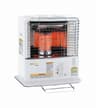
Buy the Sengoku HeatMate. It is the closest thing to a Buddy that is not a Buddy — a portable radiant heater that its listing states is cordless, rated at 10,000 BTU, running on a filled kerosene tank. That makes it the only alternative here that works exactly where a Buddy does: a space with no power, no plumbed gas and one small area that needs warming. You swap one fuel logistics problem for another, and kerosene has a smell propane does not.

Buy the Dura Heat LPC80 instead if the Buddy was simply too small. Its listing publishes 50,000 to 80,000 BTU, adjustable, off a 20 lb tank with a 360-degree convection pattern — which is several times the 9,000 BTU a Portable Buddy publishes. It warms the whole volume of a shop or a barn rather than the person in front of it, and it is the right answer when the complaint is “I can only feel it if I sit facing it.”

The budget pick is the NewAir NGH160GA00,the cheapest unit here that still does a real job: a 120 V plug-in heater its listing rates for up to 160 square feet. No cylinder, no fumes, no combustion of any kind — and no use whatsoever where there is no socket, which is precisely the gap the Buddy exists to fill.

Below: five heaters to cross-shop against a Buddy, each matching it on a stated strength or undercutting it on price. None of them is a Mr. Heater, by design — if you want a bigger one from the same family, the whole range is ranked in best portable propane heaters. We own none of these and have measured no temperatures; every figure is one the maker publishes on its own listing, read on a dated visit.

How this is funded:we earn a commission if you buy through our links, at no extra cost to you. It never changes which pit or heater we recommend, and we’ll tell you when we’d skip one. Full disclosure.

Quick picks

Ranked on published specs, beginner-friendliness and value. Select a row to jump to the full write-up. We haven’t cooked on every one of these — here is exactly what we do instead.

#ProductBest forPrice
1
Sengoku HeatMate Portable Kerosene Heater (10,000 BTU, Cordless)

Sengoku HeatMate Portable Kerosene Heater (10,000 BTU, Cordless)

The small, cordless kerosene heater — 10,000 BTU per the listing, and no mains power required, which is the pairing that makes it an emergency-heat choice rather than a shop-heating one. It is the direct comparison against a 9,000 BTU propane Buddy heater: similar output, a fuel that stores for years in a can rather than a cylinder, and a wick instead of a regulator. Same rules as every combustion heater: ventilate the space and fit a carbon monoxide alarm.

Closest alternative on form
$189.99 · View on Amazon

$199.895% off

Price as of November 23, 2026. #ad How we’re funded

2
Dura Heat LPC80 50,000-80,000 BTU Propane Convection Heater

Dura Heat LPC80 50,000-80,000 BTU Propane Convection Heater

A convection heater rather than a radiant one, which is the distinction that decides whether this is the right buy. Radiant heaters warm what they point at; this one warms the air in a 360-degree column and lets it circulate, so it is the better answer for an open garage, a barn or a large tent where you want the whole volume warmer rather than one bench. The listing states an adjustable 50,000 to 80,000 BTU range. It is a lot of combustion in one place — ventilation and a CO alarm are not optional.

Best when the Buddy is too small
$134.09 · View on Amazon

Price as of November 23, 2026. #ad How we’re funded

3
Tangkula Tabletop Propane Patio Heater with Adjustable Flame (11,000 BTU)

Tangkula Tabletop Propane Patio Heater with Adjustable Flame (11,000 BTU)

The cheapest way to put 11,000 BTU on a table, and for a lot of buyers that is the entire decision. It matches the output of the Cuisinart and the taller pyramid units, publishes adjustable flame control, and sits in the budget band rather than the mid one. The catch is that the listing publishes almost nothing else: no dimensions, no weight, no run time, no certification and no statement about tip-over protection. We will not write in a safety feature a maker has not claimed, so treat this as an output-per-dollar pick and check the manual in the box before you leave it running near anybody.

Best for a patio table
$125.99 · View on Amazon

Price as of November 23, 2026. #ad How we’re funded

4
Dr. Infrared Heater Portable Infrared Indoor/Outdoor Space Heater

Dr. Infrared Heater Portable Infrared Indoor/Outdoor Space Heater

Electric infrared solves the two things people actually hate about propane heaters: refilling tanks and the hard limit on where you can run one. It plugs into a socket, it produces no combustion products at all, and it can be used in a garage or a covered porch where a gas heater should not be. The honest trade is reach — infrared warms what it is pointed at, so it heats a person on a chair beautifully and an open lawn not at all.

Best where there is an outlet
$93.48 · View on Amazon

$109.9815% off

Price as of November 23, 2026. #ad How we’re funded

5
NewAir NGH160GA00 120V Portable Garage Heater (160 sq ft)

NewAir NGH160GA00 120V Portable Garage Heater (160 sq ft)

The 120 volt answer, and an honest one: the listing publishes 160 square feet, which is a single bay and a workbench rather than a garage. If you are not running a new circuit, this is the realistic ceiling of what a socket can do — buy it for the corner you actually work in and do not expect it to warm the whole building.

Budget pick
$78.51 · View on Amazon

Price as of November 23, 2026. #ad How we’re funded

The picks in full

#1Closest alternative on form

Sengoku HeatMate Portable Kerosene Heater (10,000 BTU, Cordless)

The small, cordless kerosene heater — 10,000 BTU per the listing, and no mains power required, which is the pairing that makes it an emergency-heat choice rather than a shop-heating one. It is the direct comparison against a 9,000 BTU propane Buddy heater: similar output, a fuel that stores for years in a can rather than a cylinder, and a wick instead of a regulator. Same rules as every combustion heater: ventilate the space and fit a carbon monoxide alarm.

What’s good

  • 10,000 BTU with no mains power needed, per the listing
  • Kerosene stores for a long time in a plain can
  • Directly comparable output to a 9,000 BTU propane heater
  • Small enough to store out of the way

Trade-offs

  • 10,000 BTU will not heat a garage or shop
  • Kerosene odor on lighting and extinguishing
  • Wick is a consumable
  • Needs ventilation and a CO alarm
TypePortable radiant kerosene heater
Output10,000 BTU (per the listing)
PowerCordless — no mains needed (per the listing)
FuelKerosene (filled tank)
Heating areaNot published

Specs read from the product listing, on October 13, 2026. “Not published” means the maker doesn’t state that figure there.

#2Best when the Buddy is too small

Dura Heat LPC80 50,000-80,000 BTU Propane Convection Heater

A convection heater rather than a radiant one, which is the distinction that decides whether this is the right buy. Radiant heaters warm what they point at; this one warms the air in a 360-degree column and lets it circulate, so it is the better answer for an open garage, a barn or a large tent where you want the whole volume warmer rather than one bench. The listing states an adjustable 50,000 to 80,000 BTU range. It is a lot of combustion in one place — ventilation and a CO alarm are not optional.

What’s good

  • Adjustable 50,000-80,000 BTU per the listing — real range, not one setting
  • Convection heats the air all round, not just what it faces
  • Runs off a standard 20 lb tank
  • Cheaper per BTU than any cabinet patio heater

Trade-offs

  • Needs serious ventilation and a CO alarm
  • Tall, open-flame tower — not a heater to put near anything
  • No thermostat control
  • Overkill, and wasteful, for a patio or a single person
TypePortable propane convection heater
Output50,000-80,000 BTU, adjustable (per the listing)
Fuel20 lb propane tank
Heat patternConvection (360 degrees)
Indoor useNot published

Specs read from the product listing, on October 13, 2026. “Not published” means the maker doesn’t state that figure there.

#3Best for a patio table

Tangkula Tabletop Propane Patio Heater with Adjustable Flame (11,000 BTU)

The cheapest way to put 11,000 BTU on a table, and for a lot of buyers that is the entire decision. It matches the output of the Cuisinart and the taller pyramid units, publishes adjustable flame control, and sits in the budget band rather than the mid one. The catch is that the listing publishes almost nothing else: no dimensions, no weight, no run time, no certification and no statement about tip-over protection. We will not write in a safety feature a maker has not claimed, so treat this as an output-per-dollar pick and check the manual in the box before you leave it running near anybody.

What’s good

  • 11,000 BTU at the lowest price in this class
  • Adjustable flame rather than a single setting
  • Small enough to live on the table between uses
  • Runs on 1 lb cylinders — no 20 lb tank to store

Trade-offs

  • Listing publishes no tip-over or flame-failure protection — do not assume it
  • No dimensions, weight or run time published
  • No certification stated
  • Marketplace brand with no hearth-specialist track record
TypeTabletop propane patio heater
Heat output11,000 BTU (per the listing)
Flame controlAdjustable (per the listing)
Safety featuresNot published
DimensionsNot published
Run timeNot published

Specs read from the product listing, on October 18, 2026. “Not published” means the maker doesn’t state that figure there.

#4Best where there is an outlet

Dr. Infrared Heater Portable Infrared Indoor/Outdoor Space Heater

Electric infrared solves the two things people actually hate about propane heaters: refilling tanks and the hard limit on where you can run one. It plugs into a socket, it produces no combustion products at all, and it can be used in a garage or a covered porch where a gas heater should not be. The honest trade is reach — infrared warms what it is pointed at, so it heats a person on a chair beautifully and an open lawn not at all.

What’s good

  • No tank to refill and no combustion products at all
  • Safe to use in a garage or covered porch where gas heaters are not
  • Warms people directly rather than heating the air around them
  • Cheap to buy and simple to run

Trade-offs

  • Needs a power outlet within reach
  • Heats only what it points at — useless for an open circle
  • Electric running cost is higher per hour than propane in most areas
  • Wattage and coverage area are not published on this listing
TypePortable electric infrared heater
FuelElectric — no tank, no combustion
UseIndoor and outdoor, per the listing
WattageNot published on this listing

Specs read from the product listing, on October 7, 2026. “Not published” means the maker doesn’t state that figure there.

#5Budget pick

NewAir NGH160GA00 120V Portable Garage Heater (160 sq ft)

The 120 volt answer, and an honest one: the listing publishes 160 square feet, which is a single bay and a workbench rather than a garage. If you are not running a new circuit, this is the realistic ceiling of what a socket can do — buy it for the corner you actually work in and do not expect it to warm the whole building.

What’s good

  • Plugs into a normal 120 V socket — no electrician
  • 160 sq ft coverage published on the listing
  • Portable: follows you to the bay you are working in
  • Cheapest electric option here

Trade-offs

  • 160 sq ft is one bay, not a garage
  • A 15-amp socket caps output no matter the brand
  • Wattage not published as a figure on the listing
  • Fan noise in a hard-walled space
TypePortable electric garage heater
Voltage120 V (per the listing)
Heated areaUp to 160 sq ft (per the listing)
PortableYes (per the listing)
WattageNot published

Specs read from the product listing, on October 13, 2026. “Not published” means the maker doesn’t state that figure there.

What the Buddy is known for

“Alternative” only means something once you know which part you are replacing. From the listings we read, the Buddy range publishes four things:

  • Radiant heat off a 1 lb cylinder. The Portable Buddy publishes 9,000 BTU, the Little Buddy 3,800 BTU, both on a screw-on camping cylinder. That is the whole appeal: no hose, no 20 lb bottle, no cord.
  • Cordless operation. No fan, no electronics, nothing to plug in. It works in a blind, a tent or a power cut, which almost nothing electric does.
  • Stated safety hardware. The Portable Buddy listing publishes a tip-over switch and an oxygen depletion sensor; the Little Buddy publishes a tip-over shutoff. That hardware is the reason these units get used in small enclosed volumes at all.
  • Small, radiant, directional. It warms what faces it. That is a feature in a two-person blind and a limitation on an open patio.

It is a well-established product and we rank it highly elsewhere on this site. The question here is narrower: which of those four things do you actually need, and what else delivers it?

Same form, different fuel: the Sengoku HeatMate

If what you value is a heater that needs no electricity and no plumbed gas, kerosene is the other answer to that problem. The HeatMate listing publishes 10,000 BTU — slightly above a Portable Buddy’s stated figure — and states cordless operation with a filled tank rather than a cylinder.

The trades are real and worth stating. Kerosene has to be bought and stored, it smells on lighting and extinguishing in a way propane does not, and the listing does not publish a heating area. Against that, a tank of fuel runs a long time compared with a 1 lb cylinder, which is the single most common complaint about the small Buddies. Our propane vs kerosene heater comparison works through the fuel side properly.

Same fuel, far more of it: the Dura Heat LPC80

A lot of people searching for an alternative are not unhappy with the Buddy — they have simply asked it to heat a space it was never sized for. A 9,000 BTU radiant unit will not warm a two-car garage or a 20-foot tent, and no amount of repositioning changes that.

The Dura Heat publishes 50,000 to 80,000 BTU, adjustable, running on a 20 lb tank, with convection rather than radiant distribution — it heats the air in the whole volume instead of the surface facing it. That is a different machine for a different job, and if your Buddy felt feeble in a big space it is the honest upgrade. The comparable units are ranked in best propane garage heaters.

Same cylinder, better on a patio: the Tangkula tabletop

A Buddy on a patio table looks wrong because it is not a patio product — it is a utility heater. If the 1 lb cylinder is what you want to keep but the setting is a deck or a bistro table, the Tangkula tabletop publishes 11,000 BTU with an adjustable flame on the same cylinder format, in a shape designed to sit on a table.

It is an outdoor product: do not read a tabletop patio heater as a substitute for the Buddy’s enclosed-space credentials. The wider field is in best tabletop patio heaters.

No combustion at all: the two electrics

This is the alternative that solves the problem rather than relocating it. If there is a socket within reach, an electric heater produces no carbon monoxide, consumes no oxygen and needs no cylinder.

The Dr. Infrared DR-238 is a portable infrared unit its listing rates for indoor and outdoor use — infrared warms objects and people the way the Buddy does, which makes it the closer behavioral match of the two. The NewAir publishes 120 V and up to 160 square feet and is the cheapest thing on this page. Both are useless in a blind, a tent or a power cut, and that is the whole reason the Buddy exists.

Where an outlet is available, this swap is also the one that removes the Buddy’s real risk. The CPSC records more than 200 accidental non-fire carbon monoxide deaths a year in the US associated with consumer products, and recommends CO alarms on every level of a home and outside sleeping areas. Safety sensors on a propane heater reduce that risk; an electric heater does not have it. Is a propane heater safe indoors is the longer answer, and carbon monoxide and outdoor heaters covers which spaces count as enclosed.

How to choose in one line each

  • No power, small space, want a long run time: the Sengoku HeatMate.
  • The space is bigger than you thought: the Dura Heat LPC80.
  • It is going on a patio table: the Tangkula tabletop.
  • There is an outlet and you would rather not burn anything: the Dr. Infrared DR-238, or the NewAir if price leads.
  • You actually want a Buddy, just a different size:stay in the family — see best portable propane heaters, or propane heaters for camping if it is going in a tent.

If price is the only thing driving the search, the floor of this whole category is in best patio heaters under $100.
Frequently asked questions

What is the best alternative to a Mr. Heater Buddy?

The Sengoku HeatMate, if you want the same kind of heater in a different fuel. Its listing publishes 10,000 BTU and cordless operation from a filled kerosene tank, so like a Buddy it needs no power and no plumbed gas. The trades are the fuel itself: kerosene must be bought and stored, and it smells on lighting and extinguishing in a way propane does not.

Is there a cheaper heater than a Buddy?

Yes, if there is a socket where you need the heat. The NewAir 120 V portable publishes up to 160 square feet and is the cheapest unit on this page, and it produces no carbon monoxide and needs no cylinder. What it cannot do is work in a blind, a tent, a barn with no power or during an outage — which is the specific job the Buddy range is built for.

What should I buy if the Buddy is not warm enough?

A convection heater rather than a bigger radiant one. A Portable Buddy publishes 9,000 BTU and warms what faces it, which is the wrong tool for a two-car garage or a large tent. The Dura Heat LPC80 publishes 50,000 to 80,000 BTU, adjustable, on a 20 lb tank with a 360-degree convection pattern — it heats the air in the volume instead of the surface in front of it.

Can I use a tabletop propane heater instead of a Buddy?

On a patio, yes — the Tangkula tabletop publishes 11,000 BTU on the same 1 lb cylinder format in a shape built for a table. Indoors or in an enclosed space, no. The Buddy heaters publish safety hardware specifically for small enclosed volumes (the Portable Buddy lists a tip-over switch and an oxygen depletion sensor); a tabletop patio heater is an outdoor product and should be treated as one.

Is an electric heater a real replacement for a propane Buddy?

Where there is power, it is the better product: no cylinders, no fumes, no oxygen consumption and no carbon monoxide risk at all. Infrared models behave most like a Buddy because they warm people and objects rather than air. Where there is no power it is not a replacement in any sense — and that is the dividing line, not output or price.

Are these alternatives safe to use indoors?

Read each listing, and do not generalize from the Buddy. Several products here publish no indoor rating at all, and the two that are designed for enclosed use are the Buddy heaters themselves. The CPSC reports more than 200 accidental non-fire carbon monoxide deaths a year in the US from consumer products and recommends CO alarms on every level of a home; treat any unrated combustion heater as outdoor-only.

Why are there no Mr. Heater products on this page?

Because it would not answer the question. If you want a different size of Buddy — the 3,800 BTU Little Buddy, the 18,000 BTU Big Buddy — that is a range comparison, and our portable propane heater roundup ranks the whole family. This page is for the case where you want something that is not a Buddy.

Sources

  • CPSC — Carbon Monoxide Information Center — The US Consumer Product Safety Commission on carbon monoxide: “More than 200 people in the United States die every year from accidental non-fire related CO poisoning associated with consumer products,” and its standing recommendation to “Install battery-operated CO alarms or CO alarms with battery backup on every level of the home and outside sleeping areas” (accessed October 7, 2026)
  • FTC Consumer Advice — Online Shopping — FTC guidance for buying online: “before you buy something online, shop around and check out sellers and products,” note the exact manufacturer or model number when comparison shopping, and pay by credit card so a bad order can be disputed (accessed October 7, 2026)
  • 16 CFR § 233.1 — Former price comparisons (FTC Guides Against Deceptive Pricing) — The federal standard for a legitimate “was” price: it must be “the actual, bona fide price at which the article was offered to the public on a regular basis for a reasonably substantial period of time.” A price is fictitious “where an artificial, inflated price was established for the purpose of enabling the subsequent offer of a large reduction” (accessed October 7, 2026)

Keep reading