What changes between $100 and $300
Price-band shopping only works if you know what the next band actually buys, and in fire pits the jump from $100 to $300 is the largest single step in the category. Below $100 you are choosing between compromises: a 23-inch bowl, a collapsible pit, a tabletop, or a propane unit small enough to sit on a table. Our best fire pits under $100 page sets out what each of those compromises costs you.
Three things become available at $300 that are not available at $100.
- A full-size smokeless pit.This is the big one. Under $200, “smokeless” means a 20-inch pit, a ring insert or a tabletop — best smokeless fire pits under $200 is that field, and it is honest about the ceiling. At $300 a 30-inch double-wall pit is in reach, which is the point at which a smokeless pit stops feeling like a scaled-down version of a real fire.
- Diameter without limit. Forty-two inches of open bowl costs less in this band than a 19-inch premium smokeless pit does. If raw fire size is what you want, $300 buys more of it than any amount of clever engineering can.
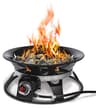
- A propane bowl you will not immediately outgrow. The cheap propane units are tabletop-sized. At this budget you get a 21-inch bowl with a 58,000 BTU burner, a cover and a carry kit, which is the same hardware people buy at twice the price in furniture form.
What does notchange at $300: materials. Everything in this band is painted or coated steel. Stainless and Corten weathering steel — the two materials specified to live outdoors permanently — start above it. That is the honest ceiling of this page, and it is why a cover matters more here than it does on a premium pit.
How we ranked these
- A live price under $300, verified on the day.Every pick was checked in stock with a live price inside the band before it was written up. Where a price moves above $300 later, the card will show the live number rather than the one we saw — prices on this site come from the retailer at request time, never from a figure typed into the page.
- Published diameter or output. Diameter decides how wide a circle a wood fire warms and how many people can sit around it; BTU decides the same thing for gas. Every pick here publishes one or the other. Nothing is ranked on a figure the maker does not state.
- One distinct job each.Six pits that all do the same thing is a list, not a recommendation. These are the smokeless pick, the biggest-fire pick, the easy-clean pick, the no-wood pick, the build-it-in pick and the spend-less pick — so the choice is about what you want, not about which brand name you recognize.
- Honest cons, published. Every card below lists what is wrong with the pit as well as what is right, including the figures its listing refuses to publish. Steel gauge is the most useful durability spec in this category and not one listing in the band states it.
No burn test, no heat measurement and no durability trial sits behind any of this. See how we pick for exactly what we do and do not do.
Smokeless at this price: what you get and what you do not
A smokeless pit is a bowl inside a bowl. Air is drawn in at the base, heated as it rises between the two walls, and injected back into the top of the fire through a ring of holes, where it burns off the smoke particles the first pass left behind. That is a real physical mechanism and it works, and our guide to whether smokeless fire pits work goes through it in detail.
Three honest limits apply to every double-wall pit, premium or not, and they apply harder in this band:
- It needs dry wood.Secondary combustion depends on the fire getting hot enough to drive it. Wet wood never gets there, and a smokeless pit burning damp splits smokes like any other pit. The EPA’s own guidance is that wood burns best below 20 percent moisture content and wants at least six months of seasoning, stored off the ground with only the top covered. If you buy one pick from this page and one page from this site, make the page how to season firewood.
- It smokes at the start and at the end.Lighting and burning down are both below the temperature the secondary burn needs. “Nearly no smoke once it is going” is the accurate claim.
- The finish is the compromise at this price. Both smokeless picks here are painted steel rather than stainless. They will work exactly as designed; they will also look their age sooner if they sit out through a wet winter uncovered. A cover is the cheapest thing you can do to change that, and it matters more than any upgrade inside the band.
If smoke is a genuine dealbreaker rather than an irritation, it is worth knowing what sits just above this budget before you commit: best smokeless fire pits ranks the whole field, and Solo Stove alternatives is the page for readers who like what the category leader does and would rather not pay its price.
Wood or gas, decided on cost rather than taste
At $300 both are genuinely available, which makes this the band where the question is worth asking properly instead of defaulting.
Wood is cheaper to buy and cheaper to run if you have access to firewood, and it is the only one of the two that gives you the crack, the smell and the embers. It is also the one that generates ash, needs the fire building, throws sparks and takes twenty minutes to be worth sitting next to.
Gas costs more per hour and almost nothing per evening of effort. A 20-pound propane tank is the unit of account, the flame is instant, there is no ash, no smoke and nothing to put out. The two costs nobody puts on the price tag are the tank itself — not included on any propane pick here — and the fact that wind affects a gas flame far more than it affects a wood fire.
Our propane vs wood fire pit comparison works through the running costs, and best propane fire pits under $200 covers the band below this one if gas is the decision and $300 is more than you want to spend. If gas is the decision and you would rather have furniture than a bowl, the next band up is where that happens — best propane fire pits under $500 is the page for a full-size fire table.
Where it goes, and what that rules out
Two of the picks on this page are too big for most patios, which makes siting part of the buying decision rather than something to work out after delivery.
The published guidance worth transferring comes from wildfire prevention rather than from pit makers. Smokey Bear’s campfire rules are specific: clear at least a 10-foot diameter around the site, stay at least 15 feet from tents, vegetation and low-hanging branches, and keep vertical clearance of at least three times the height of the flames. That last rule is the one most backyard installations break, and on a 42-inch bowl with an armful of wood in it, three times the flame height is a long way up. It rules out a pit under a tree, and it rules out pergolas and awnings entirely.
Surfaces matter as much as clearance. A wood fire in a steel bowl will kill a circle of lawn through the base and will scorch a wooden deck, so whether you can put a fire pit on a deck and fire pit mats for decks are the two pages to read before a wood pick goes anywhere near timber or composite. If your space is tight rather than open, the constraint is different again and the picks change with it: best fire pits for small patios is built around clearance rather than diameter.
Local rules are the half of this nobody can answer for you. Burn bans, minimum distances from property lines and outright prohibitions on open burning are set by municipality, and some places allow gas where they ban wood. Our fire pit safety guide lists what to check before you spend anything.
The costs that are not in the $300
Price-band pages tend to stop at the purchase, which is where budget buyers get caught. Four things to plan for:
- A cover, on every wood pick.An open bowl left out collects rain, which turns ash into a wet paste that holds moisture against the steel. That is what actually kills cheap pits — not the fire. At this price point a cover is the highest-value accessory you can add, and it is the difference between a two-season pit and a five-season one.
- A tank, on the propane pick. No propane pit here includes one, and a 20-pound tank plus its first fill is a real line item.
- A surround, on the ring pick.A ring insert is the cheap part of a built-in pit. The stone or pavers around it are the rest of the project — best fire pit rings covers the whole field, including the smokeless ones.
- Firewood, on everything that burns wood. A 42-inch bowl goes through a serious volume, and cheap wet wood will undo a smokeless pit completely. What wood to burn is free to read and will save you more than any accessory.
A spark screen is the one safety item worth adding rather than planning for, especially on the wide open bowls, which throw embers in a way the smokeless pits mostly do not — see best fire pit spark screens.
Who should spend more, and who should spend less
Spend less if you are not sure you will use it. The budget pick here is a 30-inch bowl for well under half the band, and the money you do not spend answers the only question that matters in year one. A fire pit that gets lit twice is an expensive ornament at any price.
Spend more if the pit will live outdoors permanently and you care how it looks in five years. Stainless steel and Corten weathering steel both start above this band, and Corten in particular is specified to form a stable surface rust that then protects the steel underneath instead of progressing. That is a material property, not a finish, and no amount of paint in this band replicates it.
Stay in the bandif what you want is a bigger fire, a smokeless burn or a propane bowl, and you are willing to cover it over winter. That is the great majority of buyers, and it is why this is the most useful $300 in the category. If the appeal is heat on a cold evening rather than a fire to look at, it is also worth knowing that a different product solves that better and cheaper — patio heater vs fire pit is the honest comparison, and the answer is not always the fire pit.