Coal & Char

What Size Charcoal Grill Do I Need?

14, 18, 22 inches or a barrel: how many people each size honestly feeds, why a bigger grill costs more every single cook, and the one size that fits most households.

By Stephen V.Last updated How we pick

How this is funded:we earn a commission if you buy through our links, at no extra cost to you. It never changes which grill we recommend, and we’ll tell you when we’d skip one. Full disclosure.

Charcoal grills are sold by diameter — 14, 18, 22 inches — or, for barrels, by a square-inch figure that often includes a warming rack. Neither number tells you the thing you actually want to know, which is how many people you can feed without cooking in shifts. This guide answers that honestly for each size, explains the cost of buying bigger than you need, and ends with the size we would tell most households to buy.

One rule sits over everything below: buy for the meal you cook most weeks, not the party you host twice a year. The party is a sequencing problem. The weeknight dinner is what the grill is for.

The short answer

A 22-inch kettle for most households. It feeds a family of four to six in one round, has enough grate to keep a cool side for indirect cooking, and takes a standard chimney of charcoal. Go smaller only for a balcony, a solo household or a grill that has to travel; go bigger only if you cook for eight or more most weekends.

Sizes, people and what fits

Cooking areas are the makers’ published figures. The people counts are our own estimates for a normal mixed cook — a main plus a vegetable — done in one round with room to move things around, not the maximum you could cram on. The only maker-published capacity we have is Weber’s six-burger rating for the Smokey Joe, and everything else is scaled from that.

SizeCooking areaFeeds in one roundWhat fitsTypical charcoal load
14-inch kettleNot published (Weber: 6 burgers)1-2Burgers, sausages, a couple of steaks, hot-and-fast onlyA compact chimney
18-inch kettle240 sq in (Jumbo Joe)2-4A round of burgers, a couple of chickens, lid-down indirect possibleAbout half to two-thirds of a full chimney
22-inch kettle363 sq in4-6, a dozen in two roundsA full family cook with a cool side; ribs, whole birds, a pork shoulderOne full chimney
Barrel grill550-580 sq in of main grate, plus warming rack8+A whole cookout at once; often an adjustable pan for searingTwo chimneys for a full-width fire

Our how much charcoal to use guide has the loads by cook type; the point of the last column is simply that the fuel bill scales with the grill, every time you light it.

Why bigger costs more every cook

A grill does not just cost what you pay for it. It costs charcoal, and a bigger grill uses more of it for the same four burgers, for two reasons. First, you light enough to cover the part of the grate you are using, and on a big grate that is more than you think. Second, the lid encloses more air, and every cubic inch of it has to be heated. A 22-inch kettle running a family dinner on one chimney is efficient; a 580-square-inch barrel running the same dinner on two is not.

There is a build-quality cost too. Below about $350, big means barrel, and barrels are thin steel with a lid seam that leaks. Our kettle vs barrel comparison goes through it; the summary is that the extra floor comes with more fire-tending and a shorter life, unless you seal and cover it.

The reason to size up: a cool side

The strongest argument for the 22 over the 18 is not the extra burgers. It is that almost everything worth cooking on charcoal wants a two-zone fire— coals on one side, nothing on the other — and a two-zone fire needs room. On a 22-inch grate you can sear over the coals and move a thick chop or a chicken thigh to the cool side to finish without crowding either zone. On an 18 it is possible but tight, and on a 14 the bowl is too shallow to do it properly at all. The Smokey Joe is a hot-and-fast grill by design, and its own listing says so.

That is also why a small grill feels harder to cook on than a big one. The food is not the problem; the missing cool zone is. If you have ever burned chicken on a small grill while the middle stayed raw, this was why — and the USDA’s 165°F for poultry is much easier to reach gently on the cool side of a fire than directly over it.

When to size down

Balconies and small patios.If space is the constraint, a 14-inch kettle with an ash catcher is the honest choice — but first check whether charcoal is allowed at all. Many leases and local fire rules prohibit it on balconies, and our small grills page explains what to look up before you buy anything.

One or two people. A 22-inch grill for a couple is not wrong, but you will light half a chimney and use a quarter of the grate. An 18 fits the meal and still cooks indirect. The 14 is the right call if you also want it to travel.

It has to go in the car. Then the question is not size but shape, and our Smokey Joe vs Jumbo Joe comparison is the page for that: the 18 keeps its kettle shape, the 14 carries in one hand, and the Go-Anywhere packs flat.

When to size up

Eight or more, most weekends. If that is genuinely how you cook, buy the floor: a barrel with 550 square inches or more of real main grate, chosen from our large grills roundup, which is honest about how much of each headline figure is warming rack. Budget for the extra charcoal and a roll of gasket tape.

Crowds a few times a year. Do not size up. Cook in rounds on the 22: fast things turn over in ten minutes, chicken holds warm on the cool side, and the cook is calmer than trying to manage a barrel you use twice a year. Our grilled chicken guide has the timing table that makes sequencing easy, and the rest of the cookout section is written for exactly this kind of planning.

A note on square inches

Two grills with the same number can behave very differently. A round 363-square-inch kettle grate loses some usable space at the edges but concentrates the fire; a rectangular barrel of the same area spreads the coals thin. And a headline figure that includes a warming rack is not grilling floor. When comparing, look for the main-grate figure, and treat “total cooking area” as a marketing number until the listing breaks it down.

Whatever size you land on, the two accessories that matter most do not change with it: a chimney starter sized for the grill and an instant-read thermometer. They cost less together than the difference between any two sizes on this page, and they make more difference to the food.
One pick per size

One grill per size class, so the ladder is concrete. Each is the value pick at its size from our roundups, with a live Amazon price; the full rankings at each size are linked in the sections above.

Quick picks

Ranked on published specs, beginner-friendliness and value. Select a row to jump to the full write-up. We haven’t cooked on every one of these — here is exactly what we do instead.

#ProductBest forPrice
1
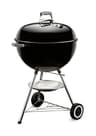
Weber Original Kettle 22" (741001)

Weber Original Kettle 22" (741001)

The plain Weber kettle, and the smartest money on this whole site. It is the same porcelain-enameled 22-inch bowl and the same one-touch ash sweep as the Premium, minus the hinged grate and the big ash catcher, for meaningfully less. If you can live without lifting a corner of the grate to add coals, this is the kettle to buy and the ten-year warranty comes along with it.

22 in: the size for most households
$149.00 · View on Amazon

$159.006% off

Price as of September 23, 2026. #ad How we’re funded

2
Weber Jumbo Joe 18"

Weber Jumbo Joe 18"

A full-flavor Weber kettle that fits in a trunk. The Jumbo Joe is a squat 18-inch kettle with a lid lock for transport — 240 sq in is enough for burgers and a couple of chickens, and it's the same porcelain-enameled steel as the big kettles. For camping, tailgating or a tiny balcony, it's the honest pick.

18 in: two to four, and portable
$89.99 · View on Amazon

Price as of September 23, 2026. #ad How we’re funded

3
Weber Smokey Joe 14" (1501695)

Weber Smokey Joe 14" (1501695)

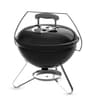
The cheapest object Weber sells that still cooks like a Weber. Eight and a half pounds, a lid that locks down over the top for carrying, and the same porcelain-enamel finish as the big kettles. Weber rates it at six burgers, which is honest — this is a balcony, campsite and picnic grill, not a party cooker, and at its price that is exactly the right trade.

14 in: one or two, balcony-sized
$54.99 · View on Amazon

Price as of September 23, 2026. #ad How we’re funded

4
Char-Griller Pro Deluxe Barrel Grill (E2827)

Char-Griller Pro Deluxe Barrel Grill (E2827)

Enormous grate area for the money. 580 square inches of grilling plus a 270-square-inch warming rack means you can cook for a garden party on one load of charcoal, and the adjustable fire grate lets you raise the coals for searing. It is a barrel grill, so it is thin-walled and leaks heat at the lid seam — you will burn more charcoal than a kettle does for the same food.

Barrel: crowds every weekend
#122 in: the size for most households

Weber Original Kettle 22" (741001)

The plain Weber kettle, and the smartest money on this whole site. It is the same porcelain-enameled 22-inch bowl and the same one-touch ash sweep as the Premium, minus the hinged grate and the big ash catcher, for meaningfully less. If you can live without lifting a corner of the grate to add coals, this is the kettle to buy and the ten-year warranty comes along with it.

What’s good

  • Same porcelain-enameled bowl and lid as the pricier Premium, for less money
  • One-touch cleaning system with an aluminized steel ash catcher
  • 10-year limited warranty stated on the listing
  • Lid hook, tool hooks and all-weather wheels — the small stuff done right

Trade-offs

  • No hinged cooking grate — you lift the whole grate to add charcoal
  • Smaller ash catcher than the Premium; you empty it more often
  • Weber doesn't state a cooking-area figure on this listing
TypeCharcoal (kettle)
Cooking areaNot published
Primary materialPorcelain-enameled steel
Ease for beginnersEasy

Specs read from the product listing, on August 11, 2026. “Not published” means the maker doesn’t state that figure there.

#218 in: two to four, and portable

Weber Jumbo Joe 18"

A full-flavor Weber kettle that fits in a trunk. The Jumbo Joe is a squat 18-inch kettle with a lid lock for transport — 240 sq in is enough for burgers and a couple of chickens, and it's the same porcelain-enameled steel as the big kettles. For camping, tailgating or a tiny balcony, it's the honest pick.

What’s good

  • Genuinely portable with a lid lock, but 240 sq in still feeds a few people
  • Weber's porcelain-enameled build — far sturdier than throwaway travel grills
  • Dead simple: one vent bottom, one vent top, done

Trade-offs

  • Sits low to the ground — you cook crouched or on a table
  • No ash catcher; you tip it out
TypeCharcoal (portable kettle)
Cooking area240 sq in
Primary materialPorcelain-enameled steel
Ease for beginnersEasy

Specs read from the product listing, on July 21, 2026. “Not published” means the maker doesn’t state that figure there.

#314 in: one or two, balcony-sized

Weber Smokey Joe 14" (1501695)

The cheapest object Weber sells that still cooks like a Weber. Eight and a half pounds, a lid that locks down over the top for carrying, and the same porcelain-enamel finish as the big kettles. Weber rates it at six burgers, which is honest — this is a balcony, campsite and picnic grill, not a party cooker, and at its price that is exactly the right trade.

What’s good

  • Weighs 8.4 lb and packs down — genuinely a one-hand carry
  • Tuck-N-Carry lid lock doubles as a lid holder while you cook
  • Porcelain-enamel finish resists rust and scratches like the full-size kettles
  • Ash catcher underneath, so it won't scorch a table or a deck

Trade-offs

  • Weber rates it at 6 burgers — too small for a crowd
  • Sits low with no legs of its own; you want a table or the ground
  • Shallow bowl makes long low-and-slow cooks impractical
TypeCharcoal (portable kettle)
Cooking areaNot published
Primary materialPorcelain-enameled steel
Ease for beginnersEasy

Specs read from the product listing, on August 11, 2026. “Not published” means the maker doesn’t state that figure there.

#4Barrel: crowds every weekend

Char-Griller Pro Deluxe Barrel Grill (E2827)

Enormous grate area for the money. 580 square inches of grilling plus a 270-square-inch warming rack means you can cook for a garden party on one load of charcoal, and the adjustable fire grate lets you raise the coals for searing. It is a barrel grill, so it is thin-walled and leaks heat at the lid seam — you will burn more charcoal than a kettle does for the same food.

What’s good

  • 850 sq in total — 580 grilling plus a 270 sq in warming rack
  • Adjustable fire grate raises the coals for a proper sear
  • Dual damper control and a built-in stainless thermometer
  • Double-bottom steel body adds some rigidity over the cheapest barrels

Trade-offs

  • Barrel lids never seal like a kettle — expect heat loss and more fuel used
  • 1-year parts warranty only
  • Big footprint (42 x 29 x 50 in); this is not a balcony grill
TypeCharcoal (barrel)
Cooking area850 sq in
Primary materialSteel with double bottom
Ease for beginnersModerate

Specs read from the product listing, on August 11, 2026. “Not published” means the maker doesn’t state that figure there.

Frequently asked questions

What size charcoal grill do I need for a family of 4?

A 22-inch kettle. Its 363 square inches takes a family's burgers, chicken and vegetables in one round with space left to keep a cool side, which is what lets you cook indirect and hold food warm. An 18-inch grill will feed four but you will be cooking in two rounds and fighting for a cool zone.

Is an 18-inch charcoal grill big enough?

For two to four people, yes. The Weber Jumbo Joe's 240 square inches handles a round of burgers or a couple of chickens, and the bowl is deep enough for a lid-down indirect cook. It stops being enough when you regularly feed more than four or want a proper two-zone fire with room to move food around.

How many burgers fit on a 22-inch charcoal grill?

Weber does not publish a burger count for the 22, but it rates the 14-inch Smokey Joe at six burgers, and a 22-inch grate has well over twice the area of a 14-inch one. A dozen at once is comfortable, with room to keep a cool side — and a second dozen is ready ten minutes later.

Is a bigger charcoal grill better?

Only if you use the space. A bigger grill burns more charcoal every cook because you light enough to cover the grate you are using and the lid encloses more air, and a cheap big grill is usually a thin-steel barrel that leaks heat. Buy the size you cook for most weeks and handle the occasional crowd in two rounds.

What size charcoal grill for a balcony or apartment?

A 14-inch kettle like the Smokey Joe, if charcoal is allowed at all — check your lease and local rules first, because many buildings prohibit charcoal on balconies. It cooks for one or two, has an ash catcher so it will not scorch a deck, and stores in a cupboard.

Does grill size affect how much charcoal I use?

Directly. A full chimney is the normal load for a 22-inch kettle; a 14-inch grill takes a fraction of that and a big barrel takes two. Lighting only what you need for the part of the grate you are using is the biggest fuel saving on any size.

Sources

  • USDA FSIS — Grilling Food SafelyUSDA on safe handling at the grill, using a food thermometer, and the difference between grilling and slower cooking (accessed July 21, 2026)
  • USDA FSIS — Safe Minimum Internal Temperature ChartUSDA safe minimum internal temperatures: 145°F for beef/pork/lamb steaks, chops and roasts (with a 3-minute rest), 160°F for ground meats, 165°F for all poultry (accessed July 21, 2026)
  • USDA FSIS — Food ThermometersUSDA on why a food thermometer is the only reliable way to know food has reached a safe temperature, and how to place the probe (accessed July 21, 2026)

Keep reading