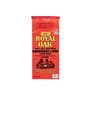
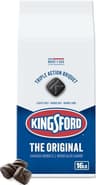
A lump of charcoal is easy to explain: wood, heated with almost no oxygen until everything that can burn off has burnt off, leaving nearly pure carbon. A briquette is a manufactured product, and the question of what is in one comes up constantly — usually phrased as “is this stuff safe?”
The honest answer has three parts: what a briquette contains, what happens to those ingredients in a fire, and which part of the process is actually worth worrying about. That last one has a clear answer, and it is not the briquette.
The three ingredients
Char.The fuel, and the bulk of the briquette. Manufacturers char wood — typically sawdust, offcuts and scrap rather than whole logs — and grind it into fines. Fines are useless loose, which is the whole reason briquettes exist: pressing them into a uniform shape turns wood waste into a controllable fuel.
A binder. Ground char will not hold a shape on its own, so something has to glue it. The usual binder is a starch, which burns away with the char. This is why a briquette holds together in a bag and crumbles once burnt.
Fillers and additives, depending on the bag.Mass-market briquettes may include mineral material to regulate the burn, something to help the briquette light, and material that produces the pale ash coating people use as a “ready” signal. Premium and “natural” bags advertise fewer of these, and that claim is easy to sanity-check yourself: less filler means less ash.
Exact recipes are proprietary and vary by brand, so we will not pretend to a formula. What we can say is what the categories are and how they behave, and that the ash pan after a cook is the most reliable evidence you have.
Where it all ends up
In the ash. That is the important structural point about a charcoal fire: the fuel burns to completion before you cook, and what remains sits under the grate, not on the food. You light the charcoal, wait until the coals are covered in gray ash — which is a genuine signal, not just tradition — and only then do you cook. Anything volatile has already gone up the chimney.
The exception is self-lighting briquettes, which are pre-soaked with a petroleum lighter fluid. Those need to burn fully before food goes on, and if you rush it you will taste it. The same is true of squirting lighter fluid onto ordinary briquettes. This is the actual source of the “charcoal tastes of chemicals” complaint, and it is entirely avoidable with a chimney starter and a wax cube.
If you want the evidence-based picture of what is worth worrying about at a grill, it is not the fuel — it is what happens to the meat. The National Cancer Institute’s summary is about compounds that form in the food at high temperatures and when fat drips onto flames, and we go through the practical implications in is charcoal grilling bad for you.
How to read a bag
“Natural” and “no additives”are marketing terms without a single legal definition, but they are not meaningless. A maker printing them is making a claim about the recipe — typically hardwood char and a plant binder — and it is a claim you can test with your own ash pan.
Named hardwoods— oak, hickory, mesquite — tell you the char is from a specified species rather than mixed scrap, which is why competition-style bags list them. It also means the fuel contributes a faint wood character of its own, which plain briquettes do not.
“Quick light” or “match light” means fluid. Skip it.
Bag weight is the number to compare on price, not bag size. Briquette bags have shrunk over the years, and the honest comparison is cost per pound, then adjusted for how long a pound of that fuel actually burns.
What changes if you switch to a cleaner bag
Three things, in our reading, all modest but real.
Less ash. Noticeable within one cook. Fewer trips to empty the ash catcher, and in a sealed cooker like a kamado, meaningfully better airflow late in a long burn.
Less smell on lighting. Mass-market briquettes have a characteristic odor for the first ten minutes. Cleaner bags have less of it. Either way, this is why you never put food on before the coals are ashed over.
A little more flavor from named-hardwood bags. Subtle, and easily overwhelmed by a couple of wood chunks, which are a far cheaper way to add wood character than upgrading every bag of fuel.
What does not change is safety. Plain briquettes burnt to ash before cooking are not the risk, and swapping bags is a choice about ash, consistency and flavor — not a health intervention. We would rather say that plainly than sell you an upgrade on a worry.
And lump, for contrast
Lump charcoal has no binder and no filler because it does not need any: it is simply charred wood, broken into pieces. That is why it lights faster, burns hotter and leaves so much less ash — and why the pieces are all different sizes, which is the honest trade.
For a long, steady cook where predictability matters, briquettes still win. For searing, for kamados, and for anyone who wants the shortest possible ingredient list, lump wins. The full comparison lives at lump vs briquettes, and our lump picks cover which bags are worth reordering.