Coal & Char

Best Charcoal Smokers for Brisket

A twelve-hour cook punishes a leaky smoker. The charcoal cookers that hold temperature overnight and actually fit a whole packer — ranked with live prices.

By Stephen V.Last updated How we pick

Brisket is the cook that separates smokers. A rack of ribs forgives almost anything — it’s done in five hours and a wobbly fire barely shows. A whole packer brisket is twelve to sixteen hours of holding a steady temperature, often overnight, with a piece of meat that costs real money sitting on the line. Every leak, every thin panel and every undersized charcoal basket shows up.

So the requirements narrow to three. The smoker has to physically fit a packer— a full brisket is 16 to 20 inches long, which rules out a surprising number of cookers or forces you to fold it. It has to hold 225-275°F without constant babysitting, which means insulation, mass or a water pan doing the work rather than you. And it has to hold enough fuel to run most of the night without a refill.

Everything below meets those three tests, ranked budget-first with the honest trade-offs on each. Prices are pulled live from Amazon and dated, and we have not cooked on every one of these — here is exactly what we do instead.

How this is funded:we earn a commission if you buy through our links, at no extra cost to you. It never changes which grill we recommend, and we’ll tell you when we’d skip one. Full disclosure.

Quick picks

Ranked on published specs, beginner-friendliness and value. Select a row to jump to the full write-up. We haven’t cooked on every one of these — here is exactly what we do instead.

#ProductBest forPrice
1
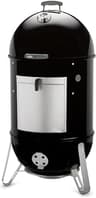
Weber Smokey Mountain Cooker 22" (731001)

Weber Smokey Mountain Cooker 22" (731001)

The biggest Weber bullet, and the one that stops being a compromise for brisket. Two full-size cooking grates take two whole packer briskets or four pork butts at once, and the 22-inch body holds a long overnight burn on a single charcoal load far more easily than the 18. It is a lot of money for a budget site to recommend — buy it only if you actually cook for crowds.

Best for brisket overall
$549.00 · View on Amazon

Price as of September 8, 2026. #ad How we’re funded

2
Weber Smokey Mountain Cooker 18"

Weber Smokey Mountain Cooker 18"

The charcoal smoker with a cult following, and the one we'd point a committed beginner toward. Two cooking grates, a water pan and three vents give real charcoal-and-wood flavor, and once you learn to set the vents it will hold 225-250°F for hours with almost no fuss. Buy once, smoke for a decade.

Best value for most people
$419.00 · View on Amazon

Price as of September 8, 2026. #ad How we’re funded

3
Oklahoma Joe's Longhorn Reverse Flow Offset Smoker

Oklahoma Joe's Longhorn Reverse Flow Offset Smoker

The serious end of what a normal person buys. Four baffles under the grates push heat and smoke the length of the chamber before it exits, which is what fixes the hot-end problem every cheap offset has — and the stack can be moved to run it as a traditional offset instead. 226 pounds of heavy-gauge steel. This is a stick-burner, and it will ask you for attention every 45 minutes.

Best true offset
$779.99 · View on Amazon

$899.9913% off

Price as of September 8, 2026. #ad How we’re funded

4
Oklahoma Joe's Laredo Series 900 Offset Smoker + Grill

Oklahoma Joe's Laredo Series 900 Offset Smoker + Grill

The cheapest thing with the Oklahoma Joe's name on it that we'd tell a budget buyer to look at. 916 square inches total, three porcelain-coated grates, a full-length pull-out ash pan and a 2-year warranty — the details a $150 barrel grill leaves out. Note the honest catch: 358 of that 916 is warming rack, so the real grilling floor is nearer 558 square inches.

Best budget offset
5
Dyna-Glo Vertical Offset Charcoal Smoker (DGO1176BDC-D)

Dyna-Glo Vertical Offset Charcoal Smoker (DGO1176BDC-D)

The budget charcoal cabinet. A tall vertical body with an offset charcoal box gives you a lot of rack space cheaply, and it takes charcoal and wood chunks for real smoke. Expect to seal a few gaps and tend the fire more than you would on a Weber — the low price shows in the thin steel — but pound for pound it's a lot of smoker.

Cheapest that can do it

The picks in full

#1Best for brisket overall

Weber Smokey Mountain Cooker 22" (731001)

The biggest Weber bullet, and the one that stops being a compromise for brisket. Two full-size cooking grates take two whole packer briskets or four pork butts at once, and the 22-inch body holds a long overnight burn on a single charcoal load far more easily than the 18. It is a lot of money for a budget site to recommend — buy it only if you actually cook for crowds.

What’s good

  • Two large cooking grates — two packers or four pork butts in one cook
  • The extra body volume makes overnight temperature holds much easier
  • Porcelain-enameled lid, bowl and center section resist rust and won't peel
  • Removable fuel door and a silicone grommet for a proper pit probe

Trade-offs

  • By far the most expensive cooker we recommend — the 18" suits most people
  • 48.5 inches tall and 68 lb; it does not tuck away in a shed corner
  • Weber states no total cooking-area figure on this listing
TypeCharcoal (bullet/water smoker)
Cooking areaNot published
Primary materialPorcelain-enameled steel
Ease for beginnersModerate

Specs read from the product listing, on August 11, 2026. “Not published” means the maker doesn’t state that figure there.

#2Best value for most people

Weber Smokey Mountain Cooker 18"

The charcoal smoker with a cult following, and the one we'd point a committed beginner toward. Two cooking grates, a water pan and three vents give real charcoal-and-wood flavor, and once you learn to set the vents it will hold 225-250°F for hours with almost no fuss. Buy once, smoke for a decade.

What’s good

  • Rock-steady temperatures once the vents are dialed in
  • Two 481 sq in grates hold several racks of ribs, or a brisket and a butt
  • Near-indestructible porcelain build with strong resale value

Trade-offs

  • You manage a live fire — a learning curve the pellet crowd skips
  • No thermostat; a leave-in thermometer is essential
TypeCharcoal (with wood chunks)
Cooking area481 sq in
Primary materialPorcelain-enameled steel
Ease for beginnersModerate

Specs read from the product listing, on July 21, 2026. “Not published” means the maker doesn’t state that figure there.

#3Best true offset

Oklahoma Joe's Longhorn Reverse Flow Offset Smoker

The serious end of what a normal person buys. Four baffles under the grates push heat and smoke the length of the chamber before it exits, which is what fixes the hot-end problem every cheap offset has — and the stack can be moved to run it as a traditional offset instead. 226 pounds of heavy-gauge steel. This is a stick-burner, and it will ask you for attention every 45 minutes.

What’s good

  • 1,060 sq in — 751 primary plus 309 secondary
  • Four baffles even out heat across the chamber; switchable to traditional flow
  • 226 lb of heavy-gauge steel holds temperature through wind and cold
  • Large charcoal basket supports long burns with less tending

Trade-offs

  • Only a 90-day limited manufacturer warranty on the listing
  • It is a stick-burner — plan on feeding wood every 30-45 minutes all cook
  • Heaviest and most expensive cooker on this site; overkill for a family of four
TypeCharcoal + hardwood splits (reverse-flow offset)
Cooking area1060 sq in
Primary materialHeavy-gauge steel
Ease for beginnersAdvanced

Specs read from the product listing, on August 11, 2026. “Not published” means the maker doesn’t state that figure there.

#4Best budget offset

Oklahoma Joe's Laredo Series 900 Offset Smoker + Grill

The cheapest thing with the Oklahoma Joe's name on it that we'd tell a budget buyer to look at. 916 square inches total, three porcelain-coated grates, a full-length pull-out ash pan and a 2-year warranty — the details a $150 barrel grill leaves out. Note the honest catch: 358 of that 916 is warming rack, so the real grilling floor is nearer 558 square inches.

What’s good

  • 916 sq in total with a genuine 2-year warranty stated on the listing
  • Full-length pull-out ash pan — the best cleanup on any barrel at this price
  • Three porcelain-coated grates instead of bare wire
  • Side, folding front and bottom shelves; 8-inch wagon wheels

Trade-offs

  • 358 sq in of the headline 916 is warming rack, not grilling floor
  • Barrel-style chamber, not a true heavy-wall offset — heat runs uneven end to end
  • 47 inches wide and tall; plan the patio space before you buy
TypeCharcoal + wood (barrel-style offset)
Cooking area916 sq in
Primary materialSteel with porcelain-coated grates
Ease for beginnersModerate

Specs read from the product listing, on August 11, 2026. “Not published” means the maker doesn’t state that figure there.

#5Cheapest that can do it

Dyna-Glo Vertical Offset Charcoal Smoker (DGO1176BDC-D)

The budget charcoal cabinet. A tall vertical body with an offset charcoal box gives you a lot of rack space cheaply, and it takes charcoal and wood chunks for real smoke. Expect to seal a few gaps and tend the fire more than you would on a Weber — the low price shows in the thin steel — but pound for pound it's a lot of smoker.

What’s good

  • Tall cabinet (784 sq in stated) holds a lot of ribs and sausage for the money
  • Real charcoal-and-wood flavor at a genuinely budget price
  • Offset charcoal box keeps the heat source away from the food

Trade-offs

  • Thin steel loses heat and leaks smoke until you seal it
  • Holding a steady temperature takes more attention than a bullet
  • Entry-level build — a starter smoker, not a lifer
TypeCharcoal (with wood chunks)
Cooking area784 sq in
Primary materialSteel
Ease for beginnersModerate

Specs read from the product listing, on July 21, 2026. “Not published” means the maker doesn’t state that figure there.

Why brisket is the hard test

Two things make brisket difficult, and neither is skill.

The first is duration. A packer brisket is a tough, collagen-heavy cut that has to be taken far past any safe temperature — to somewhere around 195-205°F internal — before the connective tissue renders and the meat goes tender. USDA is explicit that this is a donenesstarget rather than a safety one; the meat is safe far earlier, it’s just inedible. Getting from cold to 203°F at a pit temperature of 250°F takes twelve hours or more, including a stall that can last four of them.

The second is size. A whole packer is 12 to 18 pounds and 16 to 20 inches long. Plenty of smokers advertise enough square inches and still can’t take one without you either trimming it hard, folding it over, or cutting the point off the flat — which works, but is not what you bought a brisket to do. Measure the grate’s longest dimension, not its area.

Bullet, offset, or vertical?

Bullet smokers(the Weber Smokey Mountain and its relatives) are the pragmatic answer and the reason two of them top this list. A charcoal ring at the bottom, a water pan in the middle and grates above means the water pan acts as a thermal flywheel — it absorbs energy and smooths out swings, so the cooker holds temperature far better than its price or its steel thickness suggest. A 22-inch bullet will run overnight on one load. The downside is that it is a smoker only; you can’t grill on it.

Offsetsare the traditional answer and the enthusiast’s choice. A firebox to the side, a long chamber, and heat drawing through it. On a good one the flavor is genuinely different — you burn wood splits rather than just adding chunks — and you can grill directly over the firebox. The honest catch is that an offset is a hobby: you feed it every 30 to 45 minutes for the whole cook. Nobody sleeps through an offset brisket.

Vertical cabinet smokersstack a lot of grates over a firebox in a tall box. Cheap ones are the least good option here — thin steel, poor seals, big temperature gradient top to bottom — but they hold the most meat per dollar and they will do a brisket if you manage them. Buy one if capacity and price are the binding constraints.

Reverse flow, and whether it matters

Two of our picks are reverse-flow designs and the term is worth explaining, because it solves the standard offset complaint.

In a conventional offset, heat enters at the firebox end and leaves through a stack at the far end, so the near end runs hot and the far end runs cool — sometimes by 50°F or more. In a reverse-flow offset, baffles under the grates force the heat to travel the full length of the chamberunderneath the cooking surface first, then come back over the food to a stack near the firebox. The chamber evens out, and the baffle plate becomes a hot surface that radiates gently upward.

Is it worth paying for? For brisket specifically, yes — an even chamber means the flat and the point cook at similar rates and you aren’t rotating a 15-pound piece of meat every hour. For ribs and chicken, where you rotate anyway, it matters much less.

The equipment that matters more than the smoker

Three things, and we’d buy all three before upgrading the cooker.

Two thermometer probes. Not one. You need a pit probe at grate level next to the meat, and a meat probe in the thickest part of the flat. USDA guidance on smoking specifically calls for both, because a lid gauge tells you about the dome and nothing about the food. A two-probe wireless thermometeris the single best investment a brisket cook can make — it’s also what lets you sleep during an overnight bullet cook.

The right fuel. Long cooks want briquettes for their predictability, not lump for its heat. A steady, boring fuel is exactly what you want at 2am. Our smoking fuel guide covers the charcoal and the briquette picks go deeper on the bags.

Wood chunks, not chips.Chips burn out in ten minutes and you spend the cook opening the lid to add more — which is exactly what wrecks a stable fire. Three or four fist-sized chunks buried in the charcoal give you hours of clean smoke. Post oak is the Texas standard for brisket; hickory is the widely available substitute and works well.

Running a brisket: the short version

Trim the fat cap to about a quarter inch. Season simply — coarse salt and pepper is the whole traditional rub. Get the pit to 250°F at grate level and let it settle for 30 minutes before the meat goes on; chasing a temperature with cold meat inside never works.

Put the brisket on fat-side up if your heat comes from below, fat-side down if it comes from above, and then leave it alone. Expect the internal temperature to climb to roughly 150-165°F and then stall for hours as evaporative cooling matches the heat going in. This is normal. Either wait it out or wrap tightly in butcher paper or foil to push through.

Start checking for tenderness around 195°F: a probe should slide into the flat with almost no resistance. That usually lands between 200 and 205°F but it varies by animal, which is why you probe for feel rather than cook to a number. Then rest it — a minimum of an hour, and two to four in a dry cooler is better. The rest is not optional; it’s where a good brisket becomes a great one.
Frequently asked questions

What is the best charcoal smoker for brisket?

The Weber Smokey Mountain 22-inch. Two full-size grates take a whole packer without folding it, and the water pan design holds 250°F through the night on a single charcoal load with almost no attention. The 18-inch version does the same job for most households at a much lower price if you're willing to trim a large packer to fit.

Can you smoke a brisket on a Weber kettle?

You can, with the snake method, but it's the hardest way to do it. A kettle will hold 250°F for four to six hours before it needs reloading, and a packer brisket needs twelve or more — so you're refueling mid-cook and fighting to fit the meat on a 22-inch round grate. It's a great ribs and pork shoulder setup and a poor brisket one.

What temperature do you smoke brisket at?

225-275°F at grate level, with 250°F the common compromise between bark quality and finishing before midnight. USDA guidance for smoking meat is to keep the smoker between 225°F and 300°F and use two thermometers — one for the pit and one for the food. Never smoke below 225°F.

What internal temperature is brisket done at?

Around 195-205°F, but probe for feel rather than cooking to a number — a thermometer probe should slide into the thickest part of the flat with almost no resistance. That's a tenderness target, not a safety one: the meat is safe long before, it's just tough. Then rest it for at least an hour, ideally two to four.

Do I need an offset smoker for good brisket?

No. An offset burning wood splits gives a distinctive flavor and is a genuinely enjoyable hobby, but a bullet smoker produces excellent brisket for a fraction of the money and effort, and it'll do it while you sleep. Buy an offset because you want to tend a fire, not because you think it's required.

Why did my brisket stop cooking at 160°F?

That's the stall, and it's normal. Moisture evaporating from the surface cools the meat at almost exactly the rate the pit heats it, so the internal temperature flatlines for anything up to four or five hours. Either wait it out or wrap the brisket tightly in butcher paper or foil to cut the evaporation and push through.

Sources

  • USDA FSIS — Smoking Meat and PoultryUSDA guidance to keep a smoker between 225°F and 300°F, use two thermometers (food + pit), and refrigerate within 2 hours (accessed July 21, 2026)
  • USDA FSIS — Doneness Versus SafetyUSDA on the difference between a safe internal temperature and the higher 'done/tender' temperature cooks pull tough cuts to (accessed July 21, 2026)
  • USDA FSIS — Safe Minimum Internal Temperature ChartUSDA safe minimum internal temperatures: 145°F for beef/pork/lamb steaks, chops and roasts (with a 3-minute rest), 160°F for ground meats, 165°F for all poultry (accessed July 21, 2026)
  • USDA FSIS — Food ThermometersUSDA on why a food thermometer is the only reliable way to know food has reached a safe temperature, and how to place the probe (accessed July 21, 2026)

Keep reading