Budget Kamado Grills: A Realistic Guide
Kamado heat retention without the four-figure ceramic price. The one budget kamado we'd stand behind, plus whether it's worth it over a kettle.
A kamado grill is a thick-walled, egg-shaped charcoal cooker — the modern take on a design that goes back centuries to Japanese and Chinese clay ovens. Where a normal grill is a thin metal bowl, a kamado is a heavy ceramic (or insulated-steel) shell with a tight-sealing lid and a vent at the top and bottom. Those thick walls are the whole point: they trap heat instead of leaking it, so the fire inside stays remarkably steady with very little fuel and very little fuss once you have it dialed in.
What wins people over is that heat retention, and the versatility it unlocks. Because the walls insulate, a kamado will hold a target temperature for hours on a surprisingly small load of charcoal — open the vents wide and it screams past 600°F for a steakhouse sear, or choke them down and it will sit at a low 225°F all afternoon for ribs and pork shoulder. The same cooker bakes bread and cooks a wood-fired-style pizza, because it behaves more like an oven than an open fire. Very few charcoal cookers do that whole range, and a kamado does it while sipping fuel. Pair it with good lump charcoal and it is a genuinely capable, do-anything cooker.
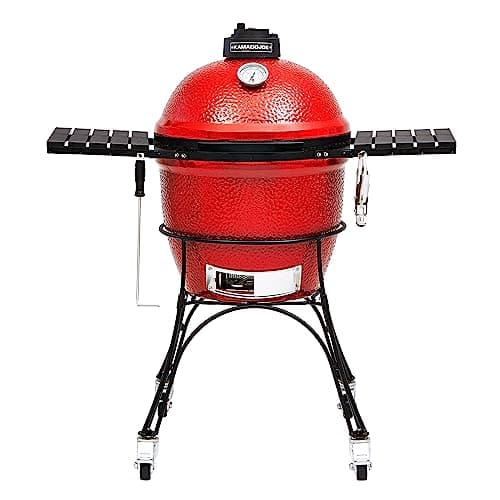
Here is the honest catch, and the reason this hub exists. A full-size ceramic kamado from a name brand costs several times what a good charcoal kettle does — often several hundred dollars, with the biggest models running into four figures — and the ceramic body can weigh well over a hundred pounds. Once it is placed it does not move, and if you drop the lid or knock the shell hard, ceramic can crack. For a budget-first cook, that is a lot of money and mass to commit to a grill you are still learning to love. The efficiency is real, but so is the price of entry.
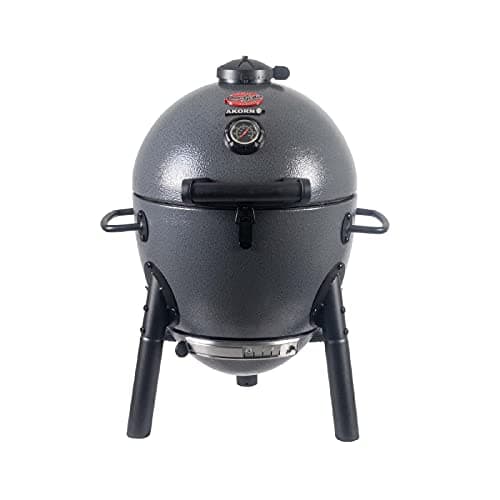
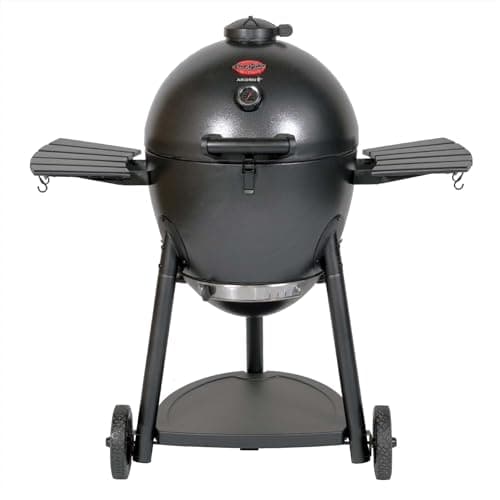
The budget way in is insulated steel instead of ceramic. The Char-Griller Akorn Jr. is the one budget kamado we would actually stand behind: its triple-wall steel body holds heat and sips charcoal much like a kamado does, but it costs a fraction of a ceramic egg and weighs little enough to carry to a campsite. If you want the same idea at full size, our kamado grills under $500 roundup covers the bigger insulated-steel models and the one genuine ceramic that lands under that line, and our kamado grills under $1,000 roundup picks up where full-size ceramic becomes reachable. The trade is size — at 153 square inches the Jr. is a one- or two-person cooker — and steel does not retain heat quite as relentlessly as thick ceramic, and can dent. But as the cheapest honest taste of kamado cooking, it is the value pick, and the only genuine budget kamado worth listing. Budget kamados are a small category on purpose: most cheap “kamado-style” grills are neither cheap enough nor good enough to recommend.
For a lot of budget buyers, the smarter move is not a kamado at all — it is a plain charcoal kettle run with the snake method. Arrange unlit briquettes in a long crescent around the edge of a Weber Original Kettle, light one end, and the fire creeps along like a fuse — giving you hours of low, steady heat for smoking without a kamado’s price or weight. A kettle will not be as fuel-efficient and it takes a little more tending to hold a temperature, but it costs far less, comes in bigger sizes for feeding a crowd, and does most of what a beginner wants a kamado to do. For many people that is the cheaper, more flexible answer.
So this is an honest, guide-led hub rather than a giant roundup — because on a real budget there is one kamado worth buying, not ten. Below you will find our review of the Akorn Jr., a head-to-head on kamado vs kettle for the budget buyer, and a straight answer to whether a kamado is worth it at all. If you decide the efficiency is not worth the outlay, our budget-first grill picks will point you at a kettle that does the job for less.
Everything in Kamado
Char-Griller Akorn Jr. Review: The Budget Kamado
The cheapest honest way into kamado cooking — insulated steel instead of heavy ceramic, at a fraction of the price.
Our top pick
Char-Griller Akorn Jr. Portable Kamado
Kamado vs Kettle: Which Should a Budget Buyer Get?
A ceramic kamado costs several times what a kettle does. Here's when the efficiency is worth it — and when it isn't.
Best Kamado Grills Under $500
Every kamado you can actually buy for under $500, ranked — insulated steel, real ceramic, and the honest trade-off between them.
Our top pick
Char-Griller AKORN Kamado Charcoal Grill (E16620)
$399.99 · View on AmazonPrice as of September 8, 2026. #ad How we’re funded
Best Kamado Grills Under $1,000
The bracket where genuine full-size ceramic comes into reach. What doubling your budget actually buys — and the two-cooker alternative that often beats it.
Our top pick
Kamado Joe Classic Joe I 18" Ceramic Grill (KJ23RH)
Are Kamado Grills Worth It?
What a kamado actually gives you over a normal charcoal grill — fuel savings, heat retention, versatility — and the honest catch.
How to Use a Kamado Grill (Without Overshooting)
A kamado holds heat so well that the usual charcoal habits work against you. Lighting, creeping up on a target temp, and shutting down.
Char-Griller Akorn Kamado Review (Full Size)
Triple-walled insulated steel at a third of ceramic money, in a full 20-inch cooking diameter. What the steel shortcut costs you, stated plainly.
Our top pick
Char-Griller AKORN Kamado Charcoal Grill (E16620)
$399.99 · View on AmazonPrice as of September 8, 2026. #ad How we’re funded
Kamado Joe Jr Review: Real Ceramic, Small Money
The cheapest way to own genuine thick-walled ceramic with a lifetime shell warranty — as long as you accept a two-person cooking surface.
Our top pick
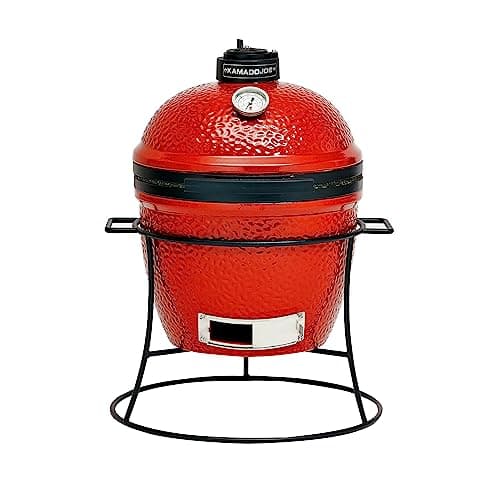
Kamado Joe Joe Jr 13.5" Ceramic Grill (KJ13RH)
Char-Griller Akorn vs Kamado Joe Jr
Insulated steel against real ceramic at budget prices. Heat retention, weight, warranty — and the size question that usually decides it.