Coal & Char

Best Charcoal for Grilling

Steaks, burgers and everyday high heat need fuel that gets hot fast and then gets out of the way. The bags worth buying for short, hot cooks — and the cheapest one that still works.

By Stephen V.Last updated How we pick

Grilling and smoking want almost opposite things from a bag of charcoal, and that is the whole reason this page exists separately from our charcoal for smoking guide. A twelve-hour brisket needs fuel that holds a low, boring temperature for hours without being touched. A steak needs the opposite: a fire that reaches searing heat inside twenty minutes of striking a match, throws that heat straight up into the meat, and is allowed to die out an hour later. Fuel that is brilliant at one job is merely acceptable at the other.

So the ranking below is judged on four things that only matter when the cook is short: time from lit to cooking, peak heat, how much ash you sweep out afterward, and cost per cook — not cost per bag, which is the number that tricks people. A dense fuel that costs twice as much per pound can be the cheaper option if half as much of it fills the chimney.

The short version: for grilling specifically, lump charcoal has the edge. It lights faster, runs hotter and leaves less ash, which is exactly the profile a forty-minute cook wants. Briquettes stay on this list anyway, because they are far cheaper, far more uniform, and the difference at burger temperatures is smaller than the internet suggests. Six bags below, ranked value-first, with live prices pulled from Amazon. We have not burned every one of these ourselves — here is exactly what we do instead.

How this is funded:we earn a commission if you buy through our links, at no extra cost to you. It never changes which grill we recommend, and we’ll tell you when we’d skip one. Full disclosure.

Quick picks

Ranked on published specs, beginner-friendliness and value. Select a row to jump to the full write-up. We haven’t cooked on every one of these — here is exactly what we do instead.

#ProductBest forPrice
1
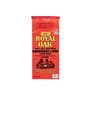
Royal Oak Lump Charcoal (hardwood)

Royal Oak Lump Charcoal (hardwood)

The value lump you'll actually find at the store. Royal Oak is real hardwood lump that lights fast, burns hot and costs little — the sensible everyday choice if you want lump's cleaner flavor and quick high heat without paying premium-brand prices. Piece size is inconsistent, which is the honest trade for the price.

Best overall for grilling
$42.99 · View on Amazon

Price as of September 8, 2026. #ad How we’re funded

2
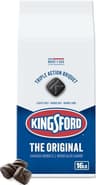
Kingsford Original Charcoal Briquettes (16 lb)

Kingsford Original Charcoal Briquettes (16 lb)

The default for a reason. Kingsford Original briquettes are uniform, cheap, available everywhere and burn at a predictable, steady temperature — which is exactly what you want when you're learning, or running a long low-and-slow cook where consistency beats peak heat. Not the cleanest-burning fuel, but the easiest to control.

Best cheap default
$10.92 · View on Amazon

Price as of September 8, 2026. #ad How we’re funded

3
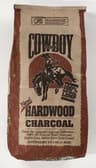
Cowboy Hardwood Lump Charcoal (8.8 lb)

Cowboy Hardwood Lump Charcoal (8.8 lb)

The right size bag for someone who grills occasionally. Cowboy is ordinary supermarket-grade hardwood lump in an 8.8-lb sack, which is roughly three or four full chimneys — enough for a season of weekend burgers on a small grill without a 35-lb bag sitting in the garage soaking up damp. Piece size is small and mixed, so it lights very fast and burns down faster than premium lump. For short, hot cooks that is a feature.

Best small bag
$19.19 · View on Amazon

Price as of September 8, 2026. #ad How we’re funded

4
Jealous Devil Max XL All Natural Hardwood Pillow Briquets (10 lb)

Jealous Devil Max XL All Natural Hardwood Pillow Briquets (10 lb)

The briquette that answers the lump-versus-briquettes argument by refusing to pick a side. These are pressed from all-natural hardwood charcoal rather than the char-plus-binder-plus-filler recipe of a standard bag, so you get the thing briquettes are good at — identical pieces that stack predictably and burn at an even temperature — without the additive smell as they catch. They are also noticeably larger than a supermarket briquette, which is where the burn time comes from. You pay premium-lump money for it, in a box rather than a sack.

Best hardwood briquette
$25.08 · View on Amazon

Price as of September 8, 2026. #ad How we’re funded

5
FOGO Super Premium Hardwood Lump Charcoal

FOGO Super Premium Hardwood Lump Charcoal

Restaurant-grade lump in a home bag. FOGO Super Premium is large, dense Central American hardwood that lights quickly for lump this size and holds a clean, high heat — a favorite for steakhouse-style searing and kamado cooks. Like all premium lump, you pay for the density and the low ash.

Best for searing steaks
$55.95 · View on Amazon

Price as of September 8, 2026. #ad How we’re funded

6
Royal Oak Ridge Premium Briquettes (15.4 lb)

Royal Oak Ridge Premium Briquettes (15.4 lb)

The briquette to buy if you want briquette convenience with a cleaner burn. Royal Oak's ridged shape lights faster and reaches heat quicker than a standard pillow briquette, and the blend leans more natural. A genuine step up from the cheapest bag without paying premium-lump money.

Fastest to cooking heat
$28.41 · View on Amazon

Price as of September 8, 2026. #ad How we’re funded

The picks in full

#1Best overall for grilling

Royal Oak Lump Charcoal (hardwood)

The value lump you'll actually find at the store. Royal Oak is real hardwood lump that lights fast, burns hot and costs little — the sensible everyday choice if you want lump's cleaner flavor and quick high heat without paying premium-brand prices. Piece size is inconsistent, which is the honest trade for the price.

What’s good

  • Real hardwood lump at a budget price
  • Lights fast and reaches searing heat quickly
  • Widely stocked, so it's easy to reorder

Trade-offs

  • Inconsistent piece size — some dust and small bits in the bag
  • Burns faster than premium dense lump on long cooks
TypeLump hardwood
Bag weightNot published
Best forEveryday grilling, fast high heat
LightingFast

Specs read from the product listing, on July 21, 2026. “Not published” means the maker doesn’t state that figure there.

#2Best cheap default

Kingsford Original Charcoal Briquettes (16 lb)

The default for a reason. Kingsford Original briquettes are uniform, cheap, available everywhere and burn at a predictable, steady temperature — which is exactly what you want when you're learning, or running a long low-and-slow cook where consistency beats peak heat. Not the cleanest-burning fuel, but the easiest to control.

What’s good

  • Uniform briquettes burn at a steady, predictable temperature
  • Cheapest way to cook and stocked in every store
  • Long, even burn suits low-and-slow and the snake method

Trade-offs

  • More ash than lump, and a slight additive smell on lighting
  • Doesn't reach the peak searing heat that dense lump does
TypeBriquettes
Bag weight16 lb
Best forEveryday grilling, long steady cooks
BurnSteady and predictable

Specs read from the product listing, on July 21, 2026. “Not published” means the maker doesn’t state that figure there.

#3Best small bag

Cowboy Hardwood Lump Charcoal (8.8 lb)

The right size bag for someone who grills occasionally. Cowboy is ordinary supermarket-grade hardwood lump in an 8.8-lb sack, which is roughly three or four full chimneys — enough for a season of weekend burgers on a small grill without a 35-lb bag sitting in the garage soaking up damp. Piece size is small and mixed, so it lights very fast and burns down faster than premium lump. For short, hot cooks that is a feature.

What’s good

  • Small bag suits a 14-18 inch grill and a few cooks a month
  • Small mixed pieces catch and reach searing heat very quickly
  • Real hardwood lump — no binder smell on lighting

Trade-offs

  • Costs more per pound than a big bag; bulk lump is far better value if you grill weekly
  • Small pieces and bag dust mean a shorter burn — not a fuel for long cooks
TypeLump hardwood
Bag weight8.8 lb (per listing title)
Best forShort, hot cooks on a small grill
Wood speciesNot published

Specs read from the product listing, on August 28, 2026. “Not published” means the maker doesn’t state that figure there.

#4Best hardwood briquette

Jealous Devil Max XL All Natural Hardwood Pillow Briquets (10 lb)

The briquette that answers the lump-versus-briquettes argument by refusing to pick a side. These are pressed from all-natural hardwood charcoal rather than the char-plus-binder-plus-filler recipe of a standard bag, so you get the thing briquettes are good at — identical pieces that stack predictably and burn at an even temperature — without the additive smell as they catch. They are also noticeably larger than a supermarket briquette, which is where the burn time comes from. You pay premium-lump money for it, in a box rather than a sack.

What’s good

  • All-natural hardwood charcoal, so no binder or filler smell on lighting
  • Uniform pieces make fuel loads repeatable — the whole point of a briquette
  • Larger than standard briquettes, which stretches the burn on a full chimney

Trade-offs

  • Costs several times what a bag of standard briquettes does per pound
  • Sold in a 10-lb box, so it is not the fuel to buy for a long weekend of cooking
TypeBriquettes (all-natural hardwood, per listing)
Bag weight10 lb box (per listing title)
Best forEven, repeatable heat without the additive smell
Burn timeNot published

Specs read from the product listing, on August 28, 2026. “Not published” means the maker doesn’t state that figure there.

#5Best for searing steaks

FOGO Super Premium Hardwood Lump Charcoal

Restaurant-grade lump in a home bag. FOGO Super Premium is large, dense Central American hardwood that lights quickly for lump this size and holds a clean, high heat — a favorite for steakhouse-style searing and kamado cooks. Like all premium lump, you pay for the density and the low ash.

What’s good

  • Large, dense pieces burn hot and clean
  • Lights faster than most lump its size
  • Neutral hardwood flavor that doesn't fight the food

Trade-offs

  • Premium price per pound
  • Large chunks may need breaking for a small kettle
TypeLump hardwood (large)
Bag weightNot published
Best forSearing, kamados, clean high heat
AshLow (per listing)

Specs read from the product listing, on July 21, 2026. “Not published” means the maker doesn’t state that figure there.

#6Fastest to cooking heat

Royal Oak Ridge Premium Briquettes (15.4 lb)

The briquette to buy if you want briquette convenience with a cleaner burn. Royal Oak's ridged shape lights faster and reaches heat quicker than a standard pillow briquette, and the blend leans more natural. A genuine step up from the cheapest bag without paying premium-lump money.

What’s good

  • Ridged shape lights and reaches heat noticeably faster
  • Cleaner, more natural blend than basic briquettes
  • Still cheap and easy to find

Trade-offs

  • Burns a little faster than a dense standard briquette
  • Still more ash than lump charcoal
TypeRidge briquettes
Bag weight15.4 lb
Best forFast lighting, everyday grilling
LightingFaster than standard briquettes

Specs read from the product listing, on July 21, 2026. “Not published” means the maker doesn’t state that figure there.

The four things that matter when the cook is short

Time from lit to cooking. This is the criterion nobody writes down and everybody feels. You get home, you want to eat, and the gap between lighting a chimney and putting food on is dead time. Lump charcoal is the faster fuel here: irregular pieces have more edges and corners for the flame to catch, so a chimney of lump is usually ashed over and ready before a chimney of standard briquettes is. Ridged briquettes narrow that gap deliberately, which is the entire reason they are shaped that way.

Peak heat.Searing is a heat-density problem. You need enough energy arriving at the surface of the meat to build a crust before the middle overcooks, and hardwood lump burns hotter than a filled briquette because there is nothing in it but carbon. If you are chasing the 450°F–550°F grate temperatures our temperature guide calls for on a steak, lump gets you there with less fuel and less fussing.

Ash. Ash is the tax you pay after dinner. It also smothers a fire from below as it accumulates, which matters more than people expect on a small grill where the fuel bed is close to the ash pan. Lump produces noticeably less of it than briquettes; natural and hardwood briquettes sit in between. On a short cook you will not choke a fire out, but you will notice the difference in the ash catcher.

Cost per cook. The one people get wrong. The unit of measurement that actually matters is the chimney, not the pound, because a chimney is a fixed volume no matter what you put in it. A chimney of lump weighs less than a chimney of briquettes, so a heavy bag of dense lump goes further than the sticker price implies. Our how much charcoal to use guide works in chimneys for exactly this reason: it is the only unit that lets you compare two different fuels honestly.

Lump or briquettes for grilling?

If you only ever grill — burgers, chicken pieces, steaks, vegetables, nothing that takes more than an hour — lump is the better fuel and the difference is real rather than theoretical. It lights faster, hits a higher peak, and leaves less to clean up. That is three of our four criteria, and the fourth (cost) is the only one briquettes win.

But they win it convincingly. Standard briquettes are the cheapest way to make fire in a grill, they are stocked in every hardware store and gas station, and because every piece is identical you can build the same fire twice. That repeatability is genuinely valuable when you are learning — it is much easier to work out what went wrong on a cook when the fuel was not the variable. If you are still finding your feet, buy briquettes and spend the saved money on a thermometer.

The pragmatic answer most people land on is both: a big bag of briquettes for everyday cooking and a smaller bag of lump for the nights you are searing something worth searing. Nothing bad happens if you mix them in the same fire, and plenty of people top a briquette bed with a few lumps for the last few minutes. If you want the full argument with a side-by-side table, we lay it out on lump vs briquettes.

How the bags differ, and what you are paying for

Value lump is real hardwood, carbonized and bagged, with no sorting for piece size. You get fist-sized chunks, thumb-sized shards and a layer of dust at the bottom of the bag. That mix lights extremely fast, which is a genuine advantage for grilling, and burns down faster, which is a genuine disadvantage for anything long. For a weeknight, it is the sweet spot.

Premium lump is the same product with the pieces graded large and the wood chosen for density. You are paying for consistency and for a longer, more even burn out of the same chimney volume. It is worth it if you sear often, if you run a kamado where the fuel sits for hours behind a closed lid, or if you simply hate breaking up chunks with tongs.

Standard briquettes are char plus a binder plus, depending on the bag, some filler, pressed into identical pillows. The filler is why they make more ash and why the first few minutes of lighting smell faintly of something other than wood. We wrote up exactly what goes into them on what charcoal briquettes are made of.

Natural and hardwood briquettes drop most or all of the filler. Ridged natural briquettes light faster because the ridges give the flame purchase; all-hardwood briquettes go further and use only carbonized wood as the raw material, which gets you a briquette that behaves more like lump on heat and ash while keeping the identical-pieces advantage. The catch is price: they cost several times what a supermarket bag does per pound.

Buy the fuel to fit the grill, not the other way around

Bag size is a real decision, not a rounding error, and the honest answer depends on how often you cook.

On a 14–18 inch grill — a Smokey Joe, a Go-Anywhere, anything in our small grills roundup — a full cook is a compact chimney of fuel. A 35-lb sack will take you a very long time to get through, and charcoal that sits in a damp garage for two seasons lights badly. It does not spoil, but it absorbs moisture, which is the whole subject of our charcoal storage guide. For occasional grilling, a small bag you finish is better value than a big bag you do not.

If you grill most weeks on a 22-inch kettle, the math flips completely. Bulk bags are dramatically cheaper per pound, and you will get through one before damp becomes an issue. Buy the biggest bag you can store dry.

One more thing worth saying plainly, because it costs you money: charcoal is heavy, bulky and cheap for its weight, which is the worst possible combination for shipping. The delivered price online often reflects that. Check the per-pound cost against your local hardware or big-box store before you order a sack — especially in peak grilling season, when charcoal is the sort of thing stores discount to get you through the door. Buying our top pick from a shelf instead of from our link is a perfectly good outcome; the point of this page is that you burn the right fuel.

What the charcoal will not do

Charcoal is heat. It is not flavor, or not much of it. Good charcoal burning properly makes very little smoke, and the difference in taste between two clean bags is far smaller than the difference made by drying the surface of your meat or getting the grate hot enough. If you want actual smoke character on a grilled steak or a chicken thigh, that comes from a couple of wood chunks laid on the coals, not from a fancier bag of fuel.

The corollary matters more: bad charcoal absolutely can hurt the food. Fuel that is damp, dusty, or still off-gassing because you started cooking too early gives you acrid smoke and a harsh edge on anything with a fatty surface. That is not a reason to buy the expensive bag — it is a reason to wait for the coals to ash over gray before the food goes on, whichever bag you bought. Our lighting guide covers the chimney method and the fluid-free backups.

The last thing charcoal is not: a substitute for a chimney starter. Self-lighting briquettes exist and we do not recommend them. They solve a problem that fifteen dollars of galvanized steel solves permanently, and they solve it by soaking the fuel in an accelerant you then cook over.

Getting more heat out of the bag you already own

Before you buy a different fuel, it is worth checking whether the fire is the problem or the setup is. Three things change searing heat far more than a bag swap.

Get the coals closer to the food. Distance is everything. Grills with a height-adjustable charcoal pan let you raise the fire; on a kettle, a pair of charcoal baskets pushed together concentrate the same fuel into a deeper, hotter bed instead of letting it spread thin. This is the single biggest lever, and it is free.

Use more fuel than you think for searing. A half-full chimney spread across a 22-inch grate is a warm grill, not a hot one. For steak, a full chimney banked into half the bowl gives you a genuinely fierce zone and a cool side to retreat to.

Open the vents and leave the lid off while you sear. Charcoal temperature is airflow. A closed bottom vent is the most common reason a fire that should be roaring is merely warm.

If you have done all three and the grill still will not sear, the grill is the limit rather than the fuel, and our best charcoal grills for steaks page covers what actually fixes it.

Our picks in one line each

Grilling most weeks, want the best all-round answer: Royal Oak lump. Fast, hot, real hardwood, cheap enough to burn without thinking about it.

Cooking on a budget or still learning: Kingsford Original. Uniform, cheapest per cook, available everywhere, and the predictability is worth more than the extra heat while you are working out vents.

Small grill, a few cooks a month:Cowboy’s small bag of lump. You will finish it before it goes damp.

Want briquette repeatability without the filler:Jealous Devil’s hardwood pillow briquets. Premium price, but the only pick here that gives you identical pieces and a clean burn at once.

Steak night, and the crust is the point: FOGO Super Premium. Large, dense pieces and the hottest, cleanest fire on this list.

Impatient: Royal Oak Ridge. Ridged briquettes reach cooking heat faster than standard pillows while staying a briquette in every other respect.

Once you have picked a bag, the next thing to get right is how much of it you light and where you put it. Both of those are covered in our beginner’s guide to using a charcoal grill, and the numbers-by-grill-size version lives in how much charcoal to use.
Frequently asked questions

Is lump or briquettes better for grilling?

Lump, for grilling specifically. It lights faster, burns hotter and leaves less ash — all three of which matter on a cook that lasts under an hour. Briquettes win on cost and on consistency, which is why they're still the sensible default if you're learning or cooking often on a budget. Many people keep both and reach for lump on steak night.

What charcoal is best for burgers?

Almost any of them, honestly — burgers are forgiving, and this is the cook where the cheap bag is genuinely fine. Standard briquettes give you a steady, even bed across the whole grate, which is what you want when you're cooking eight patties at once. If you like a harder crust, lump gets the grate hotter for the sear.

What charcoal gets the hottest for searing steak?

Dense hardwood lump, because there's nothing in it but carbon — no binder and no filler to burn through first. Large-piece premium lump is the hottest fuel on this page. That said, how close the coals sit to the meat and how deep the bed is change searing heat more than the choice of bag does.

How much charcoal do I need for grilling?

Measure in chimneys, not handfuls or pounds — a chimney is a fixed volume whatever fuel you put in it. A full chimney banked to one side suits a 22-inch kettle for most cooks; a compact chimney is a full load for a 14-inch grill. Our how-much-charcoal guide breaks it down by grill size and cook type.

Can you mix lump and briquettes in the same fire?

Yes, and it's a common and sensible thing to do. A bed of briquettes for a long, even base with a few pieces of lump added for the sear gives you the steadiness of one and the peak heat of the other. Nothing about the two fuels reacts badly together.

Is expensive charcoal actually worth it?

For grilling, only sometimes. Premium lump buys you larger, denser pieces that burn hotter and longer per chimney, which pays off if you sear regularly or run a kamado. For weeknight burgers over a kettle it's money that would be better spent on a thermometer or a chimney starter. Buy the expensive bag for the cook that justifies it, not by default.

Does charcoal go bad or lose heat over time?

Charcoal doesn't expire, but it absorbs moisture from the air, and damp charcoal is genuinely harder to light and burns cooler. That's the real argument for buying a bag size you'll actually finish. Stored somewhere dry and off a concrete floor, a bag will still light fine years later.

Sources

Keep reading