Coal & Char

Charcoal: Lump vs Briquettes, and the Best Bags

The fuel decides half your result. Which charcoal to buy, when lump beats briquettes, and the bags worth reordering — with live prices.

By Stephen V.Last updated How we pick

People obsess over the grill and shrug at the fuel, which is backwards — the charcoal you burn decides at least half of how your cook turns out. It sets your peak heat, how long the fire lasts, how much ash you sweep out afterward, and even how the food tastes. The good news for a budget buyer is that great charcoal is cheap, and the difference between the right bag and the wrong one costs you cents per cook, not dollars.

There are two kinds, and the choice is simpler than the internet makes it sound. Lump charcoalis just hardwood burned down to carbon — nothing added. It lights fast, burns hotter and cleaner, throws less ash, and gives food a subtle real-wood note. That makes it the pick for searing steaks and for kamado grills, where high, clean heat is the whole point. The trade-offs: it costs more per pound, burns through faster, and comes in uneven pieces — some big chunks, some dust.

Briquettesare compressed charcoal made to a uniform size, so they burn at a steady, predictable temperature for a long time. That consistency is exactly what you want when you are learning, or running a long low-and-slow cook where a rock-steady 250°F beats a roaring peak. They are the cheapest way to cook and stocked in every store. The trade-offs: more ash, a slightly lower ceiling on searing heat, and — with the standard bags — a faint additive smell as they light.

So we do not crown one winner; we rank the bags worth buying in each camp, budget-first. What matters most for value is cost per cook, not the sticker on the bag — a denser lump or briquette that burns longer can be cheaper over a season than a bag that looks half the price but burns out in an hour. Prices below are pulled live from Amazon and dated. We have not lit every bag ourselves; here is exactly what we do instead.

How this is funded:we earn a commission if you buy through our links, at no extra cost to you. It never changes which grill we recommend, and we’ll tell you when we’d skip one. Full disclosure.

Quick picks

Ranked on published specs, beginner-friendliness and value. Select a row to jump to the full write-up. We haven’t cooked on every one of these — here is exactly what we do instead.

#ProductBest forPrice
1
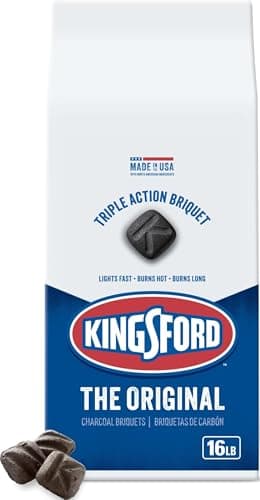
Kingsford Original Charcoal Briquettes (16 lb)

Kingsford Original Charcoal Briquettes (16 lb)

The default for a reason. Kingsford Original briquettes are uniform, cheap, available everywhere and burn at a predictable, steady temperature — which is exactly what you want when you're learning, or running a long low-and-slow cook where consistency beats peak heat. Not the cleanest-burning fuel, but the easiest to control.

Best all-round value
$10.92 · View on Amazon

Price as of July 22, 2026. #ad How we’re funded

2
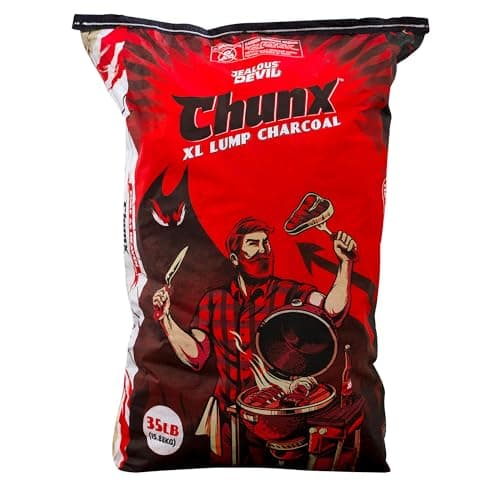
Jealous Devil Chunx XL Lump Charcoal (35 lb)

Jealous Devil Chunx XL Lump Charcoal (35 lb)

The lump serious cooks reach for. Big, dense South American hardwood chunks that burn hot, run long and throw very little ash or spark — which is exactly what you want in a kamado or for a hard sear. It costs more than grocery-store lump, but a 35-lb bag of big chunks goes a long way.

Best premium lump
$52.99 · View on Amazon

Price as of July 22, 2026. #ad How we’re funded

3
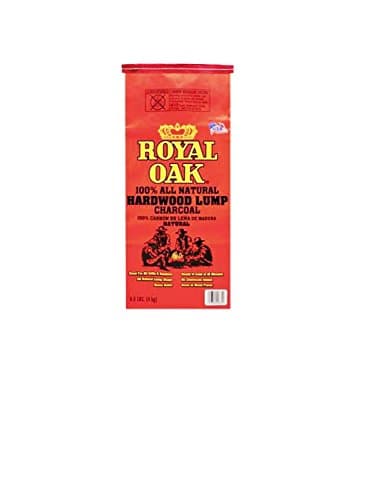
Royal Oak Lump Charcoal (hardwood)

Royal Oak Lump Charcoal (hardwood)

The value lump you'll actually find at the store. Royal Oak is real hardwood lump that lights fast, burns hot and costs little — the sensible everyday choice if you want lump's cleaner flavor and quick high heat without paying premium-brand prices. Piece size is inconsistent, which is the honest trade for the price.

Best budget lump
$43.49 · View on Amazon

Price as of July 22, 2026. #ad How we’re funded

4
Royal Oak Ridge Premium Briquettes (15.4 lb)

Royal Oak Ridge Premium Briquettes (15.4 lb)

The briquette to buy if you want briquette convenience with a cleaner burn. Royal Oak's ridged shape lights faster and reaches heat quicker than a standard pillow briquette, and the blend leans more natural. A genuine step up from the cheapest bag without paying premium-lump money.

Best natural briquette
$28.99 · View on Amazon

Price as of July 22, 2026. #ad How we’re funded

5
FOGO Super Premium Hardwood Lump Charcoal

FOGO Super Premium Hardwood Lump Charcoal

Restaurant-grade lump in a home bag. FOGO Super Premium is large, dense Central American hardwood that lights quickly for lump this size and holds a clean, high heat — a favorite for steakhouse-style searing and kamado cooks. Like all premium lump, you pay for the density and the low ash.

Best for high heat
$55.95 · View on Amazon

$74.1325% off

Price as of July 22, 2026. #ad How we’re funded

The picks in full

#1Best all-round value

Kingsford Original Charcoal Briquettes (16 lb)

The default for a reason. Kingsford Original briquettes are uniform, cheap, available everywhere and burn at a predictable, steady temperature — which is exactly what you want when you're learning, or running a long low-and-slow cook where consistency beats peak heat. Not the cleanest-burning fuel, but the easiest to control.

What’s good

  • Uniform briquettes burn at a steady, predictable temperature
  • Cheapest way to cook and stocked in every store
  • Long, even burn suits low-and-slow and the snake method

Trade-offs

  • More ash than lump, and a slight additive smell on lighting
  • Doesn't reach the peak searing heat that dense lump does
TypeBriquettes
Bag weight16 lb
Best forEveryday grilling, long steady cooks
BurnSteady and predictable

Specs read from the product listing, on July 21, 2026. “Not published” means the maker doesn’t state that figure there.

#2Best premium lump

Jealous Devil Chunx XL Lump Charcoal (35 lb)

The lump serious cooks reach for. Big, dense South American hardwood chunks that burn hot, run long and throw very little ash or spark — which is exactly what you want in a kamado or for a hard sear. It costs more than grocery-store lump, but a 35-lb bag of big chunks goes a long way.

What’s good

  • Dense hardwood burns hotter and longer than cheap lump
  • Very low ash and almost no sparking or popping
  • Big XL chunks are easy to arrange for a long, controlled burn

Trade-offs

  • Priciest lump here — overkill for a quick weeknight burger
  • Big pieces can need breaking up for a small grill
TypeLump hardwood (XL chunks)
Bag weight35 lb
Best forSearing, kamados, long high-heat cooks
Ash / sparkingVery low (per listing)

Specs read from the product listing, on July 21, 2026. “Not published” means the maker doesn’t state that figure there.

#3Best budget lump

Royal Oak Lump Charcoal (hardwood)

The value lump you'll actually find at the store. Royal Oak is real hardwood lump that lights fast, burns hot and costs little — the sensible everyday choice if you want lump's cleaner flavor and quick high heat without paying premium-brand prices. Piece size is inconsistent, which is the honest trade for the price.

What’s good

  • Real hardwood lump at a budget price
  • Lights fast and reaches searing heat quickly
  • Widely stocked, so it's easy to reorder

Trade-offs

  • Inconsistent piece size — some dust and small bits in the bag
  • Burns faster than premium dense lump on long cooks
TypeLump hardwood
Bag weightNot published
Best forEveryday grilling, fast high heat
LightingFast

Specs read from the product listing, on July 21, 2026. “Not published” means the maker doesn’t state that figure there.

#4Best natural briquette

Royal Oak Ridge Premium Briquettes (15.4 lb)

The briquette to buy if you want briquette convenience with a cleaner burn. Royal Oak's ridged shape lights faster and reaches heat quicker than a standard pillow briquette, and the blend leans more natural. A genuine step up from the cheapest bag without paying premium-lump money.

What’s good

  • Ridged shape lights and reaches heat noticeably faster
  • Cleaner, more natural blend than basic briquettes
  • Still cheap and easy to find

Trade-offs

  • Burns a little faster than a dense standard briquette
  • Still more ash than lump charcoal
TypeRidge briquettes
Bag weight15.4 lb
Best forFast lighting, everyday grilling
LightingFaster than standard briquettes

Specs read from the product listing, on July 21, 2026. “Not published” means the maker doesn’t state that figure there.

#5Best for high heat

FOGO Super Premium Hardwood Lump Charcoal

Restaurant-grade lump in a home bag. FOGO Super Premium is large, dense Central American hardwood that lights quickly for lump this size and holds a clean, high heat — a favorite for steakhouse-style searing and kamado cooks. Like all premium lump, you pay for the density and the low ash.

What’s good

  • Large, dense pieces burn hot and clean
  • Lights faster than most lump its size
  • Neutral hardwood flavor that doesn't fight the food

Trade-offs

  • Premium price per pound
  • Large chunks may need breaking for a small kettle
TypeLump hardwood (large)
Bag weightNot published
Best forSearing, kamados, clean high heat
AshLow (per listing)

Specs read from the product listing, on July 21, 2026. “Not published” means the maker doesn’t state that figure there.

Go deeper in Charcoal

Narrower picks, model reviews and guides for exactly what you’re shopping for.

How to choose charcoal

Start with what you cook most. If it is weeknight burgers, chicken and the occasional low-and-slow, standard briquettesare the value default — uniform, cheap, forgiving and steady. If you mostly sear hot and fast, run a kamado, or care about a cleaner flavor and less ash to sweep, reach for lump. Many cooks keep both: a big bag of briquettes for everyday and long cooks, and a bag of lump for steak nights. Our lump vs briquettes guide lays the two side by side in one table.

Then think about cost per cook rather than price per bag. A dense premium lump or a long-burning briquette costs more up front but can outlast a cheaper bag by half again, so the real cost of a cook lands lower. Denser fuel also holds a steady temperature better, which matters more the longer you cook.

Whatever you burn, light it with a chimney starter, not lighter fluid. A chimney lights any charcoal faster and more evenly for about $15, and it removes the chemical taste that charcoal gets unfairly blamed for — that taste comes from fluid, not from the coals. It is the single best upgrade you can make to a cheap bag of charcoal, and it pays for itself in saved fluid within a season.
Frequently asked questions

Lump or briquettes — which is better?

Neither is 'better'; they're built for different jobs. Lump burns hotter and cleaner with less ash, so it's best for high-heat searing and kamado grills. Briquettes burn at a steadier, more predictable temperature for longer and cost less, so they're best for beginners and long low-and-slow cooks. Many cooks keep both and pick by what they're cooking.

How much charcoal do I need?

For direct grilling on a 22-inch kettle, a full chimney (roughly 5-6 quarts, or about 80-100 briquettes) is plenty for burgers, chicken and steaks. For a long low-and-slow cook you'll use more and add coals over time. A 16-18 lb bag of briquettes covers several typical cookouts; heavy grillers buy the biggest bag for the best price per pound.

Is charcoal chemical-free?

Natural lump charcoal is just hardwood burned down to carbon, with nothing added. Standard briquettes contain binders and fillers to hold their shape, and some are pre-treated to light with fluid — those can give a faint additive smell as they light. If you want the cleanest fuel, choose natural lump or a natural briquette, and never use lighter fluid (that, not the coals, is what causes a chemical taste).

How should I store charcoal so it stays good?

Keep it dry. Charcoal doesn't spoil, but it readily absorbs moisture from the air, and damp charcoal is hard to light and burns poorly. Store the bag sealed in a lidded bin or tote in a garage, shed or covered area — off a concrete floor if you can. Kept dry, charcoal lasts indefinitely; leftover coals from a previous cook can be relit too.

Sources

  • USDA FSIS — Grilling Food SafelyUSDA on safe handling at the grill, using a food thermometer, and the difference between grilling and slower cooking (accessed July 21, 2026)

Elsewhere on Coal & Char