Coal & Char

Best Charcoal Briquettes

Uniform, cheap and steady — the charcoal briquettes worth buying for predictable heat and long low-and-slow cooks, including cleaner natural options, with live prices.

By Stephen V.Last updated How we pick

Briquettes are the workhorse fuel, and for good reason. Because each one is pressed to the same size and shape, they burn at a steady, predictable temperature for a long time — which is exactly what you want when you are learning charcoal, or running a long low-and-slow cook where a rock-steady 250°F matters more than a roaring peak. They are also the cheapest way to cook and stocked in every store.

The trade-offs versus lump charcoalare more ash, a slightly lower ceiling on searing heat, and — with the cheapest bags — a faint additive smell as they light. The bags below fix as much of that as a briquette can: from the everyday default to cleaner natural blends with fewer fillers. Ranked by value, with live prices from Amazon, dated.

How this is funded:we earn a commission if you buy through our links, at no extra cost to you. It never changes which grill we recommend, and we’ll tell you when we’d skip one. Full disclosure.

Quick picks

Ranked on published specs, beginner-friendliness and value. Select a row to jump to the full write-up. We haven’t cooked on every one of these — here is exactly what we do instead.

#ProductBest forPrice
1
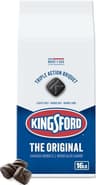
Kingsford Original Charcoal Briquettes (16 lb)

Kingsford Original Charcoal Briquettes (16 lb)

The default for a reason. Kingsford Original briquettes are uniform, cheap, available everywhere and burn at a predictable, steady temperature — which is exactly what you want when you're learning, or running a long low-and-slow cook where consistency beats peak heat. Not the cleanest-burning fuel, but the easiest to control.

Best all-round briquette
$10.92 · View on Amazon

Price as of July 22, 2026. #ad How we’re funded

2
Royal Oak Ridge Premium Briquettes (15.4 lb)

Royal Oak Ridge Premium Briquettes (15.4 lb)

The briquette to buy if you want briquette convenience with a cleaner burn. Royal Oak's ridged shape lights faster and reaches heat quicker than a standard pillow briquette, and the blend leans more natural. A genuine step up from the cheapest bag without paying premium-lump money.

Best natural briquette
$28.99 · View on Amazon

Price as of July 22, 2026. #ad How we’re funded

3
B&B Charcoal Competition Oak & Hickory Briquettes

B&B Charcoal Competition Oak & Hickory Briquettes

The briquette for people who care what's in it. B&B's competition briquettes are made from oak and hickory char with fewer fillers than mass-market briquettes, so they burn cleaner and add a little real wood character — the reason they're popular with competition cooks. You pay more per pound, and the smaller bags reflect that.

Best for low-and-slow
$56.99 · View on Amazon

Price as of July 22, 2026. #ad How we’re funded

The picks in full

#1Best all-round briquette

Kingsford Original Charcoal Briquettes (16 lb)

The default for a reason. Kingsford Original briquettes are uniform, cheap, available everywhere and burn at a predictable, steady temperature — which is exactly what you want when you're learning, or running a long low-and-slow cook where consistency beats peak heat. Not the cleanest-burning fuel, but the easiest to control.

What’s good

  • Uniform briquettes burn at a steady, predictable temperature
  • Cheapest way to cook and stocked in every store
  • Long, even burn suits low-and-slow and the snake method

Trade-offs

  • More ash than lump, and a slight additive smell on lighting
  • Doesn't reach the peak searing heat that dense lump does
TypeBriquettes
Bag weight16 lb
Best forEveryday grilling, long steady cooks
BurnSteady and predictable

Specs read from the product listing, on July 21, 2026. “Not published” means the maker doesn’t state that figure there.

#2Best natural briquette

Royal Oak Ridge Premium Briquettes (15.4 lb)

The briquette to buy if you want briquette convenience with a cleaner burn. Royal Oak's ridged shape lights faster and reaches heat quicker than a standard pillow briquette, and the blend leans more natural. A genuine step up from the cheapest bag without paying premium-lump money.

What’s good

  • Ridged shape lights and reaches heat noticeably faster
  • Cleaner, more natural blend than basic briquettes
  • Still cheap and easy to find

Trade-offs

  • Burns a little faster than a dense standard briquette
  • Still more ash than lump charcoal
TypeRidge briquettes
Bag weight15.4 lb
Best forFast lighting, everyday grilling
LightingFaster than standard briquettes

Specs read from the product listing, on July 21, 2026. “Not published” means the maker doesn’t state that figure there.

#3Best for low-and-slow

B&B Charcoal Competition Oak & Hickory Briquettes

The briquette for people who care what's in it. B&B's competition briquettes are made from oak and hickory char with fewer fillers than mass-market briquettes, so they burn cleaner and add a little real wood character — the reason they're popular with competition cooks. You pay more per pound, and the smaller bags reflect that.

What’s good

  • Oak and hickory char with fewer fillers — cleaner burn
  • Adds a subtle real-wood flavor a plain briquette won't
  • A competition-circuit favorite for consistency

Trade-offs

  • Premium price and sold in smaller bags
  • Overkill for a fast weeknight burger
TypeBriquettes (oak & hickory)
Bag weight8.8 lb (per pack, per listing)
Best forLow-and-slow, competition cooks
FillersLow (per listing)

Specs read from the product listing, on July 21, 2026. “Not published” means the maker doesn’t state that figure there.

Briquettes vs natural options

Not all briquettes are the same inside. Standard briquettes(the classic pillow shape) are made from charcoal char plus binders and fillers that hold the shape and keep the burn even. They are cheap, uniform and reliable — the sensible default for most cooks — but they leave more ash and can smell faintly of additives as they catch.

Natural briquetteslean the other way: made mostly from hardwood char with few or no fillers, sometimes shaped to light faster. They burn cleaner, leave a little less ash, and can add a subtle real-wood note — closer to lump, while keeping the uniform shape and steady burn that make briquettes easy to control. You pay a bit more, and the bags are sometimes smaller.

For everyday grilling, a standard briquette is all most people need. If you cook a lot of low-and-slow barbecue and want a cleaner burn with a touch of wood character, a natural briquette is the upgrade worth making. Either way, skip the “instant light” fluid-soaked bags and light a plain briquette in a chimney starter — it is cleaner, cheaper and tastes better.

Frequently asked questions

What are the best charcoal briquettes?

For all-round value the classic Kingsford Original is the reliable default — uniform, cheap and stocked everywhere. If you want a cleaner, faster-lighting burn, a natural briquette like Royal Oak Ridge is a genuine step up, and for long low-and-slow barbecue a low-filler competition briquette burns cleaner with a touch of real wood flavor.

Are briquettes worse than lump charcoal?

No — just different. Briquettes burn steadier and longer at a predictable temperature and cost less, which makes them better for beginners and long low-and-slow cooks. Lump burns hotter and cleaner with less ash, which is better for searing and kamados. Choose by the cook, not by which is 'better.'

How long do charcoal briquettes burn?

A typical chimney of standard briquettes gives you roughly an hour to an hour and a half of good grilling heat, and briquettes generally hold a steady temperature longer than the same weight of lump. For long cooks, methods like the 'snake' or 'minion' let a bed of briquettes burn slowly for many hours by lighting only a few at a time.

Do briquettes have chemicals in them?

Standard briquettes contain binders and fillers to hold their shape, and 'instant light' versions are pre-soaked with lighter fluid. Neither is dangerous when burned properly, but if you want the cleanest option, choose a natural briquette made mostly from hardwood char and always light it with a chimney rather than fluid.

Sources

  • USDA FSIS — Grilling Food SafelyUSDA on safe handling at the grill, using a food thermometer, and the difference between grilling and slower cooking (accessed July 21, 2026)

Keep reading