Coal & Char

Grilling vs Broiling

Same idea, opposite directions. Heat from below versus heat from above — and why that single geometric difference decides everything about flavor, fat and which foods work.

By Stephen V.Last updated How we pick

How this is funded:we earn a commission if you buy through our links, at no extra cost to you. It never changes which grill we recommend, and we’ll tell you when we’d skip one. Full disclosure.

Grilling and broiling are the same cooking method pointed in opposite directions. Both use intense radiant heat on one face of the food, both work fast, and both produce browning and char rather than gentle even cooking. In much of the world “grill” is in fact the word for the thing Americans call a broiler, which is why the terms tangle so thoroughly.

The practical difference is direction, and it decides more than it sounds like it should. On a grill, heat comes from below and fat falls into the fire. Under a broiler, heat comes from above and fat falls into a pan. Everything else on this page is a consequence of that one sentence.

The comparison in one table

 Charcoal grillingOven broiling
Heat directionFrom belowFrom above
Where the fat goesOnto the coals — smoke and flare-upsInto a pan — no smoke, no flare
Smoke flavorYes, and it’s the pointNone
Heat controlVents, fuel quantity, two-zone layoutRack position, mostly
Time to ready15–20 minutes to light3–5 minutes to preheat
CapacityA whole cookoutOne tray
WeatherOutdoors, and weather affects itIndifferent
CleanupGrate, ashOne pan, and a splattered oven

What fat direction actually changes

On a charcoal grill, rendering fat drips onto live coals, vaporizes, and rises back through the food as smoke. That is not a side effect — it is where a large part of the flavor people call “grilled” comes from. It is also the source of flare-ups, which is why the two-zone fire in our beginner’s guide matters so much: somewhere to move food when the fat catches.

Under a broiler, the fat falls into the pan and stays there. No smoke, no flare, no vapor returning to the food. That makes broiling far more predictable, and it is why a broiler is genuinely better for anything fatty that you do not want smoked — a cheese-topped dish, a delicate fish fillet, chicken skin you simply want crisp.

It also matters for the question people actually mean when they ask which is healthier. The National Cancer Institute’s summary describes polycyclic aromatic hydrocarbons forming when fat and juices drip onto a flame and the resulting smoke coats the food — a route that broiling avoids by design. It also describes heterocyclic amines forming in muscle meat at high temperatures, and that happens under a broiler exactly as it does over coals. So broiling removes one mechanism and not the other, and the practical advice for both is the same: do not incinerate the surface, trim excess fat, turn food frequently, and do not cook directly in flames. We go through it in is charcoal grilling bad for you.

Where broiling genuinely wins

Speed on a weeknight. Three minutes of preheat against twenty minutes for a chimney of coals. If dinner is at seven and you got home at half past six, the broiler wins and there is no shame in it.

Weather.An oven does not care about rain, wind or January. A grill cares about all three — manageable, as our cold-weather guide explains, but real.

Small quantities. Two chops does not justify lighting a grill for most people. It absolutely justifies a broiler.

Finishing and melting. Browning the top of a gratin, blistering peppers, melting cheese onto burgers you cooked earlier, crisping the skin on something that was braised. Heat from above is exactly right for all of it.

Flats and apartments where charcoal is prohibited. A genuine constraint for a lot of people, and the reason our charcoal vs electric comparison exists. If a fire is not permitted where you live, the broiler is your grill.

Where charcoal wins

Flavor, decisively. There is no oven setting that produces what fat vaporizing on coals produces. Add a wood chunk and it is not a close contest.

Sheer heat.A bed of coals close to the grate puts out more energy than most domestic broiler elements, which is why a proper steak crust is easier over charcoal — see best charcoal grill for steaks for the heat-density argument.

Capacity. A broiler pan holds one layer. A 22-inch kettle feeds a party.

Two-zone cooking. This is the big one, and it is what a broiler fundamentally cannot do. On a grill you can build a hot side and a cool side and move food between them, which is how you cook something thick through without burning the outside. A broiler has one setting: intense, from above. Everything thicker than an inch becomes a timing problem.

Long, slow cooking.Ribs, pork shoulder, anything that wants hours — a broiler cannot do this at all, and even a kettle can with the snake method.

How to broil properly, since most people don't

Rack position is your temperature dial. Closest to the element is maximum intensity for thin, fast items; a rack or two down is for anything that needs a few minutes to cook through without the surface burning.

Preheat the pan, not just the oven. Putting food onto a cold tray means the underside steams while the top browns. A cast-iron pan preheated under the element for five minutes gives you searing from below as well as radiant heat from above, which is the closest an oven gets to a grill.

Dry the surface. Same rule as grilling. Wet meat steams; dry meat browns.

Do not walk away. The gap between beautifully browned and ruined under a broiler is measured in seconds, and there is no cool zone to rescue anything to.

Use a thermometer.USDA guidance is that color and time do not tell you when food is safe — 165°F for poultry, 145°F for whole cuts of beef, pork and lamb with a three-minute rest, 160°F for ground meat. That applies identically to broiling and grilling.

The verdict

They are not rivals; they are the indoor and outdoor versions of the same idea, and most households should use both. Broil on a wet Wednesday when you want two pieces of fish on the table in ten minutes. Light the charcoal at the weekend, when the point is not just dinner.

If you have been broiling because you assumed a charcoal grill was expensive or difficult, that assumption is the thing worth revisiting — a genuinely good charcoal grill costs less than most people expect, as our under-$100 picks show, and the whole method is a chimney starter and a two-zone fire.

What we'd actually buy

If this page has convinced you that the missing ingredient is fire rather than technique, these are the two grills we would point you at — plus the instant-read thermometer that improves both methods, since a broiler is if anything less forgiving than a grill.

Quick picks

Ranked on published specs, beginner-friendliness and value. Select a row to jump to the full write-up. We haven’t cooked on every one of these — here is exactly what we do instead.

#ProductBest forPrice
1
TempPro TempSwift TP19H Waterproof Instant-Read Thermometer

TempPro TempSwift TP19H Waterproof Instant-Read Thermometer

The cheap instant-read everyone should own, even alongside a leave-in. Touch the probe to the thickest part of the meat and get a fast, accurate reading — the only reliable way to know a burger, chicken or steak has hit a safe temperature. Waterproof, foldaway probe, a few dollars. There's no reason to guess doneness. Listed under TempPro since ThermoPro renamed itself in 2026 — the TP19H model designation and the hardware are unchanged.

Works for both
$13.98 · View on Amazon

$19.9930% off

Price as of September 8, 2026. #ad How we’re funded

2
Weber Jumbo Joe 18"

Weber Jumbo Joe 18"

A full-flavor Weber kettle that fits in a trunk. The Jumbo Joe is a squat 18-inch kettle with a lid lock for transport — 240 sq in is enough for burgers and a couple of chickens, and it's the same porcelain-enameled steel as the big kettles. For camping, tailgating or a tiny balcony, it's the honest pick.

Cheapest way to stop broiling
$89.99 · View on Amazon

Price as of September 8, 2026. #ad How we’re funded

3
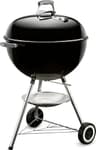
Weber Original Kettle 22" (741001)

Weber Original Kettle 22" (741001)

The plain Weber kettle, and the smartest money on this whole site. It is the same porcelain-enameled 22-inch bowl and the same one-touch ash sweep as the Premium, minus the hinged grate and the big ash catcher, for meaningfully less. If you can live without lifting a corner of the grate to add coals, this is the kettle to buy and the ten-year warranty comes along with it.

The one to buy for life
$149.00 · View on Amazon

$159.006% off

Price as of September 8, 2026. #ad How we’re funded

#1Works for both

TempPro TempSwift TP19H Waterproof Instant-Read Thermometer

The cheap instant-read everyone should own, even alongside a leave-in. Touch the probe to the thickest part of the meat and get a fast, accurate reading — the only reliable way to know a burger, chicken or steak has hit a safe temperature. Waterproof, foldaway probe, a few dollars. There's no reason to guess doneness. Listed under TempPro since ThermoPro renamed itself in 2026 — the TP19H model designation and the hardware are unchanged.

What’s good

  • Fast, accurate reading for the all-important doneness check
  • Waterproof body wipes clean and survives grill spills
  • Cheap enough to be a stocking-filler

Trade-offs

  • You must be at the grill to use it — no remote monitoring
  • Single probe, manual reading only
TypeInstant-read (spot check)
Probes1 (foldaway)
WaterproofYes (per listing)
App / WiFiNo

Specs read from the product listing, on September 2, 2026. “Not published” means the maker doesn’t state that figure there.

#2Cheapest way to stop broiling

Weber Jumbo Joe 18"

A full-flavor Weber kettle that fits in a trunk. The Jumbo Joe is a squat 18-inch kettle with a lid lock for transport — 240 sq in is enough for burgers and a couple of chickens, and it's the same porcelain-enameled steel as the big kettles. For camping, tailgating or a tiny balcony, it's the honest pick.

What’s good

  • Genuinely portable with a lid lock, but 240 sq in still feeds a few people
  • Weber's porcelain-enameled build — far sturdier than throwaway travel grills
  • Dead simple: one vent bottom, one vent top, done

Trade-offs

  • Sits low to the ground — you cook crouched or on a table
  • No ash catcher; you tip it out
TypeCharcoal (portable kettle)
Cooking area240 sq in
Primary materialPorcelain-enameled steel
Ease for beginnersEasy

Specs read from the product listing, on July 21, 2026. “Not published” means the maker doesn’t state that figure there.

#3The one to buy for life

Weber Original Kettle 22" (741001)

The plain Weber kettle, and the smartest money on this whole site. It is the same porcelain-enameled 22-inch bowl and the same one-touch ash sweep as the Premium, minus the hinged grate and the big ash catcher, for meaningfully less. If you can live without lifting a corner of the grate to add coals, this is the kettle to buy and the ten-year warranty comes along with it.

What’s good

  • Same porcelain-enameled bowl and lid as the pricier Premium, for less money
  • One-touch cleaning system with an aluminized steel ash catcher
  • 10-year limited warranty stated on the listing
  • Lid hook, tool hooks and all-weather wheels — the small stuff done right

Trade-offs

  • No hinged cooking grate — you lift the whole grate to add charcoal
  • Smaller ash catcher than the Premium; you empty it more often
  • Weber doesn't state a cooking-area figure on this listing
TypeCharcoal (kettle)
Cooking areaNot published
Primary materialPorcelain-enameled steel
Ease for beginnersEasy

Specs read from the product listing, on August 11, 2026. “Not published” means the maker doesn’t state that figure there.

A note on food safety. Temperatures on this page follow USDA safe-minimum guidance. Always confirm doneness with a food thermometer, not by time or color. We’re enthusiasts sharing what we’ve researched, not professional pitmasters — when in doubt on safety, follow the USDA.

Frequently asked questions

Is broiling the same as grilling?

Mechanically they're close relatives — both cook by intense radiant heat on one surface, at high temperature, fast. The difference is direction. A grill heats from below, so fat falls into the fire; a broiler heats from above, so fat falls into a pan. That's the whole thing, and everything else follows from it.

Is broiling healthier than charcoal grilling?

It sidesteps one specific mechanism. The National Cancer Institute describes PAHs forming when fat drips onto flames and the smoke deposits on the food — a grill-specific route that broiling avoids, since the fat falls away into a pan. But HCAs form in muscle meat at high temperature regardless of the heat source, so a broiler doesn't avoid those. Cooking hot and fast is the shared factor.

Can you get grill flavor from an oven broiler?

You can get the browning, not the smoke. Broiling produces the same Maillard crust and can char the surface of vegetables convincingly. What it can't produce is the flavor that comes from fat vaporizing on hot coals and rising back onto the food — that's a consequence of heat coming from below, and no oven setting replicates it.

What temperature does a broiler run at?

Most broilers don't have a thermostat in the usual sense — the element or burner runs at full output and you control intensity by how close the food sits to it and, on some ovens, by a high/low setting. Treat rack position as your dial, and check your oven's manual for whether the door should be ajar.

Which is better for steak?

A charcoal grill, if you have one lit — coals put out more heat than most domestic broilers and you get the smoke as well. A broiler is the better answer on a wet Tuesday: it's hot, it's fast, and a preheated cast-iron pan under the element gets you a genuinely good crust in minutes with no fire to build.

Do you need to flip food under a broiler?

Yes, for anything thicker than about half an inch. Radiant heat from above browns the top surface hard while the underside barely cooks, so thick pieces need turning to cook evenly. Thin fish fillets and cheese-topped dishes are usually fine one-sided.

Sources

Keep reading