If you are only buying one bag
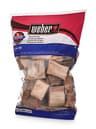
Buy hickory chunks. It is the safe answer for a reason: it works on pork, beef and poultry, it is stocked everywhere, and it is the flavor most people mean when they say something tastes barbecued. The one caveat is that hickory is also the easiest of the common woods to overdo, which is an argument for two chunks rather than five, not an argument for a different wood.
Buy apple instead if what you cook is mostly chicken and pork and you have already decided you do not love a heavy smoke. Buy post oak instead if you bought your cooker to make brisket. Those are the only three answers worth agonizing over; everything else on this page is a second bag.
What the four buying criteria actually mean
Format. Chunks are fist-sized pieces that sit on a lit charcoal bed and smolder for hours. Chips are thin shavings that catch, smoke hard for fifteen or twenty minutes, and are gone. On a charcoal grill you almost always want chunks, because you have a coal bed to bury them in and because every reload means opening the lid and losing chamber heat. Chips have exactly one legitimate job, covered below.
Species fit. The differences between woods are real but narrower than the internet suggests, and they matter most at the extremes: mesquite on a twelve-hour cook is genuinely unpleasant, apple on a brisket is genuinely invisible. Between those poles, hickory, oak, pecan and cherry all make good barbecue. Match the strength of the wood to the strength of the meat and you will not go wrong.
Cost per cook, not cost per bag. Wood is priced by weight or by cubic inches, but it is consumed in chunks. Two or three chunks carry a whole cook, so the number that matters is how many cooks a bag contains. A small bag at the price of a bag of charcoal is not expensive wood; a bulk box at three times the money is not expensive either if you smoke most weekends. The expensive option is the bag that goes damp before you finish it.
Bag size versus how often you smoke.Be honest about this one. If you smoke three or four times a year, the small bags on this page are the right purchase and the bulk box is not. If there is a bullet smoker or an offset in your yard, the arithmetic flips immediately — boxed wood is considerably cheaper per cubic inch and you will get through it.
Which wood for which meat, in one screen
| Wood | Strength | Buy it for |
|---|
| Hickory | Strong | Everything — the one bag to own if you own one |
| Post oak | Medium, clean | Brisket, beef ribs, long cooks |
| Apple | Mild, sweet | Chicken, pork, fish; the beginner-proof wood |
| Cherry | Mild, sweet | Dark bark color; blending with hickory or oak |
| Pecan | Medium, nutty | Pork and poultry when hickory is too much |
| Mesquite | Very strong | Short, hot beef cooks only — a specialist |
We have no mesquite or pecan pick on this page, and that is deliberate rather than an oversight. At the bag sizes currently listed, neither offers better value than the hickory and fruitwood bags above, and mesquite in particular is a wood we would not hand to someone buying their first bag. If you want the longer flavor discussion, the species section of best charcoal for smoking goes further into what each one tastes like.
One hard rule, whatever you buy: never burn softwood — pine, fir, spruce — and never burn treated, painted or reclaimed timber. Resinous smoke tastes like turpentine, and treated wood puts compounds on your food that have no business being there.
Chunks, chips and the pellet question
Chunks are the default and the reason most of this page is chunks. Laid on or beside lit coals they smolder rather than flame, and two or three of them will smoke a cook from start to finish without you touching the lid.
Chips earn their place on the short cook. Thirty minutes of chicken thighs or burgers is not long enough for a chunk to get properly going, and a handful of chips thrown straight onto the coals gives you smoke for the entire cook and burns out exactly when you are plating. That is the case for the chips pick above, and it is the only case we would make for them. On anything over an hour, chunks win outright.
Pelletscome up constantly, usually as “can I sprinkle pellets on my charcoal?” You can, and people do. Hardwood pellets are compressed sawdust with no binder, so they are food-safe on a charcoal fire — but they are even smaller than chips, so they flare and are spent in minutes. A pellet tube smoldering beside the coals is a more sensible way to use them, and if you already own a pellet grill and have half a bag left over, that is the way to spend it. As a thing to buy for a charcoal grill, chunks beat pellets on every measure that matters.
Splits— full logs — are a different product entirely. They are the primary fuel in an offset firebox, not an additive, and they smolder badly in a kettle. If you are running an offset, our guide to running an offset smoker covers burning wood as fuel rather than as seasoning.
What to look for in the bag, and what to avoid
Piece size and consistency. The single biggest quality difference between cheap and good boxed wood is how much of it is usable. A box that is half dust and splinters gives you fewer real chunks than the cubic-inch figure suggests, because the small stuff flares instead of smoldering. Brands that state a cubic-inch volume rather than only a weight are generally the ones confident about what is inside.
Kiln-dried, not green.Smoking wood should be dry. Green or damp wood spends its first stretch on the fire boiling off water, which cools the coals and produces the thick white smoke that makes food taste acrid. This is also why you should not soak chunks before using them — the most persistent piece of folklore in barbecue, and it makes the food worse rather than better.
Skip the flavored and impregnated stuff. Chips soaked in whiskey, wine or bourbon flavoring are a novelty, not an upgrade; the liquid is gone in the first minute and what is left is a normal chip at twice the price. Plain hardwood does the job.
Check the bark and the smell.Loose bark is fine. Visible mold, a musty smell or a bag that has clearly been rained on in a yard is not — that wood will smoke dirty. Wood is a natural product and bags do sit outside at some stores.
How much to use, and where to put it
Less than you think, earlier than you think. Two to four chunks for a whole cook, not per hour. Meat takes on smoke most readily in the first two or three hours while the surface is still cool and damp; once the bark sets, additional wood is mostly decoration. Piling on wood at hour eight does not make barbecue smokier, it makes it bitter.
Aim for thin blue smoke you can barely see against a dark background. Thick white smoke means the wood is smoldering in too little air and depositing the harsh compounds rather than the pleasant ones — open the intake vent and burn a cleaner fire. For a long cook, the snake method spaces chunks along the charcoal line so smoke is released gradually instead of all at once; our guide to smoking on a charcoal grill has the layout.
While the wood is doing its job, the fire still has to hold a temperature. USDA guidance for smoking meat and poultry is to keep the cooker between 225°F and 300°F and to run two thermometers — one for the pit, one in the food — which is exactly the argument our thermometer page makes on cheaper grounds. A lid gauge alone tells you the temperature of the dome, not the grate.
Storing wood so the last chunk works like the first
Wood does not expire, but it absorbs moisture, and damp wood behaves like a different product: harder to get smoldering, and dirtier when it does. Keep the bag or box somewhere dry, off a concrete floor (concrete wicks moisture upward), and closed. The same rules apply to your fuel, and the full version of the argument is in how to store charcoal.
If wood has gone damp, it is not ruined — a week indoors somewhere warm usually brings it back. What will not come back is wood that has grown mold. Throw that out.
Our picks in one line each
Buying one bag and want the answer: Weber hickory chunks. Works on everything, costs about what a bag of briquettes costs.
Mostly chicken and pork, or you found hickory too heavy: Weber apple chunks. The hardest wood on this list to overdo.
You own a bullet smoker or an offset:Western’s 570 cubic-inch hickory box. Considerably more wood per dollar, and you will actually get through it.
You bought the cooker to make brisket:B&B post oak. The Central Texas standard, in the box size that suits twelve-hour cooks.
You want ribs that look like the photos: Weber cherry chunks, ideally with a chunk of hickory alongside for the flavor.
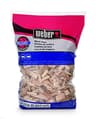
Weeknight cooks that finish in half an hour: Weber hickory chips. The only format that makes sense when the cook is shorter than a chunk takes to get going.
Once the wood is sorted, the remaining variable is the fire under it. Which charcoal to burn for a long cook is covered in best charcoal for smoking, and if you are choosing a cooker rather than a bag, charcoal smokers for beginners is the place to start.