Why a kamado cares more than a kettle
An open kettle forgives almost any fuel. It has a wide bowl, a big bottom vent and an ash sweep; if the charcoal makes a lot of ash you empty the catcher and carry on. A kamado is a sealed ceramic jar with a small vent at the bottom, a firebox grate with holes in it, and no way to clear ash mid-cook without opening everything up. Ash that would fall harmlessly through a kettle sits on the firebox grate and closes the holes one by one. Four hours into a pork shoulder that is the whole explanation for a pit that has sagged to 200°F with the vents wide open.
Two consequences for what you buy. Ash first: the less a fuel leaves behind, the longer the fire breathes. Lump is charred wood and not much else, which is why it wins here; briquettes carry binder and, in most bags, filler, all of which ends up in the ash pan. Our explainer on what briquettes are made of goes through it. Piece size second: big, dense chunks leave air gaps between them; small pieces and bag dust pack into a mat. A bag that is mostly large lump behaves better in a kamado than a bag of the same wood broken small.
What to look for in a bag
- Large, consistent pieces.The Jealous Devil and FOGO bags are sold on exactly this, and both listings note that the chunks may need breaking up for a small grill — which for a kamado is a feature, not a con. Sift the dust from the bottom of any bag before it goes in the firebox.
- Low ash, stated. Both premium picks say so on the listing; the value picks do not claim it, and their smaller mixed pieces are the honest reason.
- Density.Dense hardwood burns longer per pound, which in a kamado means fewer refuels — and refueling a kamado mid-cook is a genuine nuisance, as our how to use a kamado guide explains.
- Bag size that matches the firebox. A 35-lb sack is the right buy for a full-size Classic or Akorn you use weekly. It is the wrong buy for a Joe Jr on a balcony, where a small bag stays dry and gets used before it goes stale.
How much to load, and the fuel you get back
Fill the firebox. For grilling, to just below the fire ring; for a long cook, all the way. This feels wasteful the first time, and it is the opposite: when you shut both vents at the end of the cook the fire suffocates, and the unburnt lump is there for next time. That changes the cost-per-cook math in the premium bags’ favor, because a dense chunk that did not burn today is a dense chunk you do not buy tomorrow. It also means you light small — a few pieces in one spot, not a whole chimney — and let the fire spread, which is the other reason briquettes are a poor fit: with only part of the load lit when the food goes on, a briquette’s lighting smell is still in the cooker.
Our guide to how much charcoal to use has loads by cook type for kettles as well, if you run both.
The picks, briefly
Jealous Devil Chunx XL is the bag the category is described around: big, dense South American hardwood, very low ash and almost no sparking per the listing, in a 35-lb sack that lasts a season on a kamado that gives fuel back. It costs more per bag than anything else here and less per cook than the price suggests.
FOGO Super Premium is the same idea with a different emphasis: it lights faster than most lump its size and holds a clean, neutral high heat, which makes it the pick if your kamado is mostly a steak machine. Same premium price, same big pieces.
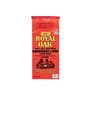
Royal Oak lump is real hardwood lump at a supermarket price and it works in a kamado; the trade is inconsistent piece size and some dust, so sift it and expect to clean the firebox a little more often on long cooks. For weeknight grilling it is the sensible everyday bag.
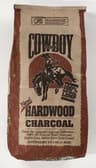
Cowboy’s 8.8-lb bag is the right size for a Joe Jr or an Akorn Jr: three or four fireboxes of fuel, small pieces that light fast, no 35-lb sack soaking up damp in a small apartment. Not the bag for an overnight cook, and it does not pretend to be.
Jealous Devil Max XL briquettesare here for one reader: the person who wants a briquette’s identical, stackable pieces and will not be talked out of it. They are pressed from all-natural hardwood charcoal without the usual binder-and-filler recipe, so they make less ash than a supermarket briquette and do not have the lighting smell. Still more ash than lump; still not our first choice in a sealed cooker.
What we would skip
Standard briquettes, for anything longer than a burger cook. The ash volume is the problem, not the flavor, and it is a problem the kamado cannot solve mid-cook. Our lump vs briquettes comparison has the general case; this page is the special case where the answer is not close.
Self-lighting anything. A kamado holds smoke by design. Whatever a match-light briquette gives off, the ceramic keeps.
Flavored or “smoky” charcoal in place of wood. Charcoal is heat; smoke flavor comes from wood chunks on top of it. Two chunks from our best smoking woodpicks on a bed of plain lump beats any flavored fuel, and the kamado’s sealed body means you need fewer chunks than a kettle does.
Whatever you burn, run two thermometers: the USDA’s smoking guidance is one for the pit and one for the meat, and a kamado’s dome gauge reads the air at the top of the dome, not the grate. Our thermometer picks include the cheap dual-probe that does both jobs.