Coal & Char

Charcoal Grill Not Getting Hot Enough? (Or Keeps Going Out)

Nine causes in the order to check them: airflow, ash, damp fuel, too little charcoal spread too thin, and the lid habit that smothers a fire. Plus the fixes that cost nothing.

By Stephen V.Last updated How we pick

How this is funded:we earn a commission if you buy through our links, at no extra cost to you. It never changes which grill we recommend, and we’ll tell you when we’d skip one. Full disclosure.

A charcoal grill that will not get hot, or lights fine and then dies, is almost never broken. It is being starved of something — air, fuel or time — and the cause is nearly always one of nine things. This page goes through them in the order to check, because the first two account for most of the complaints and cost nothing to fix. Work down the list until the fire behaves.

One principle explains most of it: a charcoal fire needs air from underneath. Anything that blocks the path from the bottom vent, up through the charcoal grate and through the coal bed, makes the fire weak; anything that opens it makes the fire strong. Keep that in mind and the list below will make sense.

1. The bottom vent is closed, or buried in ash

Check this before anything else. On a kettle the bottom vent is a set of slots in the base of the bowl, and last cook’s ash sits directly on top of them. A grill that was not emptied is a grill with its air supply half shut, and no amount of opening the top vent will help. Empty the ash catcher, sweep the slots clear, and set the bottom vent fully open while you bring the grill up to heat. On a barrel, the dampers at the ends of the firebox are the same control and the ash pan under them is the same problem.

This is also the number one answer to “my charcoal keeps going out.” A fire that lights, burns for twenty minutes and fades is a fire that used up the air it had and could not draw more.

2. The coals went on before they were ready

Coals are ready when the top layer is gray with ash and glowing underneath, about fifteen minutes in a chimney. Poured early, half the chimney is lit and half is not, and the unlit half absorbs heat from the lit half instead of adding to it. The result is a grill that never reaches temperature and often goes out. Wait for the ash. If you do not own a chimney, our lighting guide has fluid-free alternatives; if you do, make sure the starter underneath is actually burning when you walk away from it.

3. Not enough charcoal

A single layer of coals cannot sear anything. For a 22-inch kettle the normal load is a full chimney; for hot-and-fast grilling, all of it. Beginners under-fill because a full chimney looks like a lot of fuel, then blame the grill. Our guide to how much charcoal to use gives the loads by grill size and cook type, and the number is higher than most people guess.

4. The charcoal is spread too thin

The same amount of charcoal spread evenly across the whole grate gives a weak, even heat everywhere. Banked on one side, two coals deep, it gives a hot side that sears properly and a cool side to finish on. If your grill is “not hot enough to sear,” this is usually the reason, and the fix is a rake and thirty seconds. On long cooks the bank slumps and spreads on its own, which is what charcoal baskets prevent; the full method is in our two-zone grilling guide.

5. The charcoal is damp

Charcoal does not go off, but it does soak up water — from a garage floor, an open bag in a shed, a day of rain on a grill with charcoal left in it. Damp coals light slowly, smoke heavily and stall well short of searing heat. If the bag has been open a while or lived somewhere damp, that is the cause. Our guide to storing charcoal covers keeping it dry and drying out a bag that got wet.

6. The lid is on with the top vent shut — or off entirely

Two opposite mistakes, same result. Lid on with the top vent closed: no exhaust, the fire smothers in its own exhaust and dies. Lid off: on a windy day the fire can run hot, but on a still day it loses the enclosed heat that gets a grate to searing temperature, and it cannot hold anything for a long cook. The right position for heating up is lid on, both vents fully open; adjust the bottom vent down only once you are at temperature. Our temperature guide has the vent settings and a heat-zone chart.

7. The grill leaks, or the weather is stealing the heat

Barrel grills have a long flat lid seam that leaks air along its length, and thin steel that sheds heat in wind and cold. In those conditions a cheap barrel struggles to hold a high temperature no matter what you do with the vents. The fix is high-temperature gasket tape on the lid rim — the first item in our cheap grill upgrades— and a windbreak. Our cold-weather grilling guide covers the winter version, where you should also expect to use more fuel.

8. The grate is too far from the coals

If the grill holds a normal temperature but will not put a crust on a steak, the fire is fine and the geometry is the problem. Most charcoal grills fix the coals six or seven inches under the grate. Grills with an adjustable charcoal pan — the Char-Griller Patio Pro and many barrels — let you raise them to a few inches, which is where a real sear happens. On a kettle you cannot raise the coals, but banking them deeper on one side gets you most of the way; our steak grill roundup covers the adjustable-pan grills in detail.

9. The fuel is the wrong kind for the job

Briquettes burn steadily and predictably, which is exactly why they are the right fuel for beginners and long cooks — and exactly why they do not reach the peak heat a sear wants. Hardwood lump burns hotter and lights faster. If everything else is right and the grill still feels underpowered for steak, switch the fuel for that cook. Our lump vs briquettes comparison has the full trade, and best charcoal for grilling has the bags for short, hot cooks.

Stop guessing: measure it

Most people diagnosing a “cold” grill are reading the lid thermometer, which measures the air at the top of the dome, or holding a hand over the grate. A probe clipped at grate level tells you what the cooking surface is actually doing, and a second probe in the meat tells you when to stop — which the USDA is clear is the only reliable way to know food is safe. Half the time the grill was fine and the gauge was wrong. Our thermometer picks include a cheap dual-probe that does both jobs.

The five-minute reset when a fire is dying

  1. Lift the cooking grate off with tongs or gloves.
  2. Rake the coals into one pile and knock the ash off them.
  3. Clear ash from the bottom vent and open it fully.
  4. Add a half chimney of freshly lit coals on top of the pile if you have them; if not, add unlit coals to the edge of the pile, not on top.
  5. Grate back on, lid on, top vent open over the food. Give it ten minutes before you judge it.

If that does not bring it back, the charcoal is damp or you ran out of fuel, and the honest fix is a fresh chimney. If it happens every cook, start again at cause 1 and work down — and if you are new to all this, our beginner’s guide covers the habits that stop it happening in the first place, and the rest of our guides pick up from there.

What to buy, if the free fixes were not enough

Most of the causes above cost nothing to fix. These four are for the ones that do: a chimney if you have been lighting badly, baskets if the bank keeps spreading, a bag of lump if you are asking briquettes to sear, and a grate probe so you stop guessing what the grill is doing. Live Amazon prices, dated.

Quick picks

Ranked on published specs, beginner-friendliness and value. Select a row to jump to the full write-up. We haven’t cooked on every one of these — here is exactly what we do instead.

#ProductBest forPrice
1
Amazon Basics Charcoal Chimney Starter (6.6 lb capacity)

Amazon Basics Charcoal Chimney Starter (6.6 lb capacity)

There is no technology in a chimney starter — it is a steel tube with a grate across the middle and a handle on the side — so the only sensible way to buy one is to get a full-size body for the least money. This is that. The listing states a 6.6-pound capacity, which is a full 22-inch kettle's worth of briquettes in a single light, and it costs less than the name-brand alternatives that do exactly the same job. If you buy one thing on this page, buy this.

Fixes causes 2 and 3
$19.26 · View on Amazon

Price as of September 23, 2026. #ad How we’re funded

2
Kitchique Stainless Charcoal Baskets, 2-Pack (MTL-01)

Kitchique Stainless Charcoal Baskets, 2-Pack (MTL-01)

The cheapest honest way to turn a bare kettle into a two-zone cooker. A pair of mesh stainless baskets, around fifteen inches long, that pen the coals where you put them instead of letting them spread across the grate as they burn down. It's a fourteen-dollar upgrade that changes how the grill behaves — the trade is thinner steel and a one-month warranty.

Fixes cause 4
$13.99 · View on Amazon

Price as of September 23, 2026. #ad How we’re funded

3
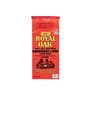
Royal Oak Lump Charcoal (hardwood)

Royal Oak Lump Charcoal (hardwood)

The value lump you'll actually find at the store. Royal Oak is real hardwood lump that lights fast, burns hot and costs little — the sensible everyday choice if you want lump's cleaner flavor and quick high heat without paying premium-brand prices. Piece size is inconsistent, which is the honest trade for the price.

Fixes cause 9
$35.90 · View on Amazon

$43.5918% off

Price as of September 23, 2026. #ad How we’re funded

4
TempPro TempSync TP20 Wireless Dual-Probe Thermometer

TempPro TempSync TP20 Wireless Dual-Probe Thermometer

The best-value way to actually know your temperatures. Two leave-in probes — one for the meat, one for the grate — read on a handheld receiver with a stated 500-foot range, so you can watch a low-and-slow cook from inside the house. No app, no WiFi to fight with, and a price that makes 'I'll just eyeball it' indefensible. This is the thermometer sold for years as the ThermoPro TP20: ThermoPro rebranded to TempPro in 2026, so the box and the listing now say TempPro. Same ASIN, same hardware, new name.

Tells you which cause it is
$35.99 · View on Amazon

$56.9937% off

Price as of September 23, 2026. #ad How we’re funded

#1Fixes causes 2 and 3

Amazon Basics Charcoal Chimney Starter (6.6 lb capacity)

There is no technology in a chimney starter — it is a steel tube with a grate across the middle and a handle on the side — so the only sensible way to buy one is to get a full-size body for the least money. This is that. The listing states a 6.6-pound capacity, which is a full 22-inch kettle's worth of briquettes in a single light, and it costs less than the name-brand alternatives that do exactly the same job. If you buy one thing on this page, buy this.

What’s good

  • 6.6 lb stated capacity — a full kettle load in one light
  • Lights coals evenly in about 15 minutes with no lighter fluid
  • About as cheap as a full-size chimney gets, and in stock
  • Fits any charcoal grill — nothing to match up or measure

Trade-offs

  • Plain metal handle with no heat shield — a glove is not optional
  • You still need a sheet of paper or a wax cube underneath to light it
  • Galvanized steel discolors quickly; treat a cheap chimney as a consumable
  • A house-brand product rather than a grill maker's, so there is no parts channel behind it
TypeChimney starter (large capacity)
Stated capacity6.6 lb of charcoal
MaterialGalvanized steel
Lights~15 minutes to ashed-over coals

Specs read from the product listing, on September 17, 2026. “Not published” means the maker doesn’t state that figure there.

#2Fixes cause 4

Kitchique Stainless Charcoal Baskets, 2-Pack (MTL-01)

The cheapest honest way to turn a bare kettle into a two-zone cooker. A pair of mesh stainless baskets, around fifteen inches long, that pen the coals where you put them instead of letting them spread across the grate as they burn down. It's a fourteen-dollar upgrade that changes how the grill behaves — the trade is thinner steel and a one-month warranty.

What’s good

  • Costs about the same as a bag of briquettes
  • Mesh sides keep air moving through the fuel
  • Listed at 15.16 x 4.33 x 2.95 in — sized for a 22-inch kettle
  • Two baskets, so you get a hot side and a genuinely cool side

Trade-offs

  • Thin steel — expect some warping after repeated high-heat cooks
  • Only a one-month warranty is stated on the listing
  • Generic brand with no maker support to speak of
TypeCharcoal baskets, pair
Size15.16" x 4.33" x 2.95" (per listing)
MaterialStainless steel mesh
Warranty1 month (per listing)

Specs read from the product listing, on August 18, 2026. “Not published” means the maker doesn’t state that figure there.

#3Fixes cause 9

Royal Oak Lump Charcoal (hardwood)

The value lump you'll actually find at the store. Royal Oak is real hardwood lump that lights fast, burns hot and costs little — the sensible everyday choice if you want lump's cleaner flavor and quick high heat without paying premium-brand prices. Piece size is inconsistent, which is the honest trade for the price.

What’s good

  • Real hardwood lump at a budget price
  • Lights fast and reaches searing heat quickly
  • Widely stocked, so it's easy to reorder

Trade-offs

  • Inconsistent piece size — some dust and small bits in the bag
  • Burns faster than premium dense lump on long cooks
TypeLump hardwood
Bag weightNot published
Best forEveryday grilling, fast high heat
LightingFast

Specs read from the product listing, on July 21, 2026. “Not published” means the maker doesn’t state that figure there.

#4Tells you which cause it is

TempPro TempSync TP20 Wireless Dual-Probe Thermometer

The best-value way to actually know your temperatures. Two leave-in probes — one for the meat, one for the grate — read on a handheld receiver with a stated 500-foot range, so you can watch a low-and-slow cook from inside the house. No app, no WiFi to fight with, and a price that makes 'I'll just eyeball it' indefensible. This is the thermometer sold for years as the ThermoPro TP20: ThermoPro rebranded to TempPro in 2026, so the box and the listing now say TempPro. Same ASIN, same hardware, new name.

What’s good

  • Two probes track the food and the grate at once
  • Long stated 500-ft range on a dedicated receiver — no phone needed
  • Cheap enough that there's no excuse not to own one

Trade-offs

  • No smartphone app or temperature graphing
  • Two wired probes to route past the lid
TypeLeave-in wireless (handheld receiver)
Probes2
Stated rangeUp to 500 ft
App / WiFiNo — dedicated RF receiver

Specs read from the product listing, on September 2, 2026. “Not published” means the maker doesn’t state that figure there.

Frequently asked questions

Why is my charcoal grill not getting hot enough?

In order of likelihood: the bottom vent is partly closed or blocked by ash, the coals went on before they were ashed over, there is not enough charcoal, the charcoal is spread too thin across the grate instead of banked, or it is damp. Check the bottom vent and the ash pan first — that one cause accounts for most of the complaints we see.

Why does my charcoal keep going out?

It is being starved of air. Ash sitting on the bottom vent, a bottom vent closed too far, or a lid put on with the top vent shut will all put a fire out within twenty minutes. Damp charcoal and a chimney poured before the coals were fully lit do the same. Clear the ash, open the bottom vent, open the top vent, and wait for gray ash before pouring.

Should the vents be open or closed to get a charcoal grill hot?

Both open. The bottom vent controls how much air reaches the fire and should be fully open while you bring the grill up to heat; the top vent lets exhaust out and should be open too. You close the bottom vent partway only to bring the temperature down once you are there.

How long should charcoal take to get hot?

About fifteen minutes in a chimney starter, until the top coals are gray with ash. In the grill, with the lid on and vents open, another five to ten minutes to heat the grate. If it is taking much longer, the usual causes are damp charcoal, too little charcoal in the chimney, or a chimney that was never properly lit underneath.

Does wet or old charcoal burn worse?

Damp charcoal burns worse; old dry charcoal is fine. Charcoal does not expire, but it soaks up moisture from a garage floor or an open bag, and damp coals light slowly, smoke heavily and never reach searing heat. Store it sealed and off the floor, and dry a damp bag out before using it.

Why is my grill hot on one side and cold on the other?

Because that is what a banked fire does, and it is usually what you want. If you built a two-zone fire on purpose, the cool side is the feature. If you did not, the coals have slumped to one side as they burned down; rake them back or use charcoal baskets to hold the bank in place.

Sources

  • USDA FSIS — Grilling Food SafelyUSDA on safe handling at the grill, using a food thermometer, and the difference between grilling and slower cooking (accessed July 21, 2026)
  • USDA FSIS — Food ThermometersUSDA on why a food thermometer is the only reliable way to know food has reached a safe temperature, and how to place the probe (accessed July 21, 2026)

Keep reading