What “chemicals” means on a charcoal bag
Three different things get lumped together under that word, and only one of them is worth avoiding outright.
- Accelerants.Self-lighting or “match light” briquettes are pre-soaked in a petroleum lighter fluid so they catch from a match. That fluid has to burn off completely before food goes on, and if it has not, you taste it. This is the real source of the “charcoal tastes of chemicals” complaint, and it is entirely avoidable: no bag on this page contains any, and a chimney starter lights plain charcoal without a drop of fluid.
- Binders.Ground char will not hold a briquette shape on its own, so a binder glues it — usually a starch, which burns away with the char. A plant binder is what the “natural” briquettes on this page mean when they say all-natural.
- Fillers and burn regulators.Mass-market briquettes may include mineral material to steady the burn and to produce the pale ash coat people use as a “ready” signal. It ends up in the ash pan, not on the food, but it is the reason a cheap bag makes so much ash. Our explainer on what briquettes are made of covers the categories in detail.
Lump sidesteps all three. It is charred wood; the only thing in the bag is the wood and, in cheaper bags, some dust. That is why a budget lump bag can be the best natural charcoal on the market without a single claim printed on it.
How to check the claim yourself
There is no certification to look for, but there are two tests that cost nothing. The ash pan: less filler means less ash, and the difference between a natural briquette and a supermarket bag is obvious within one cook. The first ten minutes:light a chimney of each and stand nearby. A briquette with additives has a characteristic smell as it catches; lump and the natural briquettes have very little. If a bag that says “natural” fails both tests, the word was decoration.
The picks, and why they are in this order
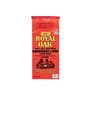
Royal Oak lump is first because it answers the search in one move: real hardwood lump, additive-free by nature, widely stocked and cheap. The honest trade is inconsistent piece size and some dust in the bag, which affects how it burns, not what is in it. For most people asking this question, this is the bag, and our best lump charcoal roundup is where it sits against the rest.
Jealous Devil Max XLis the answer for the reader who wants a briquette’s identical, stackable pieces without the recipe. The listing describes them as all-natural hardwood charcoal, and the practical difference is the one you can test: no binder-and-filler smell on lighting, and less ash. The price is premium-lump money in a 10-lb box.
B&B Competition briquettes are oak and hickory char with fewer fillers, per the listing, and they add a little real wood character that a plain briquette does not. They are the pick for long, low cooks where you want briquette consistency and a cleaner burn; our best charcoal for smoking roundup ranks them for exactly that.
Jealous Devil Chunx XL and FOGO Super Premium are the two premium lumps: big, dense hardwood with low ash and little sparking stated on the listing. Neither is more “natural” than Royal Oak — lump is lump — but both burn cleaner because of density and piece size, and both are the right buy for a kamado or a steak-heavy grill.
Royal Oak Ridge briquettes are last only because their claim is the most modest: a blend that leans more natural and burns cleaner than a basic bag, at a basic-bag price. If you want to spend the least possible money and still move away from the cheapest briquettes, this is the step.
The thing actually worth worrying about
It is not the fuel. The National Cancer Institute’s summary of compounds that form during high-temperature cooking is about what happens in the meat— heterocyclic amines above roughly 300°F, and polycyclic aromatic hydrocarbons when fat drips onto flames and the smoke coats the food. Those form over a gas burner too. The practical responses are cooking technique: a two-zone fire so fat does not drip onto direct flame, not charring the surface, trimming and flipping often. We go through all of it in is charcoal grilling bad for you, and the honest summary is that switching to a natural bag changes the ash pan far more than it changes the health picture.
What we would skip
Self-lighting briquettes. The only product in the category that puts a petroleum product in the bag on purpose. A wax cube from our fire starter picks lights plain briquettes just as fast and leaves nothing behind.
Lighter fluid on ordinary charcoal. Same problem, added by hand. If you own a bottle, our how to light charcoal guide has three fluid-free methods that do not even need a chimney.
Paying a premium for the word “natural” on a lump bag. Every lump bag is natural. Pay more for density, piece size and low ash if you need them, not for the label.