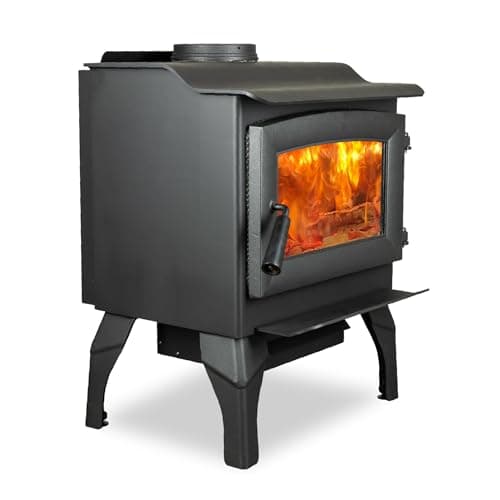
#1Best overall
US Stove US1100E-BL 1,200 sq ft Wood Stove with Blower
The blower is the reason to pick this one. A wood stove without a fan heats by radiation, which means the room it is in gets hot and the next room stays cold; a blower pushes that heat out into the house and makes a 1,200 square foot rating behave much more like 1,200 square feet. US Stove is a mainstream brand and this sits at a sensible price for a mid-size stove. It still needs a proper flue, a hearth pad and a code-compliant install.
What’s good
- Blower included — heat actually reaches adjoining rooms
- 1,200 sq ft rating suits most single-storey homes or large open plans
- Mainstream US brand with available spares
- Priced below the 2,000 sq ft stoves by a clear margin
Trade-offs
- Blower needs mains power — it does nothing in an outage
- Flue and install costs are on top, as with any stove
- Fan noise is audible in a quiet room
- Emissions rating is not published on this listing
| Type | Freestanding wood-burning stove with blower |
|---|---|
| Heating area | 1,200 sq ft (per the listing) |
| Blower | Included, per the listing |
| Model | US1100E-BL |
| Emissions rating | Not published on this listing |
Specs read from the product listing, on October 7, 2026. “Not published” means the maker doesn’t state that figure there.